Welcome to YouChoose, a blog about individual climate action. This week I would like to talk about invasive plants and why we should remove them from our backyards.
In this post we’ll focus on buckthorn, honeysuckle, and garlic mustard, of which I have extensive experience, however this same argument can apply to other invasive plants in other regions.
Because my property borders with a neighboring subdivision, one side of the yard was left wooded presumably as a delimiter between the subdivisions. The area was infested with buckthorn, honeysuckle, and garlic mustard. These plants had created a thick border between the two properties. Honestly I wasn’t aware of their devastating effects on the native oaks. For this reason I left them unchecked for many years, thinking that they provided a nice thick screening, until I realized that I was contributing to the destruction of Illinois ecosystem.
After the offenders were removed other plants could grow, such as the elderberry that still provides a nice screening between the properties in addition to having a high value for wildlife.
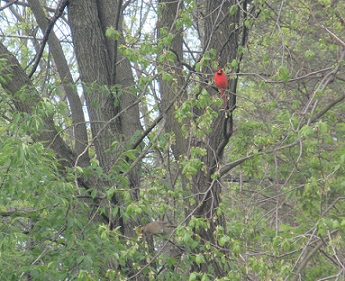
Unfortunately my yard was nothing exceptional, I see a lot of buckthorn left between backyards and between backyards and roads. Therefore, let’s first review here the reasons why it is important that we do our part and remove these plants.
Garlic mustard (alliaria petiolata)
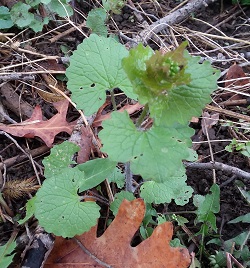
Garlic mustard is an aggressive invasive herb imported from Eurasia. It has a two-year lifecycle and it spreads aggressively in wooded area. It can quickly occupy large areas of a forest and it does not allow other native plants to germinate. For these reasons it is responsible for the decline in population of many woodland species.
Buckthorn (Rhamnus cathartica)
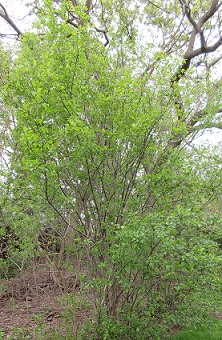
Buckthorn is an aggressive shrub originating from Europe. It quickly spreads in shaded areas. Leaves are developed early in the season and they last until late fall, thereby casting a shade that doesn’t allow sunshine to reach the younger oaks. The emergence of early leaves impacts the bloom of spring ephemerals. In addition these plants grow densely, reducing the growth and survival of native shrubs and trees.
Buckthorn affects the chemical composition of the soil making it inhospitable to other plants. The plant produces thousands of seeds that are also spread to remote areas by birds. The larger impact is the destruction of oak forests and the entire ecosystem that depends on them.
Honeysuckle (Lonicera family)

Just like buckthorn honeysuckle is a fast- growing shrub or vine from Eurasia. It has a devastating effect on the forests of the Midwest because it spreads quickly, grows leaves early and doesn’t allow other plants to emerge. I have first-hand experience of the infesting capability of this plant which is in my opinion worse than that of buckthorn.
Other regions may have different invasive species, however their impact on the ecosystem is similar. Wherever you are, you should research whether invasive plants are present in your yard. If you do have them, but are hesitant (as I was) to remove them because you like the screening or the look they provide, I strongly encourage you to go ahead and replace them with native shrubs. The damages produced by these foreign species far outweigh the few advantages that they may procure.
By removing these invasive species from your yard, you will be doing a great service to the ecosystem and to our Earth and by replacing them with native species you will provide food and shelter to many creatures.
Here is a list of alternatives to buckthorn
- Dogwood (Cornus rugosa, Cornus alterifolia)
- Serviceberry (Amelancher arborea, Amelanchier laevis)
- Elderberry (Sambucus Canadensis)
- Nannyberry (Viburnum lentago)
- Chokeberry (Aronia melanocarpia)
- Spice Bush (Lindera Benzoin)
- Sumac (Rhus Glabra, Rhus Aromatica and similar)
The YouChoose App provides several great links to resources on native plants. If you have an android phone you can download the app from Google Play using the link on the right.
In the next post we’ll discuss identification and removal techniques.
Do you want to share your experience? Send me an email at info@choosesustainable.org
 You Choose
One thought on “Why we should remove invasive plants”