Welcome to YouChoose, a blog where we explore ways of living sustainably. This week I would like to talk about achieving a palm oil-free life.
Avoiding palm oil is imperative to stop deforestation. It is also one of the most difficult tasks when transitioning to a sustainable lifestyle. Palm oil was a relatively unknown ingredient until a few decades ago, but now it has become one of the most pervasive components in the mass-produced products we buy every day.
Palm oil is found in almost everything we eat: cookies, crackers, candies, spreads, jellies, cereals, and packaged products. It is also found in many house products such as laundry soaps, and in personal care products such as shampoos, soaps, conditioners, lotions, lipsticks, creams, cosmetics, and toothpaste.
Occasionally we hear halfhearted declarations from some world leader about reducing the import of products that are responsible for deforestation, however, after doing research for the YouChoose App, I learned one important thing: If I wanted to find out who was responsible for the extensive deforestation of the past few decades, the decline in biodiversity, and the extinction of primates I needed to look no farther than the mirror.
The high and growing demand for this cheap oil by multinational corporations has led to widespread destruction of rain forests in South East Asia and is bringing primates and other species to the verge of extinction. These rain forests are cleared usually by setting them on fire and are replaced with mono-culture plantations of palm trees (which are not a native species to that region) to produce palm oil.
I checked the products in my house, in the pantry, in the bathrooms and kitchen and found out that most of them indeed contained (explicitly listed or hidden behind other names) ingredients that are derived from palm oil.

Cleaning and personal care products don’t list the ingredient as palm oil, but hide it behind the names of the chemical compound derived from it. The YouChoose App provides a list of chemical compound names that usually indicate the presence of palm oil.

I really had to take a hard look at myself, which is never easy to do. I could no longer blame others for my doing. In that painful moment of awakening, I decided to embark on a journey to free myself of palm oil.
Here is a list of actions we can take to eliminate or substantially reduce our dependence on palm oil. Each action in itself is a journey and will be discussed in separate posts.
- Be firm in our resolve, this is a very difficult path, but we shouldn’t doubt that it is worth pursuing.
- Read ingredients of every food item at the grocery store. Palm oil is found in the most unexpected places.
- Read ingredients of personal care products and avoid those that are derived from palm oil. A list is provided in the YouChoose App and it will also be provided in a following post.
- Read ingredients of house cleaning products and avoid those that include palm oil.
- Read ingredients of beauty and cosmetic products and avoid those with palm oil. A list of these is provided in the YouChoose App and it will be provided in a following post.
- Don’t be fooled by “vegan”, “green”, and “eco” labels or by statements from corporations on how they plan to make their palm oil sustainable by 2025 or 2030. These are empty words that only betray the callousness of these enterprises.
After you go through this list you will discover that there aren’t many products you can buy in stores and, if you are brave enough, your journey will begin. It will involve giving up things you like, abandoning easy choices, and probably some discussions with your friends and family.
It is also important to remember that not all palm oil is destructive, there are many small companies that source their palm oil from places were the plant Elaeis Guineensis is native (mostly West Africa) and grown responsibly. These are not the major brands found in big store shelves. Before purchasing products with this ingredient it’s important to check with the company to see where and how they source their ingredients and purchase only if the answer is satisfactory.
To answer our initial question: Is a palm oil free life possible? The answer is Yes, but it’s not easy. Here is one topic where doing the right thing involves choosing the narrow path. I’ll share my progress in following posts. The YouChoose App provides links and resources with information on this topic.
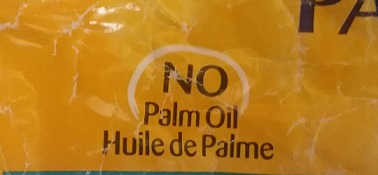
Do you want to share your progress on eliminating palm oil from you shopping list? Send me an email at info@choosesustainable.org
 You Choose