Welcome to ChooseSustainable.org a blog about sustainable living. Planting season is here! If you are thinking of starting a native garden you may be interested in 10 easy and guaranteed success blooming plants that have very high value for pollinators and birds. These plants do very well in the central and East US and they are all currently present in my backyard. Even if you have a small yard, or even a balcony, you can still do your part and recreate a small piece of prairie. I’ll feature them one by one in single posts, for now here is a quick reference sorted by bloom time.
Geranium maculatum (April-June)

Easy to grow from seeds, it forms a blooming ground cover from spring to early summer and maintains nice foliage until late fall. Important food source for early bees and pollinators. Common name: wild geranium.
Asclepias in many varieties (june-july)

I love this. It blooms around late June, flowers are extremely showy and fragrant. This is one of the most prized plants of my garden. Everything of this plant has value, from leaves to flowers to the pods that contain seeds. It is the host plant of the imperiled monarch butterfly and moths. Make sure to plant the varieties native to your region and to give it its own space, I noticed that it doesn’t like to be crowded. Common names of varieties include: Swamp milkweed, common milkweed, butterfly weed, showy milkweed, and more…
Echinaceas and Rudbeckia (july-October)
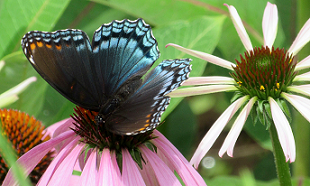
I include here many species of coneflowers including Ratibida pinnata and brown eyed susan. These are easy from seeds and have very high value for pollinators and birds that will feed on seeds through fall and winter. Different varieties bloom all the way to October. Host plant of several checkerspot butterflies and moths. Common names include: Purple coneflower, yellow coneflowers, black eyed susan, brown eyed susan.
Monarda fistulosa, didyma (july-august)
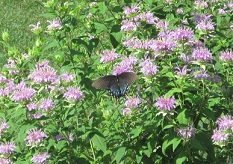
There is a reason why another name for this plant is “bee balm”. When it blooms in my yard it is surrounded by bumblebees and other pollinators from morning to evening. The leaves are very aromatic but be careful, it is quite exuberant, it may get out of hand! Host plant of several moths. Common names: bee balm, wild bergamot.
Eutrochium purpureum (july-august)

This plant is very attractive to bumblebees and butterflies. It takes a few years to establish and I noticed that it suffers in prolonged droughts. It is a host plant for several moths. Common name: Joe Pye Weed.
Silene regia (July-August)
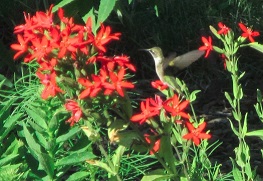
Although this may not be the most common plant, I included it here because I noticed that it is one of the preferred foraging grounds for hummingbirds. Besides it is a red rarity among prairie flowers and it is listed as endangered in several states. It is very slow to establish and I have been trying to grow the population in my yard with mixed success, but it is definitely worth a try! Common name: Royal catchfly.
Liatris varieties (August – September)

With their purple spikes Liatris in many varieties attract a large variety of bees, butterflies and moths. The bloom lasts until early fall and it seems to me that the plant can be propagated through seeds quite easily. I have tried them this year for the first time, I’ll know more in a few months. The plant itself is very attractive, and is the host plant for several moths. I hope to post a better pick in a future post. Common names include: blazing stars, gay-feather.
Helianthus varieties (August-October)
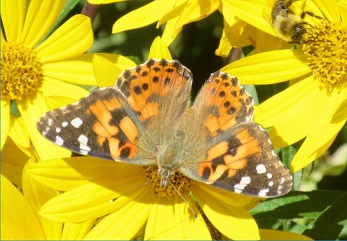
There is no summer without sunflowers. Heliantus plants come in many varieties with beauty and boldness as their common factor. I have the variety Helianthus grosseserratus (sawtooth sunflower) that was chosen based on its high wildlife value and it was entirely grown from seeds. This native variety that I have requires some space, but there are better behaved native varieties. Common name: Sunflowers
asteraceae varieties (september-october)
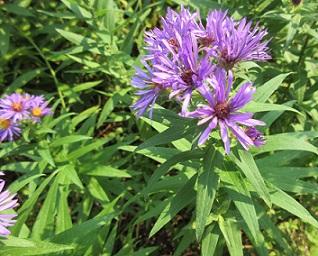
The family includes many asters that in fall, when everything else is done blooming, keep bees and butterflies happy a little longer. Asters of the genus “symphotrichum” are used as host plants of 100 species of moths and butterflies. I grew my New England aster from seeds and small plants. They both did very well and they expanded considerably. In addition I have a few heath asters that came up on their own. Asters come in great varieties, some do well in sun, others in shade, the important thing is to let them thrive in your garden, birds will thank you too. Common names: New England aster, heath aster, Georgia aster, smooth aster and many many more. Just make sure that you plant the variety native to your area.
solidago varieties (september-october)
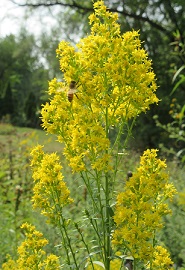
This is another extremely important fall plant for a large number of insects, including caterpillars. It provides food for migrating monarchs and winter seeds for birds. I planted the solidago speciosa, but I am planning to expand my population next year with more varieties. I do get a lot of Canadian goldenrod which I remove selectively, I leave some in specific location and remove what becomes overwhelming. Common name: Goldenrod in many varieties.
I hope this brief overview of top ten plants helped out. If you try any let me know how it goes.
The YouChoose App provides several links to resources to get you started with sustainable gardening. It also provides links to native plants in specific regions. You can download it from Google Play or through the link on the right. Please make sure to purchase native flowers from nurseries that don’t use neonicotinoids.
Would you like to talk about a native plant in your backyard? Please send me your post at info@choosesustainable.org
If you liked this post please share it!
 You Choose