Welcome to ChooseSustainable.org a blog about individual climate action. In this series of short posts I present a native plant to encourage everybody to abandon our traditional way of gardening (basically a continuous fight against nature) and engage in sustainable gardening practices that nurture the ecosystem, sustain wildlife and foster biodiversity. I show the plants in a garden setting to dispel the myths depicting them as weedy and unsuitable for gardens.
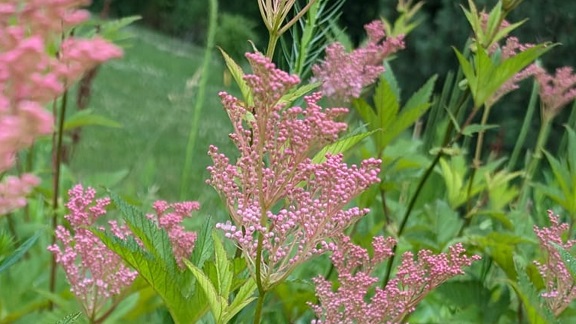
In this post I want to talk about a stunning perennial, ideal for a variety of soil conditions: Filipendula rubra. The plant is ideally a wetland species, but it will also grow in moist conditions. It spreads if it finds the right place, colonizing an area. This plant is ideal if you have a part of your garden that gets flooded when it rains.

Quick facts:
- Zones: 3-6
- Bloom time: June-July
- Sun: Sun
- Soil Moisture: Wet, moist, well drained. Rich soil is preferred.
- Aggressive: MODERATE it spreads through roots and occupies an area
- Front yard: YES
- Height: 4-5 feet
- Status: Endangered in Illinois, threatened in Iowa and Michigan.
- Maintenance: LOW
- Wildlife value: LIMITED
Wildlife connection: The plant is visited by small insects such as small flies and beetles. It has no nectar but plenty of pollen. I don’t see much activity on the leaves, however the leaves provide nice shade for frogs.
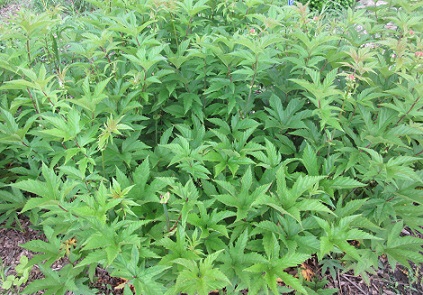
I originally removed the lawn in an area where water used to accumulate after rain and planted 5 small plugs (along with other water loving species). After more than 10 years the 5 plugs have grown nicely, but not overwhelmingly, and so they haven’t reached the point where I need to pull them back. Queen of the prairie does well in rich soil. After the lawn is removed the soil is generally terrible and it takes time to bring it back to life. I leave all organic material from the previous year’s cuttings in place, together with leaves. All material gets quickly decomposed in spring and summer and with time the soil improves. In spring the large, attractive leaves form a nice ground cover before the stems develop to their full height.

In early summer the plant blooms with large feather-like flowers that remind me of cotton candy. The large inflorescence is made up of small flowers. The bloom lasts for a few weeks.
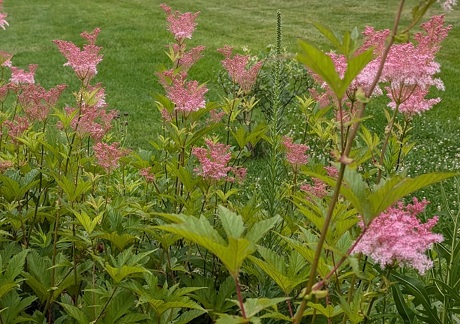
In fall the plant produces small reddish fruits that provide a nice fall accent.

Here is how to transform a soggy mess into a most attractive well-drained part of your yard without digging. The first step is to get rid of the lawn by covering it in fall with a few layers of cardboard covered with mulch (I use wood chips also). If you don’t have enough cardboard boxes you can use rolls of construction paper. In spring purchase some moist-loving native plants. Here are a few choices (there are many more):
Filipendula rubra (Queen of the prairie), Gentiana andrewsii (Bottle gentian), Liatris pycnostachyaI (Blazing star), Aster Novae Angliae (New England aster), Chelone glabra (White turtle head), Echinacea purpurea (Purple coneflower). You can add some grasses and sedges, however select them carefully because they may take over the place.
The deep roots of native plants help the water go in the soil quickly reducing standing water. In a few years you will have a beautiful pollinator haven. Plant dense or let the plants self-seed to reduce weeds.
Every native plant you add brings back a piece of ecosystem that is vital to biodiversity.
Would you like to talk about a native plant in your backyard? Please send me your post at info@choosesustainable.org
If you liked this post please share it!
 You Choose