Welcome to ChooseSustainable.org a blog about individual climate action. It’s almost Halloween and you have probably added to your grocery list a bag of candies to distribute to kids in a few weeks.
It takes a small effort to celebrate an Earth friendly Halloween by avoiding candies that contain palm oil. Just look at the list of ingredients and select candies that don’t contribute to deforestation. Is that simple!
Don’t be fooled by sustainable palm oil labels, there is no such a thing as sustainable palm oil. Read here from the World Wildlife Fund about the link between big money and deforestation. Here you can find the palm oil buyers scorecard and here you can search the score of industries that make Halloween candies such as Mondelez International. Even the best scoring companies such as Ferrero can’t entirely account for the provenance of their palm oil.
Industrial deforestation, driven by palm oil demand, is one of largest contributor to climate change and the largest driver of loss of biodiversity and mass extinction on the planet. Don’t finance the suffering of countless species with your money, this Halloween go palm oil free.
Welcome to ChooseSustainable.org a blog about individual climate action. In this series of short posts I present a native plant to encourage everybody to abandon our traditional way of gardening (basically a continuous fight against nature) and engage in sustainable gardening practices that nurture the ecosystem, sustain wildlife and foster biodiversity. I show the plants in a garden setting to dispel the myths depicting them as weedy and unsuitable for gardens.
In this post I talk about a fall blooming plant of unusual appearance: Gentiana Andrewsii (bottle gentian). The population of this plant is declining due to loss of habitat and the species has recently become of concern is several states.
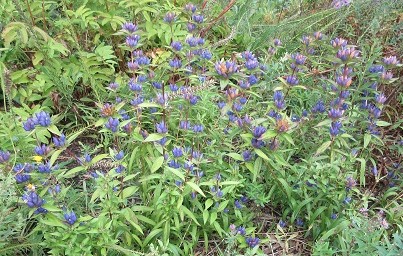
Bottle gentian at the end of September
Quick facts:
Zones:3-6
Bloom time: Fall (Sept-Oct)
Sun: Sun
Soil Moisture: Medium wet to medium
Aggressive: No
Front yard: YES
Height: 2 feet
Status: Declining and classified as threatened or species of concern in several states
Maintenance: LOW
Wildlife value: Medium
Wildlife connection: The flowers of the plant attract mostly bumble bees who are the only ones able to access the closed flowers.Although its wildlife value is limited, the plant provides a beautiful fall bloom and supports bumblebees late in the season, when other plants are not available.
I bought this plant by chance at a Forest Preserve sale. While I was waiting in line, I started talking to a nice lady next to me and she mentioned bottle gentian. She was very passionate about it and when we went in, she placed 3 small plugs in my cart recommending me to plant them. At home I was converting a patch of lawn into a mulched bed. The area used to be flooded with standing water for days after each rain and I was looking for water-loving native plants. I planted the small gentians there, they were a little slow to establish, but they have been there since, filling up year after year.
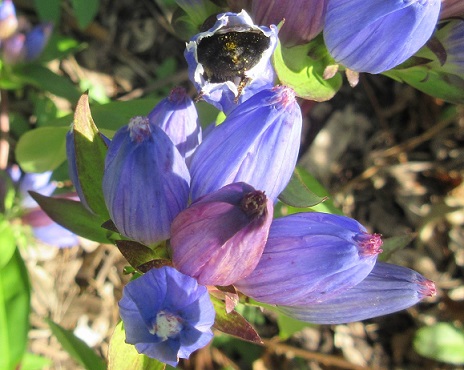
The plant grows 2-3 feet making it an excellent choice for the front yard. It is in full bloom in late September, and the flowers last about one month, extending the life of your garden’s bloom until October. The unusual flowers of a deep blue and dark violet color, with shades of yellow and pink are a sure attraction.
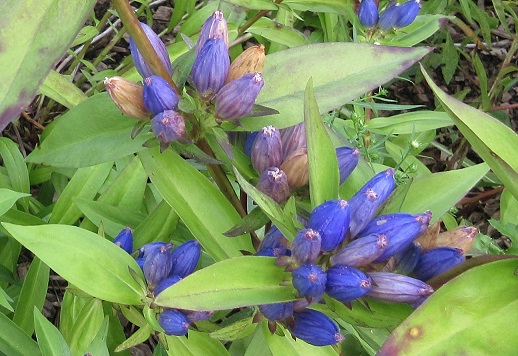
The attractive and unusual shape of blue gentian.
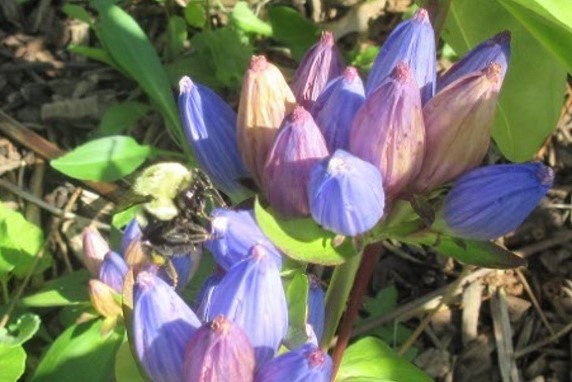
The plant is a magnet for bumblebees. They are the only ones strong enough to open the flowers and dive in, re-emerging with nectar and pollen.
A bumblebee tries to open a flower looking for nectar and pollen
Success!
I hope you will consider Gentiana Andrewsii for your garden. Every native plant you add brings back a piece of ecosystem that is vital to biodiversity.
Would you like to talk about a native plant in your backyard? Please send me your post at info@choosesustainable.org
Welcome to YouChoose, a blog about individual climate action.
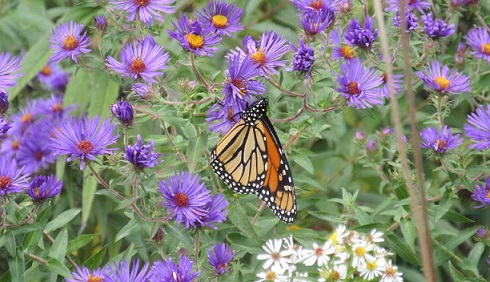
Monarch butterflies (eastern and western) are in sharp decline. Read here from the Xerces Society the conservation actions needed and the challenges faced to save the Eastern and Western populations.
You can be part of the effort: Support organic agriculture, start your own native pollinator garden, avoid pesticides and other chemicals in your yard.
Tell Congress to support the MONARCH ACT to help recovery of the Western Monarch Butterfly. Please sign the National Wildlife Federation petition below:
Reduce meat consumption by switching to a diverse, plant-based diet. This delicious recipe is based on chickpeas, a legume full of nutrients and a non-destructive crop that is actually good for the Earth. This recipe is very similar to hummus, but it doesn’t use tahini.
Sustainability tips:
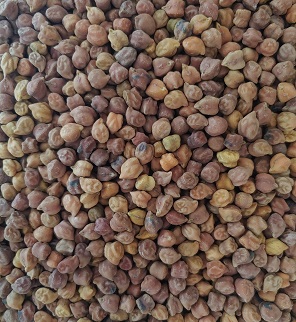
Chickpeas are a sustainable crop that requires little water, is low in calories and generally healthy. Black chickpeas are not always available in grocery stores, but they can be found in ethnic stores such as Indian grocery stores. The variety used here is more of a brown color. Regular chick peas can also be used for this recipe, however I recommend the black variety if available.
Remember that supporting organic and sustainable produce goes a long way to reduce harmful pesticide use. I also suggest to avoid produce in plastic bags and to bring your own reusable bags to help reduce the amount of plastic dispersed in the environment. I can send you free cotton grocery and produce bags entirely upcycled from old fabric. Just contact me if you need any.
Useful things to have ready
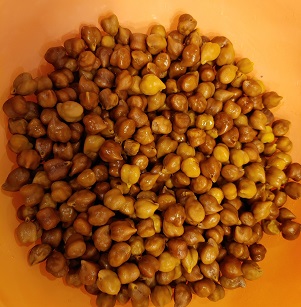
Rinse and soak the chickpeas overnight. Drain them and cook them in the pressure cooker until soft. In my pressure cooker it takes about 12 minutes.
These are the black chickpeas after they have been soaked and cooked
Preparation time: about 20 minutes
Ingredients (3-4 people)
Ingredients can be adjusted based on personal preferences. With the suggested proportions one gets a flavorful spread, but not too strong in garlic or pepper. One can also adjust the amount of oil to suit personal preferences.
3-4 fistful of black chickpeas
2-3 cloves of garlic
1/2 red pepper
1/2 teaspoon of cumin powder
Red chili (optional)
3 tablespoons of olive oil
1 tablespoon of lemon juice
3 tablespoon of water
Salt
Procedure
Rinse the soaked black chickpeas, drain them and cook them in the pressure cooker until soft.
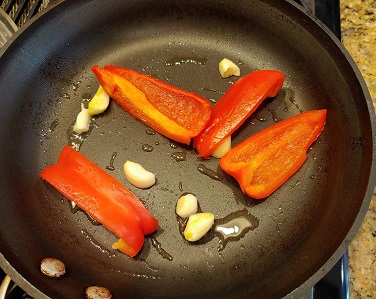
While the chickpeas are cooking, place a tablespoon of oil in a pan and roast the red pepper
Roast the garlic
Roast red pepper and garlic until soft
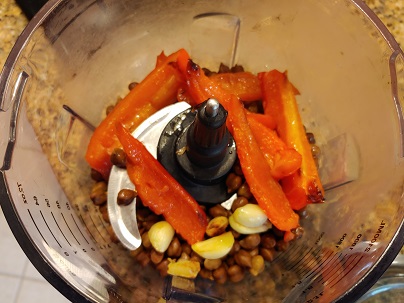
Place the cooked chickpeas in a food processor, a blender, or in a pot where you can blend them by hand
Blend all ingredients together
Add the roasted pepper and garlic
Add cumin powder, red chili, lemon juice, olive oil, salt, and enough water to blend (2-3 tablespoon of water).
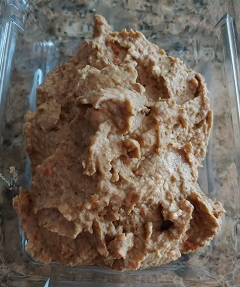
Blend until well smooth
Blend until the spread is smooth and creamy
You can eat this spread as appetizer or a snack, on crackers or bread, or with vegetables.
Ready!
Enjoy!
Did you like this recipe? Share it and spread the word.
Help reduce meat consumption! If you have a vegetarian recipe you would like to share please email me at info@choosesustainable.org and I’ll post it on this blog.
Still undecided? Read here about the destructive impact of the meat industry on forests.
Reduce meat consumption by switching to a diverse, plant-based diet. This delicious recipe is based on lentils, a legume full of nutrients and a non-destructive crop that is actually good for the earth.
Remember that supporting organic and sustainable produce goes a long way to reduce harmful pesticide use. I also suggest to avoid produce in plastic bags and to bring your own reusable bags to help reduce the amount of plastic dispersed in the environment. I can send you free cotton grocery and produce bags entirely upcycled from old fabric. Just contact me if you need any.
Useful things to have ready
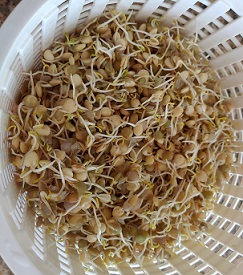
Rinse and soak the lentils overnight. Drain the lentils and let them stay in a container, covered for about 2 days, rinsing and draining them at least once a day. On the second day the lentils will be sprouted.
I suggest to steam the sprouted lentils in the microwave or boil them for 5-10 minutes in lightly salted water. This will make them softer.
Soak lentils overnight or for ~ 7 hours
Preparation time: about 15 minutes plus 3 days to sprout the lentils
Ingredients (3-4 people)
Sprouted lentils (about one fistful of dry lentils per person)
1/2 onion finely chopped
1/2 teaspoon of turmeric
1 tablespoon of unsweetened shredded dry coconut (optional)
Crushed red chili (optional)
2-3 tablespoons of oil
Salt
Procedure
Rinse the soaked lentils, drain them and keep them in a pot with closed lid.
Check the lentils daily, making sure they don’t become too dry, you can rinse them and drain them once a day.
The lentils should sprout in about 2 days.
These are the sprouted lentils after about 2 days
Option 1: Place sprouted lentils in a pot, cover them with water, add a little salt and bring to a boil for about 10 minutes. This will soften them.
Option 2: Steam sprouted lentils in the microwave for 6-7 minutes.
Heat up the oil and add chopped onions.
Sautee onions until gold add turmeric and red chili (optional)
Sautee onions and turmeric
If desired you can add the coconut powder at this point and sautee for 2 minutes.
Optional step: Add coconut powder
Add steamed (or boiled) lentils and sautee for 5 minutes.
Ready!
Enjoy!
Help reduce meat consumption! If you have a vegetarian recipe you would like to share please email me at info@choosesustainable.org and I’ll post it on this blog.
Still undecided? Read here about the destructive impact of the meat industry on forests.
The YouChoose App contains links and information about sustainable food choices with a searchable database of common food items.
Welcome to YouChoose, a blog about individual climate action.
With all the confusing information we read every day from the most diverse sources we may wonder how do we know that human activities are causing changes in the climate. I am posting here a link to the European Space Agency (ESA) web site that nicely summarizes decades of satellite observations of the so-called essential climate variables that are the indicators of change in the planet’s ecosystems.
What do satellite data tell us? See here in the ESA web page “Climate Change: The evidence from Space” how satellites monitor our Earth and provide long term continuous record of the changes happening over time. One important piece of information tells us that data from space are in agreement with climate projections from the warming scenarios provided by the IPCC, giving us some confidence that projected warming effects are realistic.
This is worrisome because the latest IPCC AR6 Synthesis report released in March 2023 provides a glimpse in possible future scenarios caused by a global temperature increase.
What can we do as individuals?
The IPCC report lists stopping deforestation, reforestation, and reconversion of degraded ecosystem among the most impactful mitigation strategies. Agriculture and livestock farming are major contributor to greenhouse gases and loss of biodiversity; reduce meat consumption and avoid using products that cause deforestation such as meat, palm oil, unsustainable sourced cocoa, and tropical woods. Urge your governments to take action against deforestation and loss of biodiversity.
Share this post with your friends and take action against deforestation and the destruction of the Earth ecosystems!
Deforestation is one of the main causes of biodiversity loss, for this reason the European Union last month introduced a ban on products from recently deforested areas. I doubt this ban will be easily enforceable. The US is taking steps to halt deforestation, restore habitats, and restore the great biodiversity of the North American ecosystem. Read from the WWF which actions have been pledged by the current administration. Will we go from words to deeds? We need to make our voice heard wherever we are and urge our governments to act. If you are in the USA please go to The Nature Conservancy petition page and tell congress to pass the Recovering America’s Wildlife Act
What else can we do as individuals?
Keep the pressure on! Think about how much forests and biodiversity mean to you and do your part to end deforestation by boycotting products that are the main drivers of destruction: cattle and livestock industry (which also drives conversion of forests to soy plantations), palm oil, cocoa, timber from old growth forests and endangered trees. The loss of even one species can not be undone. Do your part, stay informed, look for the provenance of what you buy and avoid products from high risk companies and locations.
Welcome to YouChoose, a blog about individual climate action.
The second session of the UN meeting on plastic pollution is scheduled for the end of May 2023. The first session took place in December 2022. The goal is to reach a binding agreement between nations to stop plastic pollution on land and oceans.
If you are not convinced of the urgency of the problem, please read more on the WWF plastic initiative and learn how our oceans are flooded with tons of plastic every hour.
Make your voice heard, ask the Biden administration tosupport strong measures to end plastic pollution by signing the GREENPEACE PETITION
Welcome to ChooseSustainable.org a blog about individual climate action. In this series of short posts I present a native plant to encourage everybody to abandon our traditional way of gardening (basically a continuous fight against nature) and engage in sustainable gardening practices that nurture the ecosystem, sustain wildlife and foster biodiversity. I show the plants in a garden setting to dispel the myths depicting them as weedy and unsuitable for gardens.
In this post I’ll talk about one of the most important plants for us living in the Midwest of the USA: Asclepias Syriaca (common milkweed). There are many native varieties of Asclepias, some of which are listed as threatened or endangered in various states. I start here with one of the varieties that used to be the most common. This variety has been steadily declining due to agricultural practices and suburban development.
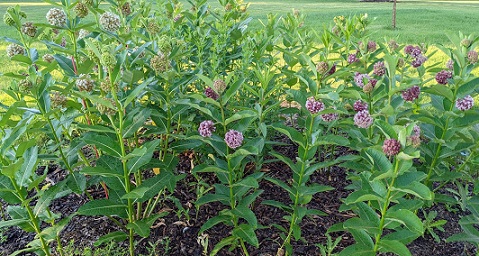
A garden patch of Asclepias syriaca offers great bloom in spring
Quick facts:
Zones:3-8
Bloom time: Summer (June-July)
Sun: Sun to part sun
Soil Moisture: Medium wet to dry
Aggressive: No
Front yard: YES
Height: 3-5 feet
Status: Declining
Maintenance: LOW
Wildlife value: Very High
Wildlife connection: The flowers of the plant attract many insects, including butterflies, moths, bees and bumblebees. The foliage is the only source of food for the caterpillars of the monarch butterfly and the tussock tiger moth, and is a preferred source for other varieties of moths.
In spite of its name containing the unflattering ‘weed’ designation, Asclepias Syriaca is a marvelous plant with a showy bloom and a scent reminiscent of lilacs. It has an undeserved reputation for being weedy and aggressive. In truth I have had the opposite experience, as I struggle to maintain the population. It seems to me that this plant doesn’t like competition and, after having nearly lost the entire population, I resorted to making an area just for them, hoping that they will be able to increase in number.
The plant takes about 3 years to fully develop from seed. If purchased as a young plug it usually blooms in the second year. The foliage is very attractive through the summer, and it becomes yellowish and sometime brown in late summer and early fall. Through the summer you will notice a lot of activity on the leaves and flowers.
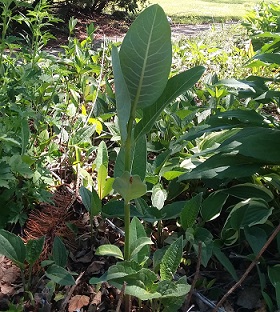
A milkweed plant emerging in spring. Often butterflies select young plants to lay eggs.
The bloom starts in late June and lasts several weeks. During this time many visitors approach the plant. The importance of the plant, however, goes beyond its bloom as the leaves are highly prized by many insects. For this reason we should never spray milkweed with any kind of insecticide or pesticide. Doing so will cause extensive damage on many levels of the food chain and will kill caterpillars feeding on the plants.
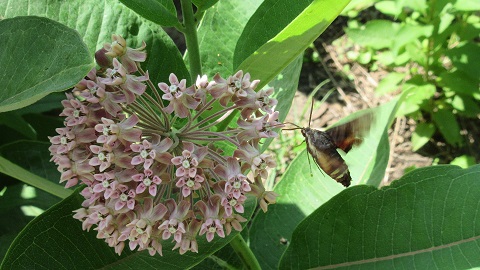
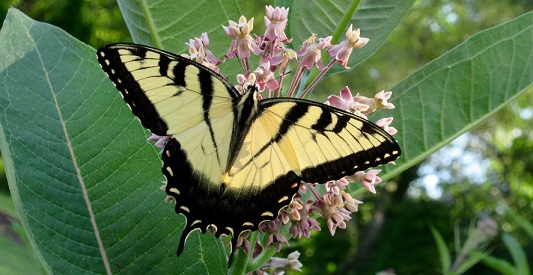
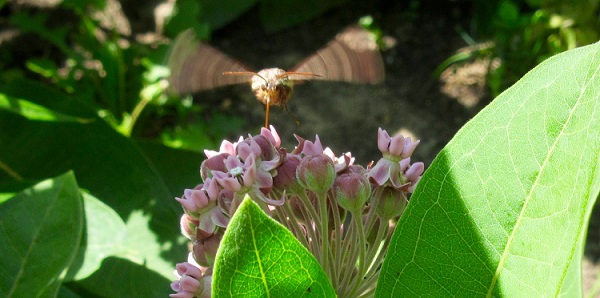
Amazing butterflies visit the flowersA moth feeds on the milkweed
On this topic I would like to talk about another caterpillar that feeds on milkweed: the Tussock Tiger moth caterpillar. In late summer you may find such visitors on the plants. These caterpillars are voracious and they will eat an entire plant from top to bottom. For this reason you may be tempted to eliminate them. The Tussock Tiger moth caterpillar is also a native species that relies on milkweed and has the right to feed on it. We should not destroy other species for the sake of the monarch butterflies. In 15 years I have had one instance where tiger moth caterpillars consumed a large number of plants. Having a large population of milkweed is the best way to ensure that everybody can make use of it.
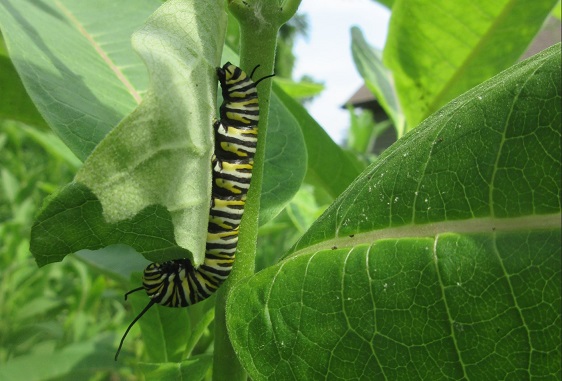
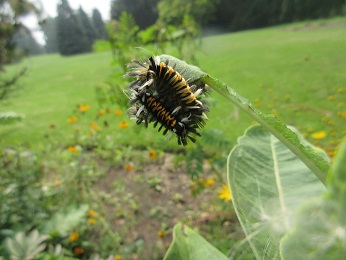
The caterpillar of monarch butterfly feeds exclusively on milkweedTussock tiger moth caterpillars feed destructively on milkweed, they are however entitled to do so
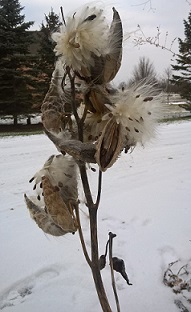
Besides providing beauty and value for your yard from spring to fall, Asclepias syriaca will enrich your winter garden with large seed pods that release seeds. I collect seeds but also leave some for dispersal through wind.
Seeds are released during fall and winter and can also be collected in late fall
Choosing the right source for your milkweed plants is a very important first step. I do see milkweed in nurseries (usually not the asclepias syriaca) sold as already blooming plants. Usually milkweed doesn’t take transplant well and establishing an already developed plant can be very difficult. Additionally, according to The Xerces Society, pesticides are found in milkweed sold in nurseries, read HERE the report. It is better to purchase young plants at local forest preserve sales, conservation societies, or from specialized nurseries that openly declare their policy on pesticides and neonicotinoids.
I hope you will consider Asclepias syriaca for your garden, Every native plant you add brings back a piece of ecosystem that is vital to biodiversity.
Would you like to talk about a native plant in your backyard? Please send me your post at info@choosesustainable.org
Welcome to YouChoose, a blog about individual climate action. We talked in previous posts about the importance of reducing the demand for palm oil. This week I would like to talk about food products that are more likely to contain palm oil.
It is a fact that, unless we stop buying, companies will keep deforesting.Avoiding palm oil is one of the actions we can take to stop deforestation. You will hear all kind of reasons why palm oil is actually good for the planet and how avoiding palm oil will do more harm than good. Don’t fall for the greenwashing. The skyrocketing demand for the cheap oil is fueled not by any necessity, but by an increase in demand for junk and fast food. The big conglomerates responsible for deforestation are also the biggest producers of junk food. Their palm oil suppliers are linked to human right violations, intimidation, and destruction of indigenous community. For this reason reducing the amount of junk and packaged food that we purchase is a fundamental step to invert the trend. When we purchase food containing or prepared with palm oil we are contributing to deforestation. Unfortunately there is no nice way to put this. Read here from Palm Oil Detectives how “sustainable palm oil” doesn’t really exist. It is just something invented to make consumers feel good and enable the continuous destruction of the rain forest.
Here is a list of foods where you are likely to find palm oil. Keep this in mind next time you go to the grocery store. I assure you that, after eliminating palm oil, my life hasn’t changed much, but my health and wallet may have actually improved.
Doughnuts: Fast food chains use palm oil for frying. I used to like doughnuts, but stopped buying them entirely and never looked back.
Candies: Almost all chocolate candies and bars in grocery stores contain palm oil. I used to buy some for my daughter when she was a kid or for Halloween. After realizing what I was doing, I stopped entirely purchasing them and lived happily everafter. I also noticed that, when I explained to my daughter the reason for it, she agreed and never asked for them anymore.
PopCorn: Please read the ingredients in microwave-ready popcorn packages and you will discover that all of them are made with palm oil.
Chocolate spreads: Products such as hazelnut spreads and sometime peanut butter spreads list palm oil among their ingredients.
Fast food, fried items, and hamburgers: Major fast food chains use palm oil for frying, especially in Asia, but also in the US. I know this is a little bit hard but limiting fast food as much as possible is important and not that depriving. It may actually be good for us.
Crackers, cereals, cookies, pancake mixes, soups, bread products: I read ingredients carefully and find palm oil in all these items. I invite you to do the same and look for available alternatives. There are few brands that don’t use palm oil.
Bakery products in grocery stores: A large percent of baked good in US grocery stores contains palm oil. In the grocery store where I shop, palm oil is found in almost all baked goods. I encourage you to check it out next time you shop and look for alternatives.
Frozen meals, ice creams, frozen waffles, and pancakes: Palm oil in ice cream? There are things I wouldn’t buy even if they were good for the environment.
Please share this post and do your part advocating a stop to palm oil consumption.







 You Choose