Halloween vegan pumpkin cookies

Sustainability tips:

This recipe is a good alternative if one wants to entirely avoid animal products and still bake Halloween cookies. I have always made the traditional cookie recipe with butter, but I tried this for the first time and I was happy with the outcome. The cookies came out crunchy. The procedure is quite simple and can be adjusted to suit our taste. I prefer less sugar and no frosting, so I suggest you taste the dough and decide what you need to add.

Preparation time: 15 minutes + 40 minutes in refrigerator + 15-20 minutes for baking

Ingredients (about 30 small cookies)

  • 2 tablespoons of pumpkin pulp (I used the canned puree)
  • About 60 ml of vegetable oil
  • 100-120 grams of sugar (add to suit your taste)
  • About 200 g of flour
  • 1 teaspoon of baking soda
  • 1 pinch of cinnamon
  • 1 pinch of nutmeg
  • 1 pinch of ginger

Procedure

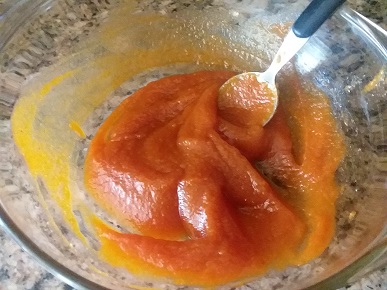
  • Mix the pumpkin, sugar, spices and oil
Mix all ingredients except flour
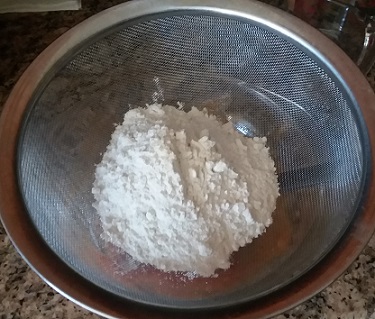
  • Sift the flour and baking soda in and mix
  • When the dough is hard enough shape it quickly into a ball with your hands
  • If it is sticky you may need to add more flour until it doesn’t stick too much to the hands

  • Place in refrigerator for 40 minutes
  • Start the oven at 180 C (about 350 F)
  • Flatten the dough and cut it with desired shapes
  • Place cookies on a parchment paper and place in the oven for about 15-20 minutes
Place cookies on parchment paper
  • When ready you can decorate the cookies with icing or sprinkles
You can make about 30 small cookies

Happy Halloween!

A satellite view of deforestation

Welcome to YouChoose, a blog where we explore ways of living sustainably. I am sharing here a recent article that appeared in the IEEE Geoscience and Remote Sensing Society newsletter. You can view the the article by copying and pasting the link below in your browser.

https://earthobservatory.nasa.gov/images/148781/smoky-skies-in-the-western-amazon

The article shows a satellite view of deforestation in South America linked to clearing for cattle and soy plantations (for feeding cattle). From the satellites it is also possible to follow the evolution in time of the rate of deforestation.

In North America environmental destruction is also causing large scale decline in biodiversity and extinction of species due to pesticides used in large scale farming. Below here is an interesting article from the BBC about California’s endangered butterflies and what we can do.

https://www.bbc.com/future/article/20211013-the-race-to-save-californias-endangered-butterflies

I hope you enjoy the readings!

The YouChoose app provides several links and information on global food issues and lists of sustainable and unsustainable foods including fish and vegetables, hopefully the information is useful to get started.

In this blog there is a recipe section where I share meat-free recipes to help out. If you want to share your sustainable recipes to help others, I’ll be glad to post them in this blog.

Do you want to share your progress on eliminating meat from your diet? Send me an email at info@choosesustainable.org and I’ll add it to this blog.

Sanguisorba Canadensis (Canadian Burnet)

Welcome to ChooseSustainable.org where we explore ways of living sustainably. In this series of short posts I present a native plant to encourage everybody to abandon our traditional way of gardening (basically a continuous fight against nature) and engage in sustainable gardening practices that nurture the ecosystem, sustain wildlife and foster biodiversity.

This past week the US Fish and Wildlife Service declared 22 species (including several birds) extinct. Among the reasons for extinction loss of habitat is the most important. Essentially we cut down the forests that sustained some of these species. Loss of habitat however is also due to agriculture and suburban development. The sad news reminded me of the importance to restore native habitat in our backyard. It is too late to save the species that have disappeared, but is not too late to save those that are still surviving. In this post I’ll talk about a native plant that is fighting for survival and that could disappear before most of us even know of its existence: Sanguisorba Canadensis (Canadian Burnet).

Canadian burnet is listed as threatened or endangered in several states

Quick facts:

  • Zones:4-8
  • Bloom time: Spring (Aug-Oct)
  • Sun: Sunny to part sunny
  • Soil Moisture: Medium wet, wet
  • Aggressive: NO
  • Front yard: YES but it grows tall
  • Height: 5’
  • Status: Threatened, Rare, or Endangered in most of its original habitat including Illinois
  • Maintenance: NONE
  • Wildlife value: Medium

Wildlife connection: This plant is one of the last fall blooming plants. It attracts bees, bumblebees and small insects when the other fall plants are done. Besides its wildlife value the plant has value for biodiversity.

One section of my backyard presents a slope that, being of course covered with lawn, caused storm water to runoff and accumulate at the bottom, creating a flooded area with standing water that lasted for few days after heavy rain. For this reason I decided to create a planting area where the water accumulated. One of the plants I chose for this area was the Canadian Burnet. I planted three bare roots and watched them grow into three marvelous plants in about 3-4 seasons.

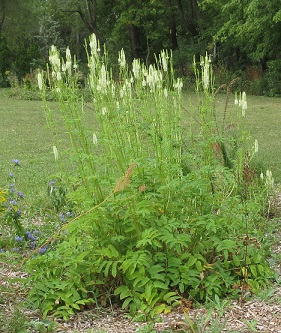
The plants grew quite large, more than I expected, reaching a height of about 5′, they emerge in early spring with a nice foliage and fully develop by summer.

At the end of August the plant is ready to bloom

Around the end of August the flowers are ready to bloom. Full bloom is in September and lasts until mid October if the weather is favorable. The leaves are quite large and the flowers have a feather-like appearance.

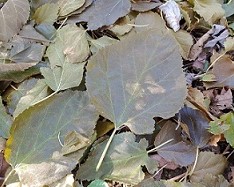
A leaf of the Canadian burnet

The plant is happy in medium wet soil, however, once established, it can sustain long droughts. If you have a section of the yard that gets good rainwater it is a good place for this plant. The plant is beautiful, however if it rains a lot it can fall over due its large size and it may be necessary to provide support to keep it up.

The white feather-like appearance of the flower. In early fall the flower attracts the last bees and bumblebees looking for nectar.

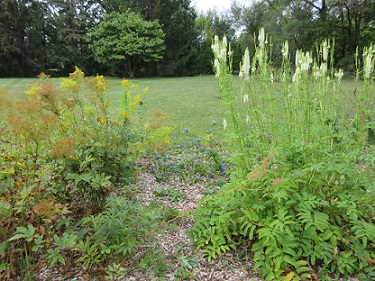
Given its size and unusual appearance, the plant can be used as a focal point for the fall garden. It doesn’t fail to catch the attention. The white bloom goes very well with the purple and yellow colors that dominate the season.

The Canadian burnet goes very well with goldenrod, asters and other late blooming plants.

In conclusion, if you live in the native range of the Canadian burnet and you have room for it, you should consider it as a fantastic addition to your backyard.

Please make sure to purchase native flowers from nurseries that don’t use neonicotinoids and look out for the full botanical name to avoid cultivars.

The YouChoose App provides several links to resources to get you started with sustainable gardening. It also provides links to native plants in specific regions. You can download it from Google Play or through the link on the right. Would you like to talk about a native plant in your backyard? Please send me your post at info@choosesustainable.org

If you liked this post please share it!

Tomatoes stuffed with rice

Recipe provided by Ermanno and Simona from Rome

Sustainability tips:

This delicious Italian recipe requires few simple ingredients such as rice, tomatoes, onions and some herbs. It also requires only one pot because everything cooks together in the oven. Choose organic vegetables if possible and remember to take your own bags to the grocery store to avoid plastic bags for the produce. I really want to thank Ermanno and Simona for the work they did putting together the pictures and the procedure. Collaborations really help a lot to keep the blog going.

The procedure seems elaborate, but it is really quite simple. If I could get it right the first time, anybody can do it.

Preparation time: 15 minutes + 45 minutes in the oven

Ingredients (3 people)

  • 3 large tomatoes
  • 5-6 basil leaves
  • Small bunch of parsley
  • 1 garlic clove
  • Arborio (o Carnaroli) rice – This is available in general grocery stores
  • Extra virgin olive oil, salt, black pepper
  • 1 potato
  • 1 sweet onion

Procedure

  • Slice the cap from the tomatoes
Remove the top part of the tomatoes and keep it aside
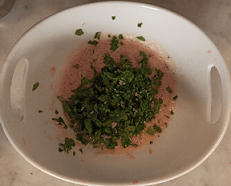
  • Finely chop basil, parsley and garlic
Basil, parsley and garlic finely chopped
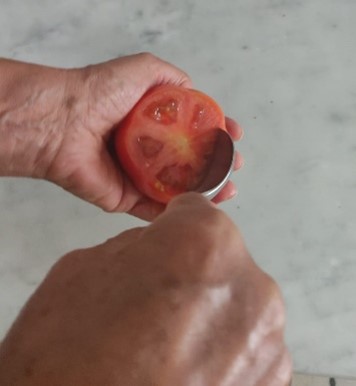
  • Empty the tomatoes with a spoon.
Make sure not to break the external skin of the tomatoes.
  • Place the tomato pulp in a centrifuge or a blender to make a nice smooth tomato juice. Keep a small amount (half cup or less) of the juice on the side.
  • In the larger part of the tomato juice add the chopped herbs, 2 spoons of olive oil, salt and pepper.
  • Add one tablespoon of uncooked rice for each tomato plus one extra tablespoon.

  • Place the tomatoes on a baking sheet, add one basil leaf and little salt at the bottom.
  • Fill up the tomatoes (up to 3/4 of capacity) with the rice and tomatoes mixture.
Fill the tomatoes with the rice and sauce
  • Place the caps back on the tomatoes.
  • Now add the sliced potato, sweet onion and (optionally) one more spoon of rice to the tomato juice that was set aside and place it on the baking sheet between the tomatoes.
  • Place in the hot oven for at least 45 minutes at about 360 F (180 C) until the rice is entirely cooked.
Cooked tomatoes out of the oven. You can let it broil for a few minutes depending on your preferences

If you would like to share vegetarian recipes please email me at info@choosesustainable.org and I’ll post them on this blog.

The YouChoose App contains links and information about sustainable food choices with a searchable database of common food items.

If you like this recipe please share it and help reduce meat consumption!

Celebrating 2 years of palm oil free soap

Welcome to YouChoose, a blog where we explore ways of living sustainably. This week I would like to share a small victory in my effort to free myself of palm oil (and plastic bottles).

It has been about two years since I bought my last bottle of liquid soap. The original intention was to reduce the use of plastic bottles, after all there are plenty of soap bars that can be used as alternatives. However, as I learned more about the ingredients in common soap bars and how they contribute to deforestation I decided to look for soap without palm oil.

That is where the real challenge began. I naively went around looking for palm oil free soap and realized that it is virtually impossible to find one. Now you may look at the ingredients in the soap (liquid or solid) in your home and be at peace because you won’t see a single mention of palm oil, still you’ll see seemingly innocuous ingredients such as: Sodium laureth (lauryl) sulfate, glyceryn, sodium kernelate, or additional names containing the palm suffix. These ingredients signal the presence of palm oil in the product. For example components such as laureth sulfate can be produced synthetically from petroleum oil or made using coconut or palm oil. Unfortunately, unless it is clearly stated that the product is palm oil free, you can be 99% sure that it is produced using palm oil. Note that many of these products are advertised as “natural”, “vegan”, “green”, which of course technically they are, except that their production brings devastation and deforestation.

Having failed hard on my attempt to purchase a palm oil free soap bar locally I turned my attention to the web. There are online several companies that produce really great palm oil free soap bars, the prices are also quite steep. It is understandable how these products may not be for every pocket, which brings us to the more general question of whether one has to be wealthy to be able to afford sustainable products. As it happens some of these products were too pricey for my pockets as well.

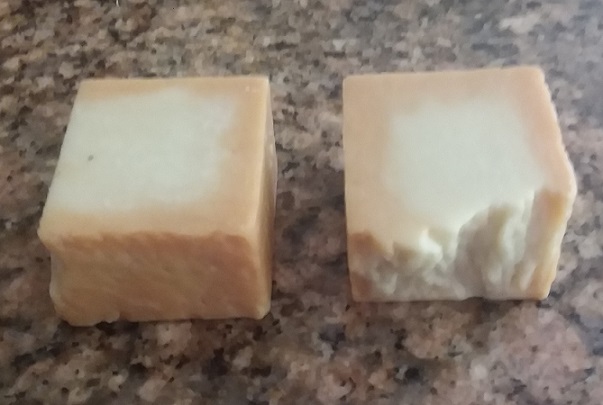
At the end of the day a compromise had to be made. I had to give up a luscious, foaming, creamy soap and fall back on a 100% olive oil soap bar. I resolved to use the scented ones for hands and shower, and the unscented ones for dishes. The price is very reasonable, they come in a paper box and wrapped in paper. They however don’t make a nice rich foam and come in limited scents. In the end for me this is a small price to pay to avoid palm oil and all the trail of destruction that comes with it.

A basic 100% olive oil soap bar

I make liquid soap from the olive oil soap bar this way:

  • Bring 6 cups (or about 1.5 liters) of water to a boil
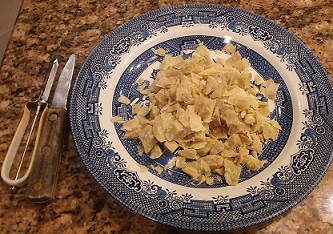
  • Grate 1 bar (or 3.5 ounces) of soap. Cutting the soap in small pieces also works
3.5 ounces of olive oil soap cut in small pieces
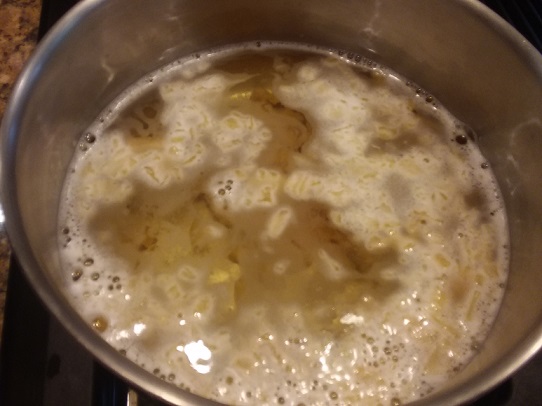
  • When the water is boiling lower the heat and place the soap in water
  • Turn off the heat and let the soap melt
Dissolve soap in water
  • Let it cool off
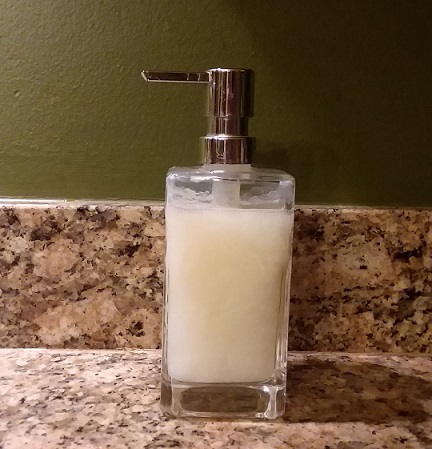
  • Transfer to a bottle, it is liquid at the beginning, but becomes dense later
A bottle of olive oil liquid soap

The amount of water may vary depending on the soap and on personal preferences so one may need to experiment a little. One can also add essential oils for specific fragrances. On my part I now use basic olive soap also for dishes and found it to be fairly good.

Olive oil soap works also for dishes

Perhaps in time I’ll find better alternatives, I recently found a possible substitute for the dishes, but haven’t tried it yet.

At the end of the day I have come to a conclusion that we can’t keep the same habits and hope that the outcome will change. We have to give up some things we like to switch to more sustainable products. We can argue that all these efforts are just a drop and don’t make a big difference, but if more people say no to products derived from palm oil the outcome may actually change.

The YouChoose app provides several links and information on beauty products and cosmetics ingredients that are unsustainable and bad for the environment.

Send me your experience at info@choosesustainable.org and I’ll add it to this blog.

If you liked this post please share it!

Hummingbirds!

Welcome to ChooseSustainable.org where we explore ways of living sustainably. In this post I would like to talk about hummingbirds and how native and sustainable gardening is important to ensure their well being. This is true not only of hummingbirds, but of countless species that coexist (or try to) with us.

Sometime, when we take simple decisions such as getting rid of bugs, spiders, or dandelions in our yard we don’t consider the far reaching consequences of our actions. Most of the time things that we consider trash or nuisances are essential for the survival of other species. When we think of hummingbirds we think of feeders, but our yard can provide much more than that. The good news is that what they really need comes at no cost to us, it is already there, we just need to leave it where it is.

Every spring I look at the hummingbird migration map and around the beginning of April put out a feeder hoping that a few of them will take notice and stop in my backyard. The idea is to offer them plenty of reasons to stay through the summer and fall, so let’s see what hummingbirds need to be happy in our backyards.

Food and water

Contrary to common belief the main part of a hummingbird diet is not made of nectar, but of insects. Hummingbirds are voracious eaters of all kind of small insects, from spiders and small flies to aphids and 80% of their diet is made up of them. Nectar is important especially in early spring when the availability of insects is still limited. If we use pesticides to get rid of spiders, ants, or even mosquitoes in the yard we deprive hummingbirds of their main source of food and, even worse, we may poison them.

The best thing is to provide them with nectar-rich flowers and insect attracting plants from spring to fall. A shallow bird bath can provide water access. From what I see in my backyard, hummingbirds like to go to a variety of plants. Here are some plants that provide nectar and/or insects, these are mostly for the Midwest, please check native plants in your area:

Spring: Aquilegia Canadensis (columbine), Geranium Maculatum (wild geranium), Penstemon digitalis (foxglove penstemon), Diervilla Lonicera (dwarf honeysuckle)

Summer: Lobelia Cardinalis (cardinal flower), Silene Regia (royal catchfly), Monarda Fistulosa (wild bergamot or Monarda Didyma if you are on the East Coast), any native Liatris (for example Liatris Spicata), native Hibiscus if you are in the native range.

  • Fall: Chelone Glabra (turtlehead), Lobelia Siphilitica (blue lobelia), any of the goldenrod (for example Solidago Speciosa).
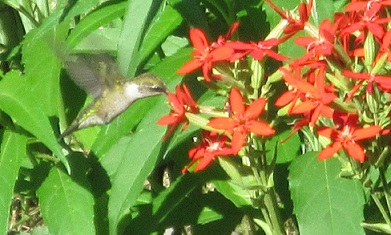
A hummingbird visits the Royal Catchfly (Silene Regia) in summer
Shelter

Hummingbirds are not exempt from predators. For this reason a habitat rich with tall grasses, tall prairie flowers, and shrubs near the feeder provides a better way for the hummingbird to avoid hunters.

Tall grasses, shrubs, and trees offer nearby shelter to the little hummingbird
Nesting

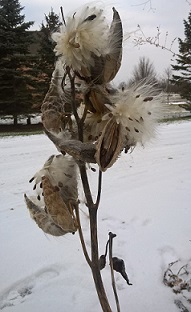
Hummingbirds use spiderwebs and possibly fluffy material to build their nest. The fluffy material is provided for example by dandelion and milkweed. If you eliminate spiders from the backyard you eliminate essential elements for the survival of hummingbirds. Similarly leaving an untidy backyard over the winter with grasses and twigs and possibly dandelions in spring will provide material for nest building. Additionally, tall trees provide a place where to position the nest.

The fluffy cotton-like material produced by milkweed is used for nests.
Feeder

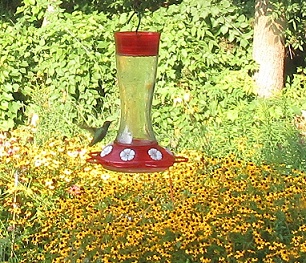
In addition to to a variety of native plants a feeder is a good way to provide easy access to nectar and to attract hummingbirds near your window where you can see them often. I love watching them come and go and I know that, as I observe them, they observe me. They observe me when I go to replenish the nectar and they come to look inside the window when I am in the kitchen.

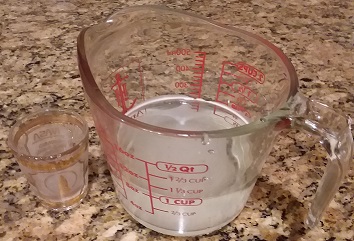
Preparing nectar is quite simple: 1 part of sugar to 4 parts of water is enough. I warm up the water and dissolve the sugar until the solution is clear.

One small glass of sugar and 4 small glasses of water make about 1 cup of nectar

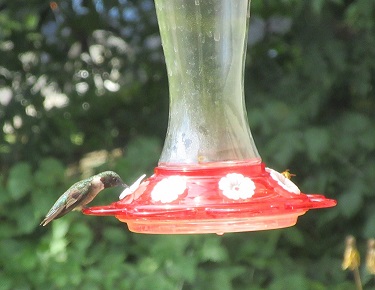
Because the sugary solution can be outside only for 2-3 days before it becomes old and dirty I put out only what is necessary for a few days in order to avoid wasting sugar. Every 2-3 days I rinse the feeder and replenish the nectar. Approximately once a week I empty the feeder entirely and wash it well to eliminate sugar residue. Keeping the feeder clean will also reduce ants that can sometime become a nuisance.

Insects such as wasps and ants will use the feeder.

If you are considering native and sustainable gardening I hope this post was useful to see how planting native grasses and trees, avoiding pesticides, leaving grasses, twigs and seed heads in the yard through the winter, helps hummingbirds find a welcoming backyard in spring.

The YouChoose App provides several links to resources to get you started with sustainable gardening. It also provides links to native plants in specific regions. You can download it from Google Play or through the link on the right.

If you liked this post please share it!
Legumes: Earth’s best friends

Welcome to YouChoose, a blog where we explore ways of living sustainably. This week I would like to share some thoughts about reducing meat consumption.

Today, the link between meat consumption, deforestation, and emission of greenhouse gases is well established. Therefore one of the most important steps we can take for the benefit of our Earth is to eliminate meat from our diet. Legumes are among the most Eco friendly food we can consume and they are an important source of proteins. They are also beneficial for the soil and don’t require excessive water use.

Sometime when we think of legumes we get discouraged because we have to remember to soak them and need time to boil them. While this is true for some, not all legumes require long preparation time. Additionally it is possible to soak the desired amount in advance and keep it for one day or two. Soaking is an important step necessary to make legumes more digestible and eliminate anti nutrients. If we are pressed for time some limited variety of legumes are ready available in cans. This is very helpful, however there is a much greater variety of dry legumes so I suggest to explore ethnic grocery stores and see what is available.

Another frequent complaint is that legumes are hard to digest and make us uncomfortable. Again, this may be true of some types such as red or garbanzo beans, and it is especially true if we are not used to them. Here are some steps that can help us to to become more accustomed to the regular use of legumes.

  • Start with the varieties that are easier to digest: Green and yellow lentils, split peas, mung beans.
  • Introduce harder legumes (beans, garbanzo) in small amount at the beginning.
  • Soak the harder beans for 8-12 hours. Lentils don’t need to be soaked, however soaking them even for 2-3 hours makes them more digestible.
  • Cook the legumes thoroughly. They should be soft but not mushy.
  • Soak them when you remember, you can use them later.

In this post I’ll talk about a variety of easily available legumes we can quickly incorporate in our daily meals and will provide approximate preparation time. The following is the basic procedure, once cooked legumes can be used in recipes to make delicious snacks, soups, and side dishes.

Lentils

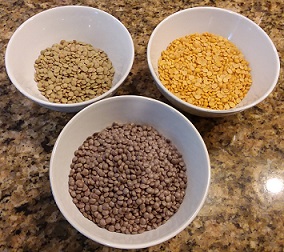
Lentils are probably the easiest to start with. They come in many types, green, yellow, brown. They make a great side dish, soup or can also be used to make fritters. They are fairly easy and quick to prepare and they don’t need soaking if there is no time. Lentils, like all legumes, should be rinsed and checked before use. Green and yellow lentils can be soaked for 3-4 hours or boiled directly in a regular pot with water. They are ready in 15-20 minutes. Brown lentils can be soaked overnight (but it is not necessary) and pressure cooked for about 8 minutes. Brown lentils can be cooked in the pressure cooker directly with other vegetables so they make a very quick meal. I plan to post some delicious and quick lentil recipes in the recipe section of this blog.

Green, yellow, and brown lentils are great starters to get yourself used to legumes. They are easy to prepare and can be used in a variety of dishes.
Garbanzo beans

I mostly use two types of chick peas: white and black. Garbanzo beans should be washed and soaked for at least 8 hours as they are generally harder than lentils. The black variety requires at least 12 hours. They can be cooked in the pressure cooker for about 15 minutes and kept in the refrigerator for 1 or 2 days ready to use. Garbanzo beans make an excellent salad addition for lunch, but are also very good in soups and can be used as a side dish, cooked with spices and tomatoes. Garbanzo beans can also be used to make hummus to use as snack or in appetizers.

Garbanzo beans are excellent cooked with a variety of spices or in salads
Mung beans

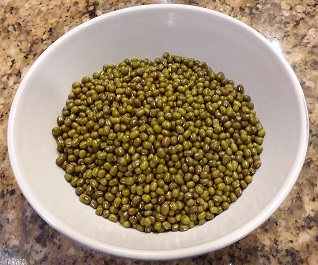
There are several types of mung beans (red, green,black). They make an excellent lunch, snack, or side dish. The best way is to soak them overnight before sprouting or cooking. Check out the easy sprouting procedure in the recipe section. Once soaked, cover the beans with water and bring to a gentle boil for about 15 minutes, make sure not to overcook them. They need to be just soft, but not mushy. Once boiled they can be cooked with spices and peanuts to make a great lunch or snack.

Mung beans cook very quickly after they have been soaked for 8 hours and don’t require a pressure cooker.
Beans including dried Lima beans

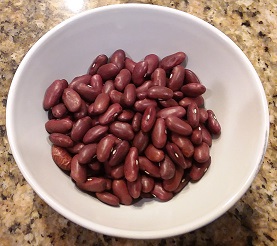
There is a great variety of beans, large, small, red, white, and more. Usually beans need to be soaked overnight and cooked for about 15 minutes in the pressure cooker depending on the beans and the cooker. Some can be quite hard, therefore the soaking and cooking part is important and should not be skipped. Beans can be added to salads, used in soups, or cooked in spices. One can get used to them starting with small portions.

Beans require soaking at least 8-12 hours and proper cooking to be more digestible
Peanuts

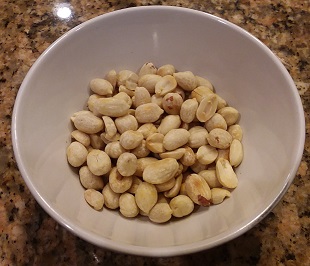
At last I’ll mention here peanuts. Although they are legumes, they are more similar to nuts. When lightly roasted they make a nice snack or can be used in small amount in a variety or recipes.

Peanuts are a sustainable food that can be added in small amount to dishes or used as snack

I hope this brief overview of some common legumes inspired you to include more of them in your daily diet. Including more legumes and less meat is one of the most important steps we can take to reduce greenhouse gases, reduce deforestation, and help our Earth.

The YouChoose app provides several links and information on global food issues and lists of sustainable and unsustainable foods including fish and vegetables, hopefully the information is useful.

In this blog there is a recipe section where I share meat-free recipes to help out. If you want to share your sustainable recipes to help others, I’ll be glad to post them in this blog.

Do you want to share your progress on eliminating meat from your diet? Send me an email at info@choosesustainable.org and I’ll add it to this blog.

Basmati rice with vegetables

Sustainability tips:

This recipe requires few ingredients such as basmati rice, vegetables of choice, turmeric, and and few spices that can be found in Indian stores or general grocery stores, depending on where you live. You can adjust the ingredients to suit your taste.

Useful things to have ready
  • I suggest to rinse and soak the rice for about half hour before cooking, however it is not required.

Preparation time: 30 minutes

Ingredients (3-4 people)

  • Basmati rice (2-3 fist full are enough for 3-4 people)
  • One laurel leaf
  • 4 peppercorns (black whole pepper)
  • 1 small piece of ginger root cut in small pieces
  • 3-4 cloves
  • 1/2 finely chopped onion
  • 1/2 teaspoon of turmeric
  • 1 sliced carrot
  • 5-6 small cauliflower florets
  • 1 fistful of green peas
  • 1 fistful of green beans chopped in small pieces
  • 1 small potato chopped in small pieces (0ptional)
  • Salt
  • One table spoon of vegetable oil

Procedure

  1. Wash the rice, soak it for half hour and drain it
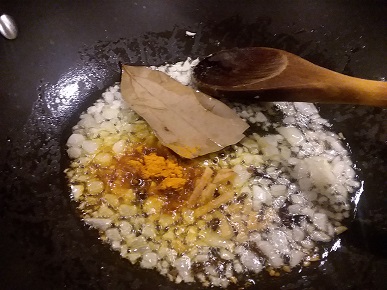
  2. In a wok heat the oil and add the laurel leaf, peppercorn, ginger root, cloves
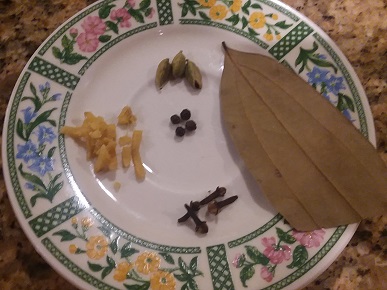
Cloves, black pepper, cardamon, ginger, and laurel leaf are the spices for this rice
  • When the spices are lightly roasted add the onions
  • When the onion turn gold add the turmeric powder
Add onion and turmeric powder to the spices
  • Add the rice and stir for a few minutes until it is coated with the spices
  • Add the vegetables cut in small pieces and stir for a few minutes
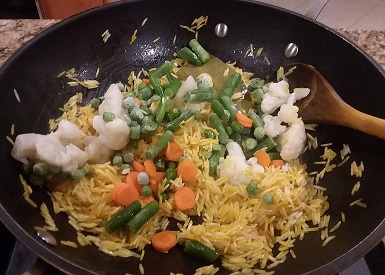
Add vegetables cut in small pieces
  • Add enough water to cover the rice and add salt
  • Cover and cook on low flame until the basmati rice is soft but firm (usually ~15 minutes)
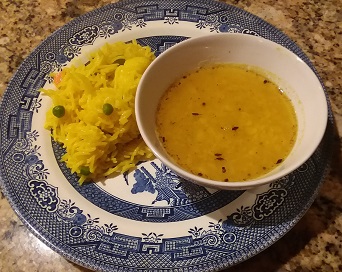
The rice can be served with a yellow lentil soup

When ready the rice can be served with a side of legumes or green vegetables

If you like this recipe please share it and help reduce meat consumption!
Identification and removal of invasive plants

Welcome to YouChoose, a blog about individual climate action. This week I would like to talk about invasive plants and how to remove them from our backyards.

In a previous post we reviewed the reasons why it is important to remove invasive plants from our backyard. Here we’ll review removal techniques. Again we’ll focus on buckthorn, honeysuckle, and garlic mustard.

These removal techniques worked for me, keeping in mind that I had a very bad infestation of a large area.  Removing invasive plants is not an easy task, it is physically tiring, frustrating, and it requires patience. Additionally it is never finished, because, until the unwanted persist in the area, new ones will always appear. However with time the task becomes routine maintenance. Winter, early spring and late fall are the best times to do this job.

Garlic mustard (alliaria petiolata) removal techniques.

Garlic mustard is probably the easiest to remove. I went from having a large infestation to almost nothing very quickly. The fact that it has a two-year lifecycle works to our advantage because removing the plants before they bloom helps to reduce the population quickly. I was able to remove by pulling. For very large areas spraying with a herbicide may be necessary, however, for backyard-size areas, pulling should be a preferred technique. The population went down in about two seasons. Now I survey the area in spring and remove what I see coming up. Because garlic mustard self-seeds abundantly it is important to dispose of the pulled plants if they have flowers.

A small garlic mustard plant can be removed before it blooms

Buckthorn (Rhamnus cathartica) removal techniques.

Warning: As the name suggests buckthorn trees have very long and sharp spines. When working with developed plants it is important to use gloves and eye protection.

I had a large buckthorn infestation in one section of the yard. Working in winter or very early spring helps because leafless branches are easier to handle. Buckthorn can be recognized in winter by shaving off a small amount of the tree bark to expose what is immediately under. Buckthorn is of a very bright orange color.

Buckthorn has a bright orange color right under the tree bark

Smaller plants (up to 1.5 inches in diameter) can be easily removed by eradicating them with a digging shovel. I was able to remove many younger plants this way. It is a very labor-intensive task so it can be done little by little.

Here are small plants removed by digging. It took me about 1 hour for this amount.

Medium plants (2-3 inch in diameter) were removed with a small chainsaw that even I could handle. For the bigger plants I had to call the help of a professional tree service.

Whether you or a professional do the cutting part, after the tree is cut it is necessary to brush the stump with herbicide such as 19% Glyphosate. This will prevent regrowth.  Warning: 19% Glyphosate is found in commonly used Roundup. Despite their extensive availability herbicides should be used with extreme care and should go only on the interested area. Do not spray it as it increases the probability of inhaling it. You can use a brush to cover the stump.

Cutting the adult buckthorn tree is only the beginning of the battle. Buckthorn trees produce thousands of seeds that will generate small new plants for a few seasons after. It is therefore important to monitor the area and continuously remove the young plants. This is an easier task, monitoring the site a few times in a year will be enough to keep up with the regrowth.

Honeysuckle (Lonicera family) removal techniques

Once the buckthorn was gone the honeysuckle became more aggressive and was the second target of my battle against invasive plants. I was able to remove the younger plants with a digging shovel. However, the infestation was very bad, and it took two years of spring and summer working to achieve results. The few large plants were removed by a professional service, once the larger plants were cut it was necessary to brush the stump with 19% Glyphosate to prevent regrowth. New growths are now uprooted periodically as they emerge. Early spring and late fall are good months for honeysuckle removal as the plants are easily identifiable.

This small honeysuckle is easily removed by uprooting it

Once you have removed these invasive species from your yard, you can help our Earth by replacing them with native species that provide food and shelter to many creatures.

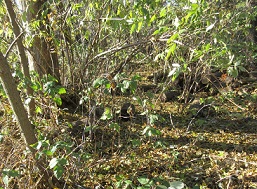
The buckthorn-free wooded area
Here is a list of alternatives to buckthorn
  • Dogwood (Cornus rugosa, Cornus alterifolia)
  • Serviceberry (Amelancher arborea, Amelanchier laevis)
  • Elderberry (Sambucus Canadensis)
  • Nannyberry (Viburnum lentago)
  • Chokeberry (Aronia melanocarpia)
  • Spice Bush (Lindera Benzoin)
  • Sumac (Rhus Glabra, Rhus Aromatica and similar)

The YouChoose App provides several great links to resources on native plants. If you have an android phone you can download the app from Google Play using the link on the right.

Do you want to share your experience? Send me an email at info@choosesustainable.org

Zizia Aurea (Golden Alexander)

Welcome to ChooseSustainable.org where we explore ways of living sustainably. In this series of short posts I present a native plant to encourage everybody to abandon our traditional way of gardening (basically a continuous fight against nature) and engage in sustainable gardening practices that nurture the ecosystem, sustain wildlife and foster biodiversity.

In this post I’ll talk about a native flowering plant of the carrot family: Zizia Aurea (Golden Alexander).

Golden Alexander tolerates dry soil and spreads quickly

Quick facts:

  • Zones:3-8
  • Bloom time: Spring (April-June)
  • Sun: Sunny to part sunny
  • Soil Moisture: Medium, Dry
  • Aggressive: YES
  • Front yard: YES
  • Height: 3’
  • Status: OK
  • Maintenance: MEDIUM (It spreads aggressively and may need deadheading)
  • Wildlife value: High

Wildlife connection: This plant attracts many insects, including small flies, bees, and bumblebees. It is also the host plant for a few varieties of the swallowtail butterflies and some varieties of moths.

I planted a few small golden alexanders some years ago in a dry patch of my backyard mostly hoping to attract the black swallowtail. My efforts have been rewarded as shown in the picture below.

The caterpillar of a black swallowtail feeds on golden alexander

The plants grew very quickly and took over the area that was assigned to them. In addition they appear to expand aggressively through reseeding, for this reason some effort to keep them in check is required.

The green leaves emerge in early spring and by mid-May the plant is in full bloom providing early food to many insects. The yellow flowers are fairly large and even from far away the plant has a nice full appearance. After the bloom is over the leaves last through the summer. I usually cut them back in late summer if they grow too much.

Flowers of golden alexander

If you have a rough patch in your yard that you want to fill up quickly this plant is a good choice. It may be possible to grow it from seeds, although I never tried. The plant is hardy, we have been in a drought for 2 years and it seems to do just fine. Because golden alexander is quite aggressive, I suggest to provide it with its own space. Additionally, one can deadhead the flowers before seeds are released .

Golden alexander attracts black swallowtail butterflies

Please make sure to purchase native flowers from nurseries that don’t use neonicotinoids and look out for the full botanical name to avoid cultivars.

Would you like to talk about a native plant in your backyard? Please send me your post at info@choosesustainable.org

If you liked this post please share it!