Baked mixed roots

Sustainability tips:

This recipe requires a variety of roots. I wasn’t familiar with some of them, but have been pleasantly surprised. They are actually quite easy to make. One can try different roots, I am sure they will be just as good as those listed here.

Useful things to have ready
  • I suggest to boil some of the roots to make them just a little soft before baking them in the oven.

Preparation time: 15 minutes +30 minutes for baking

Ingredients (3-4 people)

  • 1 Parsnip
  • 1 Red Beet
  • 1 Turnip
  • 1-2 Carrots
  • 1 Taro root
  • 2-3 tablespoons of olive oil
  • Salt
  • Parsley (optional)

Procedure

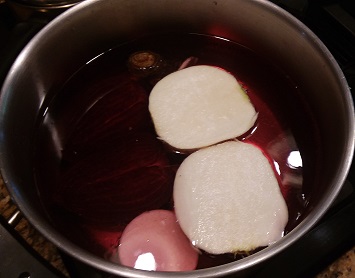
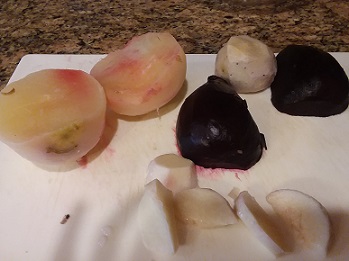
  • Cut the taro, turnip and beet and boil them with little salt just enough to soften them (10 minutes).
Boil roots until slightly tender
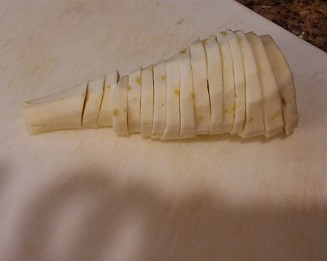
  • Meanwhile peel and slice the turnip
Sliced turnip
  • When the roots are soft enough to be peeled drain them, place them under cold water and peel them when cold.
  • Peel the carrots
Slice the peeled roots in thin slices

  • Place in an oven pan, dress with olive oil, salt and parsely and place in the oven at 400 degrees F
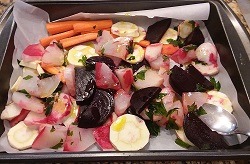
  • Ready to go in the oven
    • After about half hour the vegetables should be ready. They can accompany a dish of vegetarian sausage or veggie chicken
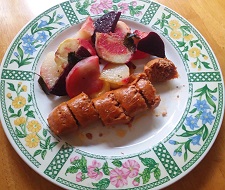
    Baked roots with meatless sausage

    Are we what we eat?

    Welcome to YouChoose, a blog where we explore ways of living sustainably. This week I would like to share some thoughts about food and meat consumption.

    Meat consumption drives deforestation in two ways: 1. The forest is cleared to make room for cattle pastures and 2. The forest is replaced by large-scale soy plantations to be sold as food for cattle. Even in the USA almost half of the agricultural land is used to grow crop for cattle feeding. This has led to the destruction and near extinction of the great American Prairies and the entire ecosystem that depended on them, of which we’ll talk in another post.

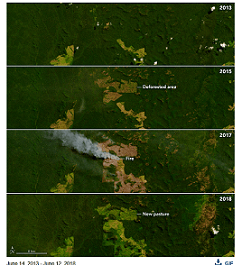
    In the above image (https://earthobservatory.nasa.gov) the progressive deforestation of a large area for cattle pasture between 2013 and 2018 is captured in satellite images.

    I think the German philosopher Ludwig Feuerbach (1804-1872) was right when he declared that “Man is what he eats.” Turning upside down Feuerbach’s Marxist materialism it seems that what we eat is at the core of our identity and it is a very difficult part of us to change. Perhaps for this reason advocating the reduction in consumption of meat and animal products to save the Earth is not a popular topic. What we eat is an essential element of our culture and of the way we perceive ourselves as a species and as part of social groups.

    A long time ago I decided to stop eating meat. This decision was very personal, it had nothing to do with the environment or sustainability, it was more part of a spiritual path that helped me find my own place in the world. As a result I had to face an unexpected wave of hostility from my family. There was no family meeting in which I didn’t have to explain, defend, and justify myself. I noticed that people took this choice almost as a personal offense, an act of defiance, a refusal of cultural and social norms. However, even in my own culture, in the past, meat consumption was limited to special occasions. It has been only in recent years that meat has become part of the daily diet with bad consequences for animal welfare and for the environment.

    For the last 23 years I have worked on eliminating meat entirely from my diet and on cutting back on animal products in general, including fish, eggs, milk, and cheese. Cumulatively animal products constitute now less than 3% of my diet and meat has been entirely absent for about 20 years. I am far from perfect, but it has been a continuous improvement. By substantially reducing the amount of animal products, I am also in the position to purchase products that are more sustainable, which sometime means more expensive.

    Recently there has been more awareness of the environmental impact of meat consumption and a plant-based diet is becoming more acceptable, still meat consumption is on the rise. Today we know that reducing meat and animal products is one of the most important actions we can take to reduce and stop deforestation, pollution, and degradation of the environment.

    I would like to invite everybody to gradually reduce meat and animal product consumption to a minimum. It is important not to set expectations too high, it is easy to quickly run out of food choices and give up. Gradually one can try new grains, legumes, roots, and vegetables. The possibilities are endless. One doesn’t have to become a perfect vegan overnight. It is more important to become conscious consumers and develop our own path to sustainability, even veganism doesn’t necessarily mean 100% sustainable.

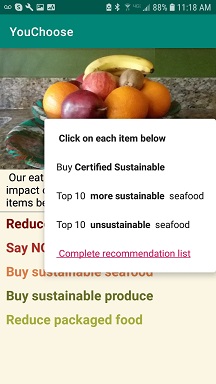
    The YouChoose app provides several links and information on global food issues and lists of sustainable and unsustainable foods including fish and vegetables, hopefully the information is useful to get started.

    Here are a few more suggestions to help getting started:

    • Be firm in the resolve, changing food habits is not easy. Please don’t give up
    • Set one reachable goal at a time. For example one meat-free day a week to start and progress from there
    • Buy unknown vegetables, grains, legumes and look them up at home. You will be surprised of how many pleasant discoveries you will make
    • Make a point to try one new grain/cereal (millet, barley, black rice, farro)
    • Make a point to try one new legume (yellow peas, chick peas, green lentils, mung beans, kidney beans, brown lentils)
    • Try different recipes for the same vegetable
    • Cook ahead, sometime you can boil the legumes ahead and keep them ready in the refrigerator

    In this blog there is a recipe section where I share meat-free recipes to help out. If you want to share your sustainable recipes to help others, I’ll be glad to post them in this blog.

    Do you want to share your progress on eliminating meat from your diet? Send me an email at info@choosesustainable.org and I’ll add it to this blog.

    Prunus serotina (Black cherry)

    Welcome to ChooseSustainable.org where we explore ways of living sustainably. In this series of short posts I present a native plant to encourage everybody to abandon our traditional way of gardening (basically a continuous fight against nature) and engage in sustainable gardening practices that nurture the ecosystem, sustain wildlife, and foster biodiversity.

    In this post I’ll talk about a large cherry tree: Prunus Serotina (Black Cherry).

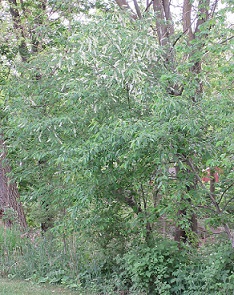
    A young black cherry in my backyard. Mature trees grow up to 60′-80′ (18-25 m).

    Quick facts:

    • Zones:3-7
    • Bloom time: Early spring (Apr-May)
    • Sun: Sunny area to shade
    • Soil Moisture: Wet-dry
    • Aggressive: NO
    • Front yard: YES
    • Height: (60-80’)
    • Status: OK
    • Maintenance: NONE
    • Wildlife value: Very High

    Wildlife connection: A host of insects, birds and mammals depend on this tree for survival. The early flowers provide food for many species of bees and bumblebees, along with smaller insects. The leaves provide food for the caterpillars of several butterflies and moths and for a large variety of beetles. The fruits are extremely important for birds and mammals such as foxes, raccoons, opossums, chipmunks and squirrels.

    I consider myself very lucky because I had a large black cherry in my yard. The tree was able to survive the invasive buckthorn and, after the buckthorn was cleared, two new small trees emerged. The large tree died last year, but the young trees are growing fast.

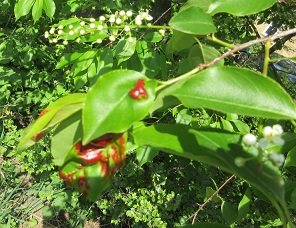
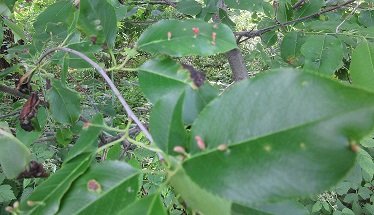
    The leaves of this tree are bright green and shiny. If you look at them up close you will notice that many leaves have bumps and holes. There is no need to worry, it just means that the tree is serving its purpose and it is being used by insects, as it should be.

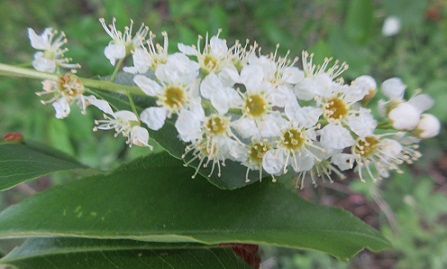
    In mid spring (mid to late May in my yard) the tree blossoms with nice white flowers that unfortunately don’t last very long, perhaps 2-3 weeks. In summer the flowers are replaced by small black cherries that look more like berries. It is hard to catch a glimpse of them as they quickly disappear, eaten by birds.

    The flowers of black cherry in mid-late May

    The importance of this tree to the ecosystem is hard to overstate and it is on the same level as the oak’s. Both trees provide to the essential needs of a large number of species. If you do have some room in your yard and are thinking of planting a tree, Prunus serotina is an excellent choice for conservation.

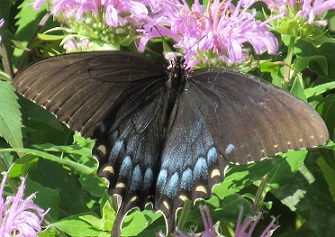
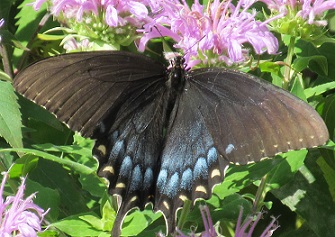
    The tiger swallowtail is just one of the many creatures that rely on black cherry for survival. I wonder if this one was born on my tree

    Please make sure to purchase native flowers from nurseries that don’t use neonicotinoids and look out for the full botanical name to avoid cultivars. The YouChoose App provides resources and several links to useful sites for sustainable gardening.

    Would you like to talk about a native plant in your backyard? Please send me your post at info@choosesustainable.org and if you liked this post please share it with others.

    Sprouted Mung Beans (Green Gram)

    Sustainability tips:

    This recipe requires a few spices that are needed to add some extra flavor to the beans. You can adjust the ingredients to suit your taste. The recipe is very sustainable, it has only few ingredients and legumes are among the most sustainable crops. You don’t have to sprout the beans necessarily, they can also be cooked as they are. Below are some additional tips to go more sustainable for those who have the time and availability .

    Ingredient

    Onions

    More Sustainable

    No plastic

    Less Sustainable

    Plastic bag

    Useful things to have ready

    Mung beans need about 48 hours to sprout. Once cooked they also make an excellent lunch or even a snack.

    Preparation time: 48 hours to sprout the beans, 20 minutes to boil, 10 minutes to cook.

    Ingredients (3-4 people)

    • Mung beans (2 fistful per person)
    • Two tablespoon of onions chopped in small pieces
    • 1 garlic clove smashed (optional)
    • 1/2 teaspoon turmeric
    • Red chili (optional)
    • 1/2 teaspoon garam masala (or other spice, optional)
    • 1/2 teaspoon mustard seeds
    • 1/2 teaspoon cumin seeds
    • 1 tablespoon of roasted peanuts (optional)
    • Salt
    • One tablespoon of vegetable oil

    Procedure

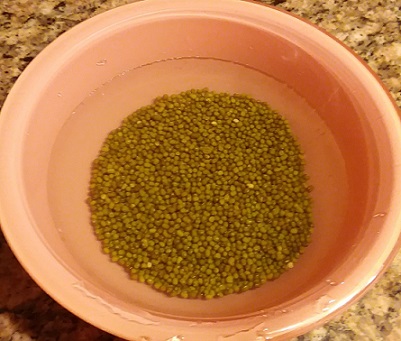
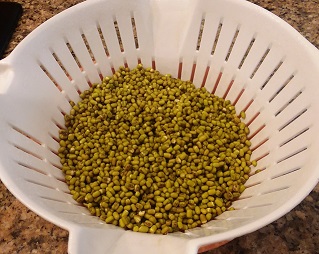
    1. Rinse the mung beans and soak for at least 8 hrs in water.
    2. Drain and rinse the beans in a colander
    3. Place a plate under the colander and store the beans in a dark place (no need to wrap in a cloth or to keep in a closed lid container)
    4. Every about 8 hours take them out, rinse them and put them back in the dark
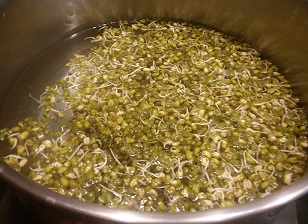
    • The beans will start sprouting after about 8 hours
    • When they are fully sprouted place them in salty water and bring to a gentle boil
    • Boil the beans for about 15 minutes or until tender and drain
    • Heat the vegetable oil
    • Add cumin seeds and mustard seeds
    • Add onions and cook for a few minutes
    • Add red chili, turmeric, garam masala (or spices of your choice)
    • Add beans and salt
    • Add peanuts (optional)

    You can accompany this with green vegetables or rice

    A palm oil free life: Is it possible?

    Welcome to YouChoose, a blog where we explore ways of living sustainably. This week I would like to talk about achieving a palm oil-free life.

    Avoiding palm oil is imperative to stop deforestation. It is also one of the most difficult tasks when transitioning to a sustainable lifestyle. Palm oil was a relatively unknown ingredient until a few decades ago, but now it has become one of the most pervasive components in the mass-produced products we buy every day.

    Palm oil is found in almost everything we eat: cookies, crackers, candies, spreads, jellies, cereals, and packaged products. It is also found in many house products such as laundry soaps, and in personal care products such as shampoos, soaps, conditioners, lotions, lipsticks, creams, cosmetics, and toothpaste.

    Occasionally we hear halfhearted declarations from some world leader about reducing the import of products that are responsible for deforestation, however, after doing research for the YouChoose App, I learned one important thing: If I wanted to find out who was responsible for the extensive deforestation of the past few decades, the decline in biodiversity, and the extinction of primates I needed to look no farther than the mirror.

    The high and growing demand for this cheap oil by multinational corporations has led to widespread destruction of rain forests in South East Asia and is bringing primates and other species to the verge of extinction. These rain forests are cleared usually by setting them on fire and are replaced with mono-culture plantations of palm trees (which are not a native species to that region) to produce palm oil.

    I checked the products in my house, in the pantry, in the bathrooms and kitchen and found out that most of them indeed contained (explicitly listed or hidden behind other names) ingredients that are derived from palm oil.

    Look at the ingredients of every packaged item you want to purchase

    Cleaning and personal care products don’t list the ingredient as palm oil, but hide it behind the names of the chemical compound derived from it. The YouChoose App provides a list of chemical compound names that usually indicate the presence of palm oil.

    A common skin-care product found in convenience stores. Can you spot the palm oil?

    I really had to take a hard look at myself, which is never easy to do. I could no longer blame others for my doing. In that painful moment of awakening, I decided to embark on a journey to free myself of palm oil.

    Here is a list of actions we can take to eliminate or substantially reduce our dependence on palm oil. Each action in itself is a journey and will be discussed in separate posts.

    • Be firm in our resolve, this is a very difficult path, but we shouldn’t doubt that it is worth pursuing.
    • Read ingredients of every food item at the grocery store. Palm oil is found in the most unexpected places.
    • Read ingredients of personal care products and avoid those that are derived from palm oil. A list is provided in the YouChoose App and it will also be provided in a following post.
    • Read ingredients of house cleaning products and avoid those that include palm oil.
    • Read ingredients of beauty and cosmetic products and avoid those with palm oil. A list of these is provided in the YouChoose App and it will be provided in a following post.
    • Don’t be fooled by “vegan”, “green”, and “eco” labels or by statements from corporations on how they plan to make their palm oil sustainable by 2025 or 2030. These are empty words that only betray the callousness of these enterprises.

    After you go through this list you will discover that there aren’t many products you can buy in stores and, if you are brave enough, your journey will begin. It will involve giving up things you like, abandoning easy choices, and probably some discussions with your friends and family.

    It is also important to remember that not all palm oil is destructive, there are many small companies that source their palm oil from places were the plant Elaeis Guineensis is native (mostly West Africa) and grown responsibly. These are not the major brands found in big store shelves. Before purchasing products with this ingredient it’s important to check with the company to see where and how they source their ingredients and purchase only if the answer is satisfactory.

    To answer our initial question: Is a palm oil free life possible? The answer is Yes, but it’s not easy. Here is one topic where doing the right thing involves choosing the narrow path. I’ll share my progress in following posts. The YouChoose App provides links and resources with information on this topic.

    Labels like this are unfortunately rare

    Do you want to share your progress on eliminating palm oil from you shopping list? Send me an email at info@choosesustainable.org

    Why we should remove invasive plants

    Welcome to YouChoose, a blog about individual climate action. This week I would like to talk about invasive plants and why we should remove them from our backyards.

    In this post we’ll focus on buckthorn, honeysuckle, and garlic mustard, of which I have extensive experience, however this same argument can apply to other invasive plants in other regions.

    Because my property borders with a neighboring subdivision, one side of the yard was left wooded presumably as a delimiter between the subdivisions. The area was infested with buckthorn, honeysuckle, and garlic mustard. These plants had created a thick border between the two properties. Honestly I wasn’t aware of their devastating effects on the native oaks. For this reason I left them unchecked for many years, thinking that they provided a nice thick screening, until I realized that I was contributing to the destruction of Illinois ecosystem.

    After the offenders were removed other plants could grow, such as the elderberry that still provides a nice screening between the properties in addition to having a high value for wildlife.

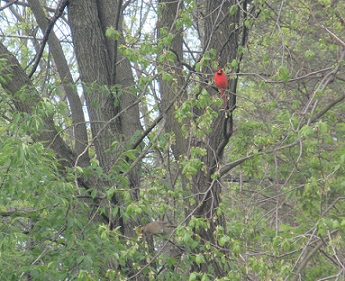
    A couple of red cardinals enjoys the buckthorn-free wooded area in the backyard. Can you spot the female?

    Unfortunately my yard was nothing exceptional, I see a lot of buckthorn left between backyards and between backyards and roads. Therefore, let’s first review here the reasons why it is important that we do our part and remove these plants.

    Garlic mustard (alliaria petiolata)
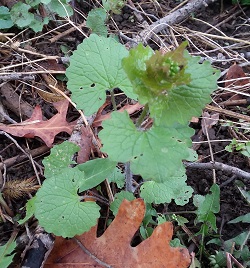
    Here is a small garlic mustard plant in early spring.

    Garlic mustard is an aggressive invasive herb imported from Eurasia. It has a two-year lifecycle and it spreads aggressively in wooded area. It can quickly occupy large areas of a forest and it does not allow other native plants to germinate. For these reasons it is responsible for the decline in population of many woodland species.

    Buckthorn (Rhamnus cathartica)
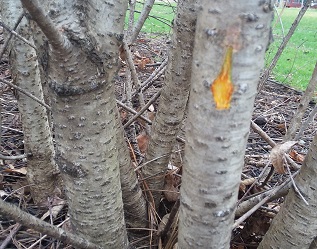
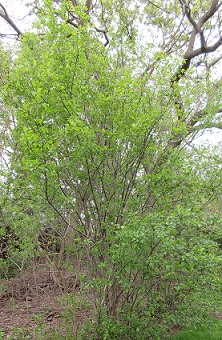
    Buckthorn plant

    Buckthorn is an aggressive shrub originating from Europe. It quickly spreads in shaded areas. Leaves are developed early in the season and they last until late fall, thereby casting a shade that doesn’t allow sunshine to reach the younger oaks. The emergence of early leaves impacts the bloom of spring ephemerals. In addition these plants grow densely, reducing the growth and survival of native shrubs and trees.

    Buckthorn affects the chemical composition of the soil making it inhospitable to other plants. The plant produces thousands of seeds that are also spread to remote areas by birds. The larger impact is the destruction of oak forests and the entire ecosystem that depends on them.

    Honeysuckle (Lonicera family)
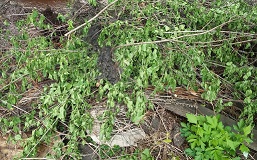
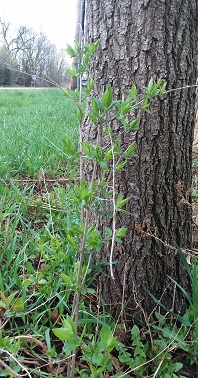
    Honeysuckle plant

    Just like buckthorn honeysuckle is a fast- growing shrub or vine from Eurasia. It has a devastating effect on the forests of the Midwest because it spreads quickly, grows leaves early and doesn’t allow other plants to emerge. I have first-hand experience of the infesting capability of this plant which is in my opinion worse than that of buckthorn.

    Other regions may have different invasive species, however their impact on the ecosystem is similar. Wherever you are, you should research whether invasive plants are present in your yard. If you do have them, but are hesitant (as I was) to remove them because you like the screening or the look they provide, I strongly encourage you to go ahead and replace them with native shrubs. The damages produced by these foreign species far outweigh the few advantages that they may procure.

    By removing these invasive species from your yard, you will be doing a great service to the ecosystem and to our Earth and by replacing them with native species you will provide food and shelter to many creatures.
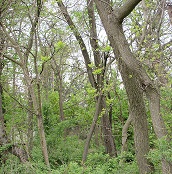
    Here is a list of alternatives to buckthorn
    • Dogwood (Cornus rugosa, Cornus alterifolia)
    • Serviceberry (Amelancher arborea, Amelanchier laevis)
    • Elderberry (Sambucus Canadensis)
    • Nannyberry (Viburnum lentago)
    • Chokeberry (Aronia melanocarpia)
    • Spice Bush (Lindera Benzoin)
    • Sumac (Rhus Glabra, Rhus Aromatica and similar)

    The YouChoose App provides several great links to resources on native plants. If you have an android phone you can download the app from Google Play using the link on the right.

     In the next post we’ll discuss identification and removal techniques.

    Do you want to share your experience? Send me an email at info@choosesustainable.org
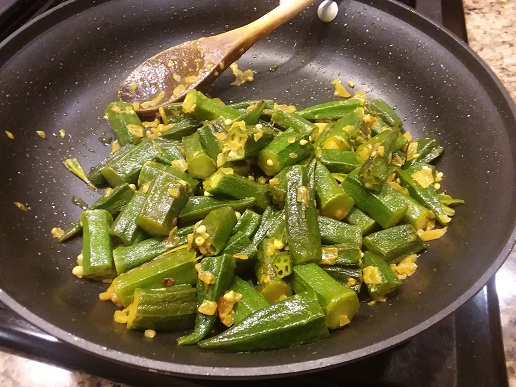
    Okra with turmeric

    Sustainability tips:

    This is a very quick recipe with only three ingredients: okra, turmeric, and onion. It is a very nice side dish that can served with veggie burgers or rice. Below are some additional tips to go more sustainable for those who have the time and availability .

    Ingredient
    More Sustainable
    Less Sustainable

    Okra
    Onion

    Fresh
    No plastic

    Frozen/plastic bag
    Plastic bag

    Preparation time: 15-20 minutes

    Ingredients (3-4 people)

    • 1 pound (~450 g) of okra
    • 1/2 onion sliced in small pieces
    • One table spoon of vegetable oil
    • Half teaspoon of red chili pepper (optional)
    • Salt
    • Half teaspoon of turmeric powder

    Procedure

    1. Wash the fresh okra
    2. Cut the okra in medium pieces of about 1 inch
    3. In a pan heat the oil
    4. Add sliced onion
    5. Add red chili
    6. Cook a few minutes until the onion is golden
    7. Add turmeric and cook one minute
    • Add okra and cook on medium heat until soft but not slimy (about 10-15 minutes)
    • Add salt if necessary

    Start a native garden: Motivation

    Welcome to YouChoose, a blog where we explore ways of living sustainably. This week I would like to share the first steps we can take towards sustainable gardening. There are many topics to be discussed on this subject and I plan to share several postings about my journey to achieve a 100% sustainable backyard.

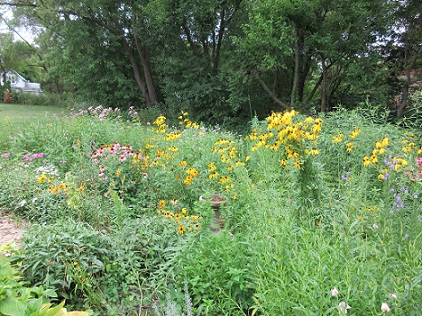
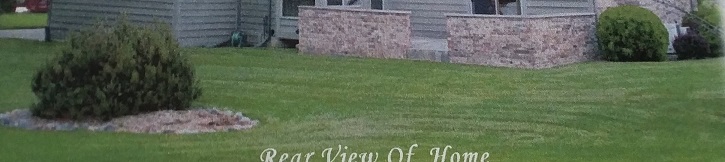
    The focus of this post is motivation. It is important to be confident that our efforts make a difference. My experience bears witness to this fact: I have seen my backyard quickly transform from a lawn wasteland to an ecosystem full of life.

    After-A part of the tall prairie section in my backyard
    Before-My backyard as it was with the traditional suburban landscape

    Here is just a quick overview, we’ll go into the details in future posts.

    QUICK TIPS TO START – STEPS to DO

    • Be motivated and be sure that your efforts make a difference
    • Don’t be overwhelmed; small steps go a long way
    • Remove invasive plants (if any)
    • Reduce the amount of lawn in the yard
    • Plant native forbs and shrubs
    • Provide wildlife with places to live and shelter
    • Plant native trees
    • Provide water

    QUICK TIPS TO START – things to AVOID

    • Being obsessed with lawn appearance
    • Being afraid of making mistakes
    • Using herbicides or pre-emergent chemicals
    • Using pesticides
    • Collecting and disposing of leaves

    My neighborhood is a typical Midwest suburban neighborhood with single family homes surrounded by yards landscaped with lawn (a lot of it) and mulched areas planted with evergreens, roses, and plants readily available at general home improvement stores or nurseries. As a foreigner in a foreign land my initial efforts were devolved to maintaining what was found. Therefore, I joined the chorus, hired a lawn maintenance company to take care of the lawn and visited local nurseries or whatever was nearby to purchase familiar plants: roses, azaleas, peony, etc. Plant diseases or parasites were treated with chemicals recommended by the nurseries and, occasionally, a mosquito treatment kept the yard free of bugs.

    It is likely that my experience mirrors the one of many homeowners. It was only later that I realized that the weed-free, picture-perfect look of the suburban homes is achieved at a very high environmental cost. The perfect lawn is maintained by pouring herbicides and fertilizers, in addition to constant mowing. The weed-free mulched areas are loaded with pre-emergent chemicals, and the bug-free backyard requires the use of non-selective pesticides that have repercussions on the entire food chain of the creatures living (or better trying to survive) in our backyards.

    The eye opener for me came one day when I was going for a walk in the neighborhood and came across a road that was developed on one side and undeveloped on the other. The developed side had new homes surrounded by a luscious lawn of an intense green. The mulched areas were planted with flowers of almost a neon color that matched some of the house details, nothing was out of place, the whole view was studied to the detail. The undeveloped side in the front was filled with milkweed and other tall grasses and had the messy look of the summer prairie. When I stopped and listened, the developed part was dead silent, not a buzz to be heard, not a bug to be seen; the undeveloped side was a concert of sounds and voices of creatures living there.  This was when the realization came to me, that my move into a suburban acre was forcing all the other creatures living there to move out or die. I was depriving many species of food and shelter and was poisoning the soil and water.

    Since that day my yard has changed very much and it is still an ongoing effort. I have also become addicted to bugs and can’t stop taking pictures of them and being amazed at their shapes and colors.

    Are you ready to start the transition? Don’t wait and don’t be afraid of the messy look, there are wonderful native plants that are perfect for the front yard. My only regret is that I didn’t start earlier. It takes about 3 growing seasons to go from nothing to an initial blooming backyard.

    In a next post we’ll discuss the first step: How to identify and remove invasive plants.

    Do you want to share your motivation for starting a native gardening? Send me an email at info@choosesustainable.org

    Amelanchier Arborea (Downy Serviceberry)

    Welcome to ChooseSustainable.org where we explore ways of living sustainably. In this series of short posts I present a native plant to encourage everybody to abandon our traditional way of gardening (basically a continuous fight against nature) and engage in sustainable gardening practices that nurture the ecosystem, sustain wildlife and foster biodiversity.

    In this post I’ll talk about a small tree I planted in my yard a few years ago: Amelanchier Arborea (Downy Serviceberry).

    Quick facts:

    • Zones:4-9
    • Bloom time: Early spring (March-May)
    • Sun: Sunny area to shade
    • Soil Moisture: Medium, Wet
    • Aggressive: NO
    • Front yard: YES
    • Height: (15-25’) But it can vary
    • Status: OK
    • Maintenance: NONE
    • Wildlife value: High

    Wildlife connection: The trunk, flowers, leaves, and fruits of this plant are very important for wildlife. Serviceberry is the host plant to caterpillars of several butterflies and moths. Several other insects use this plant for their larvae. The flowers attract bees, honeybees, and other early insects and the berries are food to birds and small mammals.

    I planted a very small serviceberry tree in my backyard several years ago. Not being very familiar with the plant I placed it in a location where it was unhappy. Thinking in retrospect, the soil was probably too dry. Although the plant is tolerant of a wide range of soil moisture it prefers moist and well drained soil.

    After waiting for a few seasons I decided to transplant it to a different location. Since then the tree has been growing better and this year it bloomed for the first time.

    If you are looking for a small tree, Serviceberry is a very good choice. Its size makes it suitable for small yards but it can be a nice decorative addition to a big yard as well. It provides early spring flowers, fruits, and foliage color in fall and it seems fairly low maintenance. The spring flowers are particularly important for early bees, when other flowers are still not available.

    Please make sure to purchase native flowers from nurseries that don’t use neonicotinoids and look out for the full botanical name to avoid cultivars. Contact me for suggestions on where to buy.

    Would you like to talk about a native plant in your backyard? Please send me your post at info@choosesustainable.org
    Happy Earth Day

    Happy Earth Day to all!

    Remember that saving our Earth starts at home with our everyday actions. Please don’t doubt for a second that even small changes in our habits make a difference.

    Here are 10 actions we can all take every day for our Earth:

    Save the Forests:

    1. Reduce meat consumption
    2. Refuse to buy products responsible for deforestation

    Save the Oceans:

    1. Refuse unsustainable seafood
    2. Stop using plastic bags
    3. Stop plastic bottles and single-use plastic as much as you can

    Save the Land:

    1. Stop using pesticides, herbicides, and fertilizers in your yard
    2. Reduce lawns and help restore native plants
    3. Reduce waste

    Save the climate

    1. Reduce use of electricity
    2. Buy local

    Get informed

    Want to know more? Download the YouChoose Android app from Google Play (free and no ads)

    I am sure there are many more things we can do. Please send me your thoughts at info@choosesustainable.org