Welcome to ChooseSustainable.org a blog about individual climate action. As usual, my October post is a reminder of the destructive properties of palm oil, a common ingredient in Halloween candies.
Palm oil is one of the most devastating commodities, driving deforestation, the extinction of countless species, and rampant human right abuses. Unfortunately it is found found in mass produced Halloween candies as well as other countless products. This Halloween take a few extra minutes and read the ingredients to avoid candies that contain palm oil.
Below is a link to a list of candies without palm oil. However it is always better to read the label to make sure ingredients haven’t changed.
Industrial deforestation, driven by palm oil demand, is one of the largest contributor to climate change and the largest driver of loss of biodiversity and mass extinction on the planet. Don’t finance the suffering of countless species with your money, this Halloween go palm oil free.
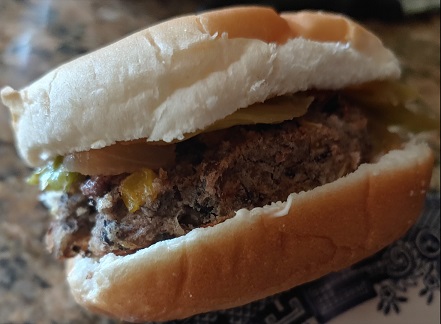
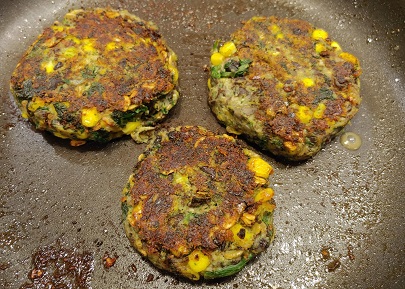
Empower yourself! Free yourself from meat dependency by switching to a diverse, plant-based diet. This delicious recipe is based on beans, a legume full of nutrients and a non-destructive crop that is good for the earth. Black and pinto beans used in this recipe are good for us and for the environment. With this recipe you can enjoy a delicious bean burger without resorting to highly processed food.
Sustainability tips:
Remember that supporting organic and sustainable produce goes a long way to reduce harmful pesticide use. I also suggest to avoid produce in plastic bags and to bring your own reusable bags to help reduce the amount of plastic dispersed in the environment. I can send you free cotton grocery and produce bags entirely upcycled from old fabric. Just contact me if you need any.
Useful things to have ready
Legumes are an important component of plant-based diets. You can purchase them canned or dry. Canned legumes are more practical because you can get away with soaking them however the variety is limited and I noticed that they have lately become expensive. I usually keep canned legumes but mostly buy them dry in bulk. If legumes become part of your regular diet you may want to purchase a pressure cooker. A good pressure cooker lasts a lifetime and is useful for many purposes.
For this recipe, rinse and soak the beans overnight (or about 7 hours). This step is NECESSARY. After soaking, discard the water and rinse. Beans in general need to be fully cooked in boiling water, possibly in a pressure cooker. This step is not necessary if using canned beans, however it is good to rinse canned beans before use.
Preparation time: about 30 minutes.
Ingredients (3-4 people)
One fistful of black beans per person
1 fistful of pinto beans
1/2 onion finely chopped
1 scallion or 1-2 spinach leaves (optional) chopped in small pieces
1-2 cloves of garlic mashed or chopped in small pieces
1-2 fistful of corn kernels
2-3 tablespoons of olive oil
red chili pepper (optional)
Salt
Procedure
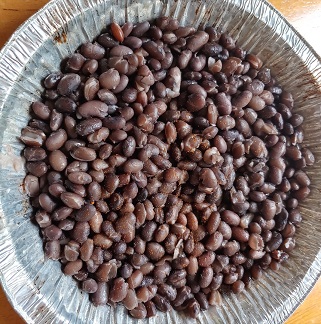
After soaking the beans for for at least 7 hours, drain, rinse and boil them until soft (about 13 minutes total time in a pressure cooker). This step is not necessary if you use canned beans.
Black and pinto beans, soaked and rinsed, ready to be cooked in pressure cooker
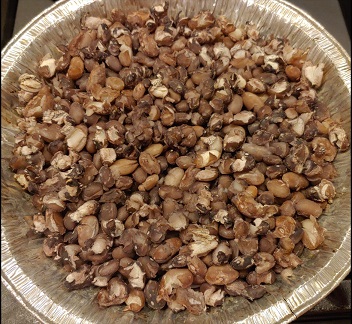
Place the cooked beans in an oven-safe plate, sprinkle them with salt and keep them in the oven at 375 degree F (190 C) for at least 15 minutes. This step removes the excess water so that they stick together once blended.
Boiled beans going into the ovenDried beans out of the oven
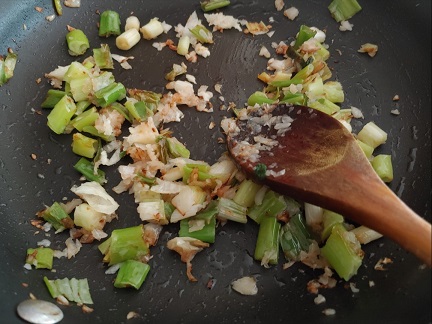
While the beans are in the oven sautee onion and garlic in a little oil until golden
Add chopped scallions (or spinach leaves) and cook until tender, if using spinach make sure to use only a few dry leaves to avoid adding moisture
Cook onion, garlic, and scallions until tender
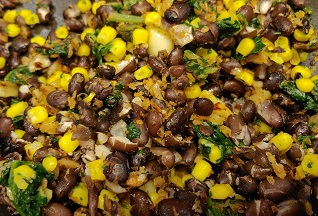
Add corn, cook until tender and then add the beans
Cook for a few minutes without adding any water
Add salt and red chilies (optional)
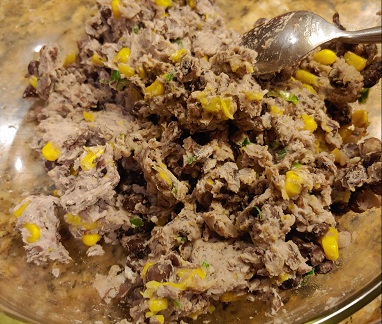
Place the ingredients in a cup and coarsely blend with an immersion blender, add one spoon of olive oil
Coarsely blend ingredients
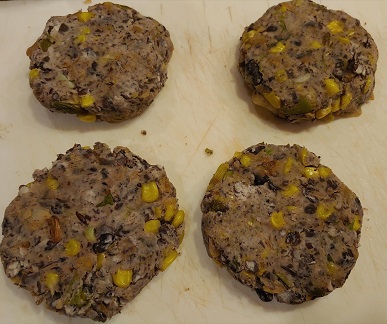
Prepare the burgers; they should stick without the need for a binder
Heat a skillet with a few drops of oil. Cook the burgers for a few minutes on each side.
Burgers ready to cookCook for a few minutes in a pan with very little oil
Enjoy your bean burger with any addition of your choice!
Enjoy!
Help reduce meat consumption! If you have a vegetarian recipe you would like to share please email me at info@choosesustainable.org and I’ll post it on this blog.
Still undecided? Read here about the destructive impact of the meat industry on forests.
The YouChoose App contains links and information about sustainable food choices with a searchable database of common food items.
Reduce meat consumption by switching to a diverse, plant-based diet. This delicious recipe is based on chickpeas, a legume full of nutrients and a non-destructive crop that is actually good for the Earth. This recipe is very similar to hummus, but it doesn’t use tahini.
Sustainability tips:
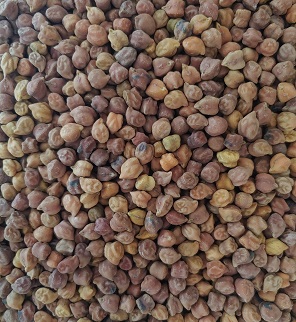
Chickpeas are a sustainable crop that requires little water, is low in calories and generally healthy. Black chickpeas are not always available in grocery stores, but they can be found in ethnic stores such as Indian grocery stores. The variety used here is more of a brown color. Regular chick peas can also be used for this recipe, however I recommend the black variety if available.
Remember that supporting organic and sustainable produce goes a long way to reduce harmful pesticide use. I also suggest to avoid produce in plastic bags and to bring your own reusable bags to help reduce the amount of plastic dispersed in the environment. I can send you free cotton grocery and produce bags entirely upcycled from old fabric. Just contact me if you need any.
Useful things to have ready
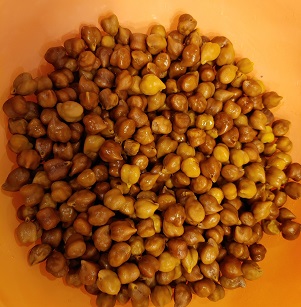
Rinse and soak the chickpeas overnight. Drain them and cook them in the pressure cooker until soft. In my pressure cooker it takes about 12 minutes.
These are the black chickpeas after they have been soaked and cooked
Preparation time: about 20 minutes
Ingredients (3-4 people)
Ingredients can be adjusted based on personal preferences. With the suggested proportions one gets a flavorful spread, but not too strong in garlic or pepper. One can also adjust the amount of oil to suit personal preferences.
3-4 fistful of black chickpeas
2-3 cloves of garlic
1/2 red pepper
1/2 teaspoon of cumin powder
Red chili (optional)
3 tablespoons of olive oil
1 tablespoon of lemon juice
3 tablespoon of water
Salt
Procedure
Rinse the soaked black chickpeas, drain them and cook them in the pressure cooker until soft.
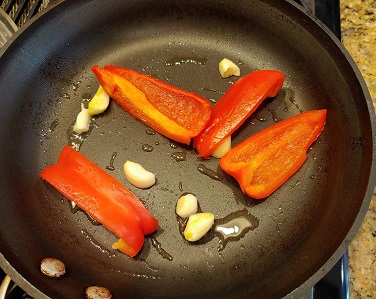
While the chickpeas are cooking, place a tablespoon of oil in a pan and roast the red pepper
Roast the garlic
Roast red pepper and garlic until soft
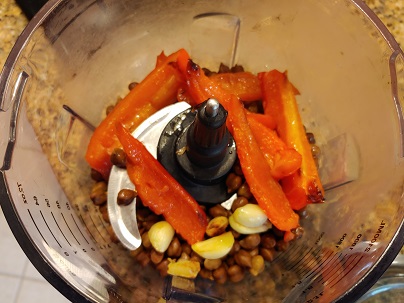
Place the cooked chickpeas in a food processor, a blender, or in a pot where you can blend them by hand
Blend all ingredients together
Add the roasted pepper and garlic
Add cumin powder, red chili, lemon juice, olive oil, salt, and enough water to blend (2-3 tablespoon of water).
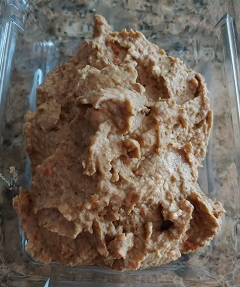
Blend until well smooth
Blend until the spread is smooth and creamy
You can eat this spread as appetizer or a snack, on crackers or bread, or with vegetables.
Ready!
Enjoy!
Did you like this recipe? Share it and spread the word.
Help reduce meat consumption! If you have a vegetarian recipe you would like to share please email me at info@choosesustainable.org and I’ll post it on this blog.
Still undecided? Read here about the destructive impact of the meat industry on forests.
Reduce meat consumption by switching to a diverse, plant-based diet. This delicious recipe is based on lentils, a legume full of nutrients and a non-destructive crop that is actually good for the earth.
Remember that supporting organic and sustainable produce goes a long way to reduce harmful pesticide use. I also suggest to avoid produce in plastic bags and to bring your own reusable bags to help reduce the amount of plastic dispersed in the environment. I can send you free cotton grocery and produce bags entirely upcycled from old fabric. Just contact me if you need any.
Useful things to have ready
Rinse and soak the lentils overnight. Drain the lentils and let them stay in a container, covered for about 2 days, rinsing and draining them at least once a day. On the second day the lentils will be sprouted.
I suggest to steam the sprouted lentils in the microwave or boil them for 5-10 minutes in lightly salted water. This will make them softer.
Soak lentils overnight or for ~ 7 hours
Preparation time: about 15 minutes plus 3 days to sprout the lentils
Ingredients (3-4 people)
Sprouted lentils (about one fistful of dry lentils per person)
1/2 onion finely chopped
1/2 teaspoon of turmeric
1 tablespoon of unsweetened shredded dry coconut (optional)
Crushed red chili (optional)
2-3 tablespoons of oil
Salt
Procedure
Rinse the soaked lentils, drain them and keep them in a pot with closed lid.
Check the lentils daily, making sure they don’t become too dry, you can rinse them and drain them once a day.
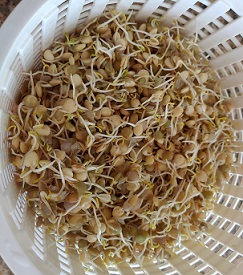
The lentils should sprout in about 2 days.
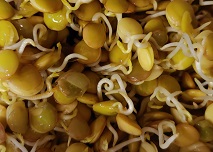
These are the sprouted lentils after about 2 days
Option 1: Place sprouted lentils in a pot, cover them with water, add a little salt and bring to a boil for about 10 minutes. This will soften them.
Option 2: Steam sprouted lentils in the microwave for 6-7 minutes.
Heat up the oil and add chopped onions.
Sautee onions until gold add turmeric and red chili (optional)
Sautee onions and turmeric
If desired you can add the coconut powder at this point and sautee for 2 minutes.
Optional step: Add coconut powder
Add steamed (or boiled) lentils and sautee for 5 minutes.
Ready!
Enjoy!
Help reduce meat consumption! If you have a vegetarian recipe you would like to share please email me at info@choosesustainable.org and I’ll post it on this blog.
Still undecided? Read here about the destructive impact of the meat industry on forests.
The YouChoose App contains links and information about sustainable food choices with a searchable database of common food items.
Welcome to YouChoose, a blog about individual climate action. We talked in previous posts about the importance of reducing the demand for palm oil. This week I would like to talk about food products that are more likely to contain palm oil.
It is a fact that, unless we stop buying, companies will keep deforesting.Avoiding palm oil is one of the actions we can take to stop deforestation. You will hear all kind of reasons why palm oil is actually good for the planet and how avoiding palm oil will do more harm than good. Don’t fall for the greenwashing. The skyrocketing demand for the cheap oil is fueled not by any necessity, but by an increase in demand for junk and fast food. The big conglomerates responsible for deforestation are also the biggest producers of junk food. Their palm oil suppliers are linked to human right violations, intimidation, and destruction of indigenous community. For this reason reducing the amount of junk and packaged food that we purchase is a fundamental step to invert the trend. When we purchase food containing or prepared with palm oil we are contributing to deforestation. Unfortunately there is no nice way to put this. Read here from Palm Oil Detectives how “sustainable palm oil” doesn’t really exist. It is just something invented to make consumers feel good and enable the continuous destruction of the rain forest.
Here is a list of foods where you are likely to find palm oil. Keep this in mind next time you go to the grocery store. I assure you that, after eliminating palm oil, my life hasn’t changed much, but my health and wallet may have actually improved.
Doughnuts: Fast food chains use palm oil for frying. I used to like doughnuts, but stopped buying them entirely and never looked back.
Candies: Almost all chocolate candies and bars in grocery stores contain palm oil. I used to buy some for my daughter when she was a kid or for Halloween. After realizing what I was doing, I stopped entirely purchasing them and lived happily everafter. I also noticed that, when I explained to my daughter the reason for it, she agreed and never asked for them anymore.
PopCorn: Please read the ingredients in microwave-ready popcorn packages and you will discover that all of them are made with palm oil.
Chocolate spreads: Products such as hazelnut spreads and sometime peanut butter spreads list palm oil among their ingredients.
Fast food, fried items, and hamburgers: Major fast food chains use palm oil for frying, especially in Asia, but also in the US. I know this is a little bit hard but limiting fast food as much as possible is important and not that depriving. It may actually be good for us.
Crackers, cereals, cookies, pancake mixes, soups, bread products: I read ingredients carefully and find palm oil in all these items. I invite you to do the same and look for available alternatives. There are few brands that don’t use palm oil.
Bakery products in grocery stores: A large percent of baked good in US grocery stores contains palm oil. In the grocery store where I shop, palm oil is found in almost all baked goods. I encourage you to check it out next time you shop and look for alternatives.
Frozen meals, ice creams, frozen waffles, and pancakes: Palm oil in ice cream? There are things I wouldn’t buy even if they were good for the environment.
Please share this post and do your part advocating a stop to palm oil consumption.
Reduce meat consumption by switching to a diverse, plant-based diet. This delicious recipe is based on farro, one ancient grain that, after being forgotten for sometime, is making a comeback. Farro was extremely popular in ancient Rome, and a staple food for the Roman legions. I use pearled farro that cooks faster, especially after soaking.
Farro can be used as a side dish, in salads, and I am discovering that it can be used as an alternative to rice.
Sustainability tips:
Organic farro is a sustainable crop that can be part of a diverse diet. Spinach can be loaded with pesticide therefore organic better. Remember that supporting organic and sustainable produce goes a long way to reduce harmful pesticide use. I also suggest to avoid produce in plastic bags and to bring your own reusable bags to help reduce the amount of plastic dispersed in the environment. I can send you free cotton grocery and produce bags entirely upcycled from old fabric. Just contact me if you need any.
Useful things to have ready
Rinse and soak the farro and kidney beans together for about 7 hours. Notice that it is not necessary to soak the pearled farro for so long, but soaking will reduce the cooking time and give a creamy consistency to the final dish. A great thing about this recipe is that it can be made as a soup or as a risotto-style dish.
Soak farro and beans overnight or for ~ 7 hours
Preparation time: about 30 minutes
Ingredients (3-4 people)
2 fistful of soaked farro per person
1 bunch of spinach (frozen spinach also works)
2-3 fistful of red kidney beans (soaked with farro for about 7 hours)
1 chopped tomato (I peel it but is not necessary)
half onion (if small) or 1/4 (if large) chopped in small pieces
1 garlic clove-mashed
Crushed red chili
1 carrot
2-3 spoons of olive oil
1 tablespoons of tomato paste (or tomato sauce)
Salt
Procedure
Wash the spinach carefully and chop them.
Wash and peel the carrot and tomato
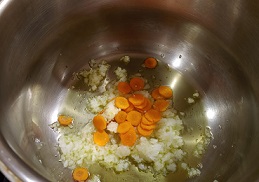
In a pressure cooker heat the oil, add chopped onion, mashed garlic, carrots, crushed chili, and cook for a few minutes on medium heat.
Add onion, garlic, and carrot to the hot oil
Add tomatoes, tomato paste, and spinach and let cook for 5 minutes
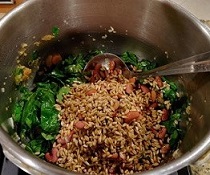
Add drained and rinsed farro and kidney beans
Add spinach, farro, and beans
For a soup add enough water to exceed the level of farro, for a risotto-like consistency add enough water to just cover the farro.
Close the lid and pressure cook for about 15 minutes from when it starts whistling.
Let the steam out and check consistency. You may need more time depending on the type of cooker and desired consistency.
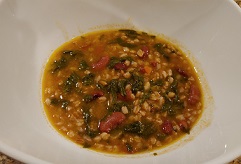
This is the risotto-like versionThis is the traditional soup
Enjoy!
Help reduce meat consumption! If you have a vegetarian recipe you would like to share please email me at info@choosesustainable.org and I’ll post it on this blog.
Still undecided? Read here about the destructive impact of the meat industry on forests.
The YouChoose App contains links and information about sustainable food choices with a searchable database of common food items.
This recipe seems complicated, but in reality is quite simple once you have familiarized yourself with millet. It took me a few tries to get the right way to cook millet. I’ll share here the basic cooking, you can try and see if it works for you.
Millet is a variety of whole grain that can be used in several dishes. It is a nice alternative to rice or couscous. If you have never tried it I suggest you give it a try. It doesn’t require soaking and cooks very quickly.
Sustainability tips:
Millet is a sustainable crop that requires less resources compared to other cereals. Diversifying our diet is also a great way to increase crop biodiversity. Please check out this link on millet crops.
The remaining ingredients for this recipe are quite basic and generally sustainable. Remember that supporting organic and sustainable produce goes a long way to reduce harmful pesticide use. I also suggest to avoid produce in plastic bags and to bring your own reusable bags to help reduce the amount of plastic dispersed in the environment.
Useful things to have ready
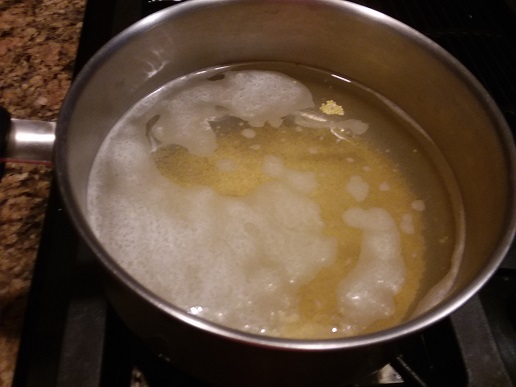
Cooked millet: I used to follow directions and cook the millet in little water letting the grain absorb the water slowly. However this preparation method resulted in a sticky blob of millet that was difficult to utilize. I therefore suggest the following method for the basic preparation:
Place millet in a bowl and rinse it several times draining the water with a fine mesh strainer (the grains are quite small).
Fill up a pot with water and add salt, water should be abundant compared to the amount of millet.
Add 1 fistful of millet per person (it grows a lot).
Bring the water and millet to a boil on a medium flame and let it boil until the millet is soft (about 10 minutes). The millet should be circulating in the pot.
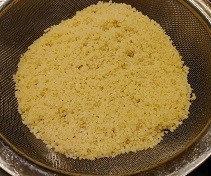
As soon as the millet is soft drain the water with a strainer and rinse the millet under cold running water, this will stop the cooking and leave the millet intact.
At this point you can store the millet in the refrigerator and use it later or proceed to this recipe or any other recipe.
Boil millet in abundant salty waterAs soon as the millet is soft drain it ad rinse in cold water
Preparation time: about 30 minutes
Ingredients (3-4 people)
1 large chopped tomato (I peel it but is not necessary)
half onion (if small) or 1/4 (if large) chopped in small pieces
4 zucchini (courgette)
2 scallions
1 garlic clove-mashed
2-3 spoons of olive oil
2 tablespoons of tomato paste (or sauce)
1 handful of capers and olives (optional)
Salt
Procedure
Cut zucchini in cylinders about 1 inch high and place them into a pot of water. Bring to a boil until the zucchini are softer, but not fully cooked (about 5-10 minutes).
Soft zucchini ready to be carved
Carve the zucchini removing the soft center and leaving the outer skin
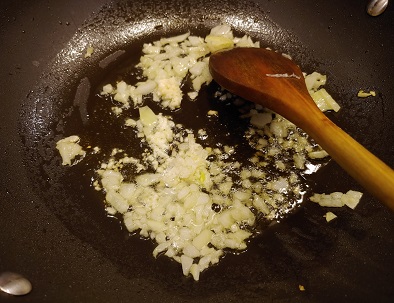
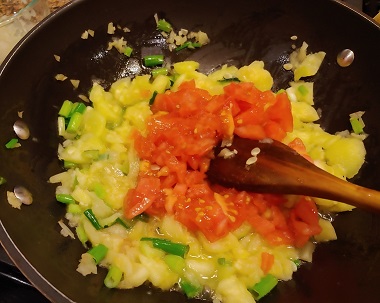
In a pot heat the oil, add chopped onions, mashed garlic and cook for a few minutes
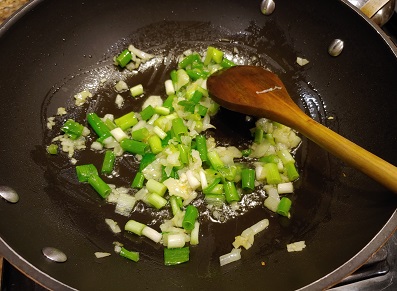
Add scallions
Add chopped onions and garlicAdd scallions
Add the zucchini pulp, chopped tomatoes, tomato paste, salt, olives and capers.
Cut the pulp in small piecesCombine all ingredients
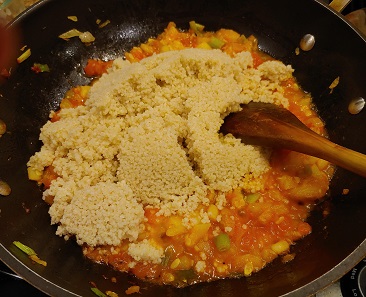
Cook 6-7 minutes until the tomatoes are well cooked, add the cooked millet and check the salt. The millet will quickly absorb any excess liquid.
Add millet to the mix
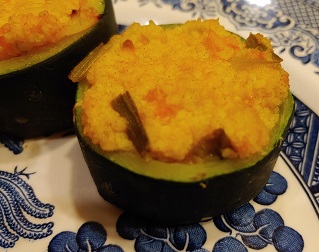
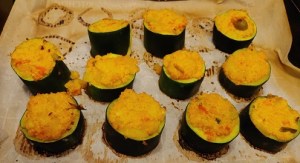
Place the empty shells on an oven pan and fill up with the millet.
Place in the oven for about 20 minutes
Bake at 400 F for about 20 minutes
Enjoy as a side dish or a nice appetizer!
Help reduce meat consumption! If you have a vegetarian recipe you would like to share please email me at info@choosesustainable.org and I’ll post it on this blog.
The YouChoose App contains links and information about sustainable food choices with a searchable database of common food items.
Welcome to YouChoose, a blog about sustainable living. In this post I wanted to share some great information provided by Ashok Nagella, MD, on the impact of a plant-based diet on our health and our planet. The intention is not to scare people off into a vegan diet, but rather to share a few good reasons to reduce our consumption of meat and animal ingredients to a minimum and make more room for a variety of plant-based food. The full set of slides can be found here.
Why is it important for our Earth that we reduce meat consumption?
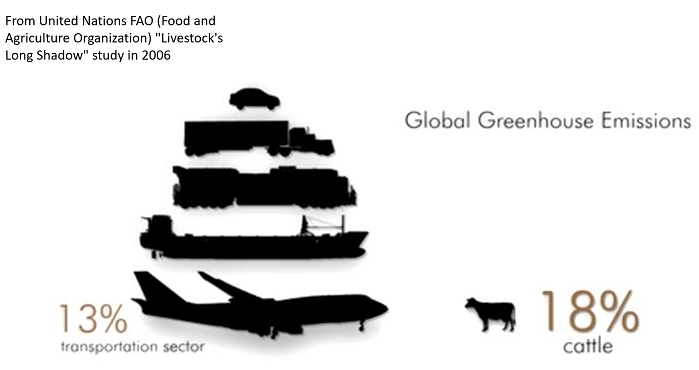
If it is true that a picture is worth a thousand words, then the following two images should speak for themselves.
Agriculture emissions (in green) constitute about one fourth of global emissions. A large portion of these are due to cattle and animal farming (website: drawdown.org)The animal industry alone is responsible for the same percentage of emissions as the entire transportation industry but with the additional damages of deforestation, loss of biodiversity, and enormous water consumption.
Electricity, agriculture, and industry are the largest sources of greenhouse gases. We, as individuals, can directly influence a few sectors, for example switching to electric vehicles, low consumption bulbs, and reducing the use of high consumption devices. The sector over which we can have the most effective impact is agriculture. In fact, emissions due to the cattle industry are higher than those due to the entire transportation sector. And it is not just greenhouse gases emissions, but also water consumption, because a great amount of water is necessary to raise, kill, and process animals.
Why is it important for Us to reduce meat consumption?
Check out these health benefits of a plant-based diet.
Significant increase in Fiber, Antioxidants, Omega 3 Fatty Acids, and Neurotransmitter Production
Significant reduction of Inflammation, saturated fat, and cholesterol
Increase in longevity while preventing cancer, heart disease, strokes, and dementia
Improvement in mood while reducing anxiety
Improvement in focus, attention, and memory
Often, we get frustrated about politicians not doing enough for the planet and the climate, at the same time feeling powerless and depressed. However, let’s think about this: We, as individuals, have complete control of what we eat. The greatest change we can make for our planet is also the one that requires the least effort and is good for us. We don’t have to wait for governments to take action on our behalf, we can take our own actions!
This is a simple recipe with few sustainable ingredients. It is quick and it also makes a delicious snack. It can also be served with a side of fresh cucumber and tomato salad.
Sustainability tips:
Green peas is a sustainable crop, especially if grown organically. Like all legumes peas don’t degrade the soil and are drought tolerant. Supporting organic and sustainable produce goes a long way to reduce harmful pesticide use and to help non destructive agriculture.Proteins in peas can be a valid alternative to planet destroying meat.
Useful things to have ready
Soak green peas for at least 8 hours before using.
Preparation time: 8 hours to soak the dry peas, 20 minutes to prepare.
Ingredients (3-4 people)
Dry green peas (2 fistful per person)
Two tablespoon of onions chopped in small pieces
1 garlic clove mashed (optional)
1/2 teaspoon salt (or to taste)
Red chili (optional)
Parsley (1 small bunch)
Bread crumbs
One tablespoon of vegetable oil to fry
One table spoon of olive oil
Procedure
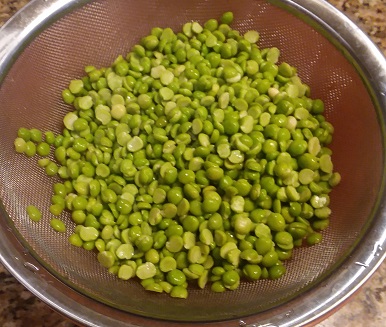
Rinse the dry peas and soak for at least 8 hrs in water.
Soaked dry peas
Chop the onions and garlic in small pieces (or mash the garlic)
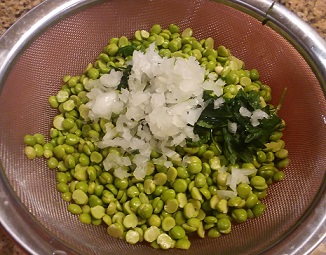
In a food processor add green peas, garlic, onions, parsley, salt, olive oil
Ingredients ready for food processor
Blend to produce a dense, smooth mix. If you do have a modern food processor this should come relatively easy. I have a very old blender so I need to add a little water to the mix.
Refrigerate for about 1 hour to make the mix dense
Make small patties and coat them with bread crumbs
Coat the patties with bread crumbs
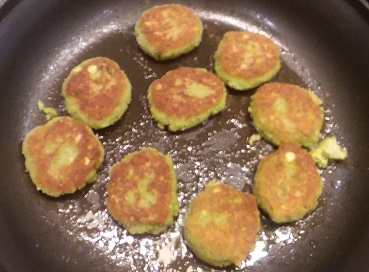
Fry in little oil or you can try to bake them (I never tried)
Fry in little oil
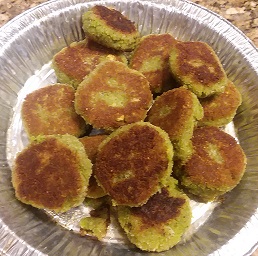
They make a nice appetizer, snack, or a main course with a side of salad
Dry peas fritters make a nice snack
Help reduce meat consumption! If you have a vegetarian recipe you would like to share please email me at info@choosesustainable.org and I’ll post it on this blog.If you like this recipe please share it!
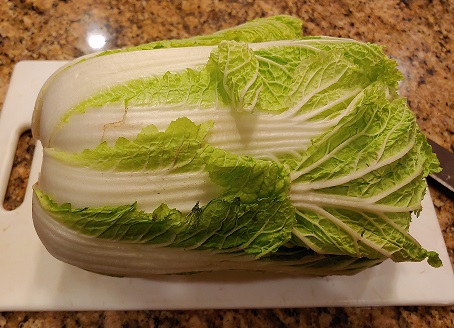
This recipe is very simple and I definitely recommend it if you have never tried Napa cabbage. It makes a delicious side dish that goes very well with vegetarian burgers or even rice. Like all other cabbage variety Napa cabbage is a food low on calories and high in health benefits.
Sustainability tips:
Cabbage is a sustainable crop, especially if grown organically. If you grow your own vegetables I think this cabbage is also fairly easy to grow at home. If you purchase vegetables supporting organic and sustainable produce goes a long way to reduce harmful pesticide use. I also suggest to avoid produce in plastic bags and to bring your own reusable bags to help reduce the amount of plastic dispersed in the environment.
How to clean and cut Napa cabbage
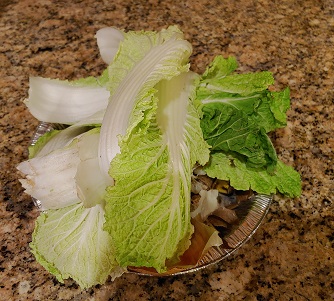
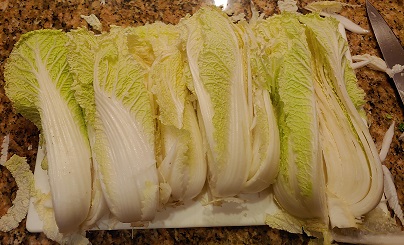
Napa cabbage is quite large, and almost all of it, except for the hardest part can be used. It is enough to remove the outer layer of leaves, cut the cabbage in fourths or eights by the length (4 or 8 pieces depending on the size) and rinse under running water. If you compost, make this a zero waste recipe, don’t trash the leaves of the cabbage, they make excellent compost material.
Reuse cabbage leaves in a compost or just in the yardCut the cabbage in 4 or 8 pieces
Preparation time: about 30 minutes
Ingredients (3-4 people)
1 Napa cabbage
3 garlic cloves
1 tablespoon of Dijon mustard
1/2 glass of olive oil
Juice of half lemon
salt
Procedure
Preheat oven at 420 F (~220 C)
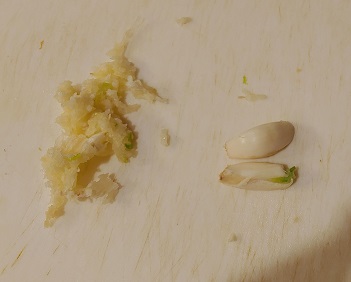
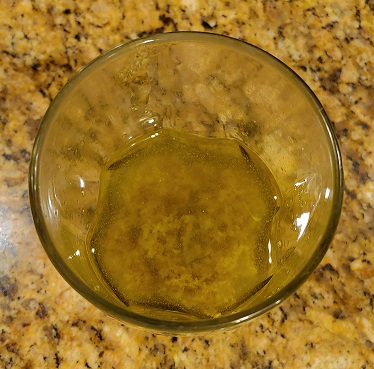
Combine Dijon mustard, mashed garlic, lemon juice and and olive oil
Garlic cloves can be mashed or kept wholeMake a condiment
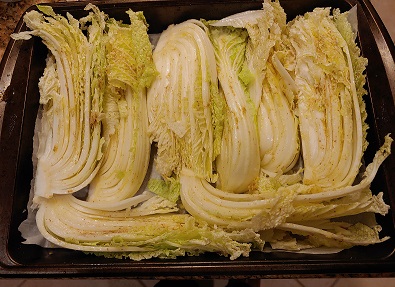
Place the cabbage in an oven pan and brush all sides with the oil
Add salt
Brush the cabbage with the oil and Dijon mustard mix
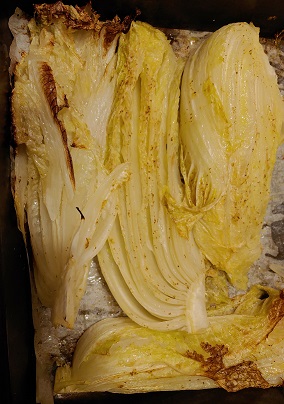
Place in the oven for about 20 minutes
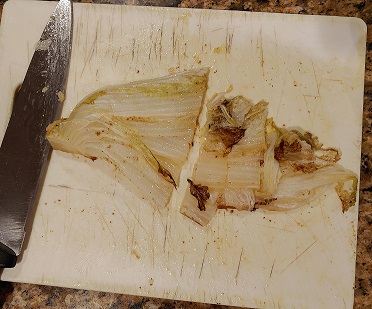
Roasted cabbageCut the tender part in smaller pieces
Once the cabbage is roasted pull it out of the oven and let cool for a few minutes
The end part of the leaves may still be hard so it is better to remove the end part and slice the tender leaves.
Your cabbage is ready to eat!
Help reduce meat consumption! If you have a vegetarian recipe you would like to share please email me at info@choosesustainable.org and I’ll post it on this blog.
If you like this recipe please share it!
The YouChoose App contains links and information about sustainable food choices with a searchable database of common food items.














 You Choose