This is a very popular recipe in my island of Sardinia (where I am from). It requires a variety of vegetables that are easy to find in any grocery store. I’ll post here all vegetables that are commonly used for this dish, however they can be changed depending on availability and what one likes. The trick for a delicious soup is to cut the vegetables in small pieces so their flavors blend nicely together.
Sustainability tips:
If you grow your own vegetables this is a great way to use them. You can also make the soup and freeze it for later use. If you purchase the vegetables supporting organic and sustainable produce goes a long way to reduce harmful pesticide use. I also suggest to avoid produce in plastic bags and to bring your own reusable bags to help reduce the amount of plastic dispersed in the environment.
Useful things to have ready
Important: If you decide to use dry legumes they should be soaked for 8-10 hours and cooked in advance because they take longer than the other vegetables to cook.
Most other vegetables, except potatoes can be peeled (if necessary) and chopped in advance so they are ready to use. I find it useful to keep chopped onions in the refrigerator.
Preparation time: about 30 minutes
Ingredients (3-4 people)
1 large tomato (I peel it but is not necessary)
half onion (if small) or 1/4 (if large) chopped in small pieces
1 zucchini (courgette)
1 small potato
2 fistful of green peas
half cup of green beans
5-6 cauliflower florets
1 carrot
1 celery stalk
half cup of chick peas or white beans (either previously cooked or canned)
2-3 tablespoons of tomato sauce or paste
Salt
One table spoon of vegetable oil
Procedure
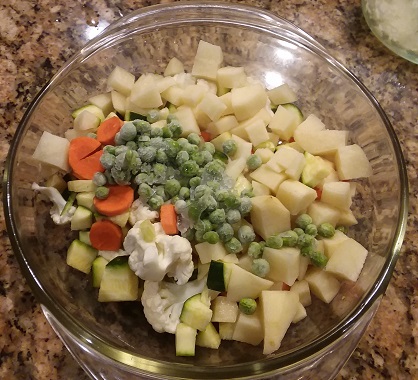
Wash all vegetables and chop them in small pieces
Chop vegetables in small pieces
In the pressure cooker add oil
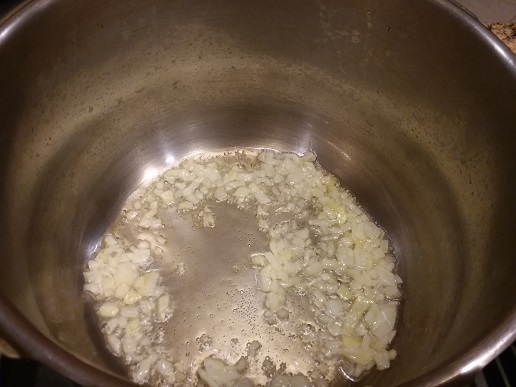
When the oil is hot add chopped onions
Add the onions to the hot oil and cook until golden
When the onion is golden add carrots and celery and cook 1-2 minutes
Add all other vegetables and stir for 2 minutes
Add the tomato sauce (or paste)
Add enough water to cover the vegetables and close the lid
Cook with pressure cooker for about 10 minutes from the time it starts whistling. If using a regular pot it will take a little bit longer, about 20 minutes
Turn off the flame and wait until the pressure is entirely gone
Open the lid and add the cooked beans or chickpeas
Cook additional 5 minutes
Add salt
Enjoy a delicious bowl of mixed vegetable soup
Help reduce meat consumption! If you have a vegetarian recipe you would like to share please email me at info@choosesustainable.org and I’ll post it on this blog.
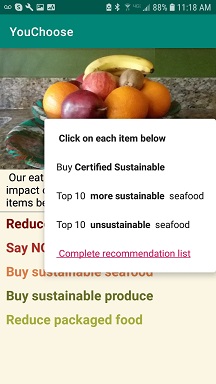
The YouChoose App contains links and information about sustainable food choices with a searchable database of common food items.
This recipe is a good alternative if one wants to entirely avoid animal products and still bake Halloween cookies. I have always made the traditional cookie recipe with butter, but I tried this for the first time and I was happy with the outcome. The cookies came out crunchy. The procedure is quite simple and can be adjusted to suit our taste. I prefer less sugar and no frosting, so I suggest you taste the dough and decide what you need to add.
Preparation time: 15 minutes + 40 minutes in refrigerator + 15-20 minutes for baking
Ingredients (about 30 small cookies)
2 tablespoons of pumpkin pulp (I used the canned puree)
About 60 ml of vegetable oil
100-120 grams of sugar (add to suit your taste)
About 200 g of flour
1 teaspoon of baking soda
1 pinch of cinnamon
1 pinch of nutmeg
1 pinch of ginger
Procedure
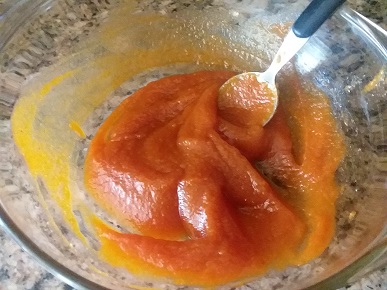
Mix the pumpkin, sugar, spices and oil
Mix all ingredients except flour
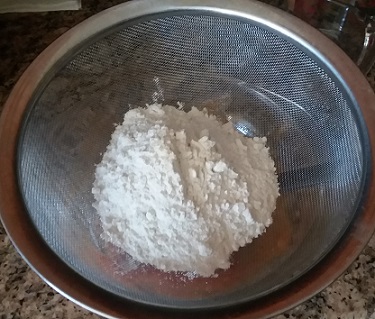
Sift the flour and baking soda in and mix
When the dough is hard enough shape it quickly into a ball with your hands
If it is sticky you may need to add more flour until it doesn’t stick too much to the hands
Better to sift the flour for easier mixing
Make the dough into a ball and refrigerate
Place in refrigerator for 40 minutes
Start the oven at 180 C (about 350 F)
Flatten the dough and cut it with desired shapes
Place cookies on a parchment paper and place in the oven for about 15-20 minutes
Place cookies on parchment paper
When ready you can decorate the cookies with icing or sprinkles
This delicious Italian recipe requires few simple ingredients such as rice, tomatoes, onions and some herbs. It also requires only one pot because everything cooks together in the oven. Choose organic vegetables if possible and remember to take your own bags to the grocery store to avoid plastic bags for the produce. I really want to thank Ermanno and Simona for the work they did putting together the pictures and the procedure. Collaborations really help a lot to keep the blog going.
The procedure seems elaborate, but it is really quite simple. If I could get it right the first time, anybody can do it.
Preparation time: 15 minutes + 45 minutes in the oven
Ingredients (3 people)
3 large tomatoes
5-6 basil leaves
Small bunch of parsley
1 garlic clove
Arborio (o Carnaroli) rice – This is available in general grocery stores
Extra virgin olive oil, salt, black pepper
1 potato
1 sweet onion
Procedure
Slice the cap from the tomatoes
Remove the top part of the tomatoes and keep it aside
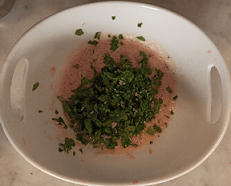
Finely chop basil, parsley and garlic
Basil, parsley and garlic finely chopped
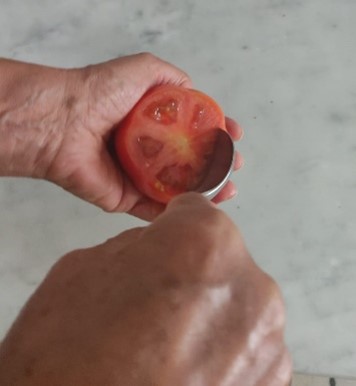
Empty the tomatoes with a spoon.
Make sure not to break the external skin of the tomatoes.
Place the tomato pulp in a centrifuge or a blender to make a nice smooth tomato juice. Keep a small amount (half cup or less) of the juice on the side.
In the larger part of the tomato juice add the chopped herbs, 2 spoons of olive oil, salt and pepper.
Add one tablespoon of uncooked rice for each tomato plus one extra tablespoon.
Add herbs and rice to the tomato pulp
Place the tomatoes on a baking sheet, add one basil leaf and little salt at the bottom.
Fill up the tomatoes (up to 3/4 of capacity) with the rice and tomatoes mixture.
Fill the tomatoes with the rice and sauce
Place the caps back on the tomatoes.
Now add the sliced potato, sweet onion and (optionally) one more spoon of rice to the tomato juice that was set aside and place it on the baking sheet between the tomatoes.
Place in the hot oven for at least 45 minutes at about 360 F (180 C) until the rice is entirely cooked.
Cooked tomatoes out of the oven. You can let it broil for a few minutes depending on your preferences
If you would like to share vegetarian recipes please email me at info@choosesustainable.org and I’ll post them on this blog.
The YouChoose App contains links and information about sustainable food choices with a searchable database of common food items.
If you like this recipe please share it and help reduce meat consumption!
Welcome to YouChoose, a blog where we explore ways of living sustainably. This week I would like to share some thoughts about reducing meat consumption.
Today, the link between meat consumption, deforestation, and emission of greenhouse gases is well established. Therefore one of the most important steps we can take for the benefit of our Earth is to eliminate meat from our diet. Legumes are among the most Eco friendly food we can consume and they are an important source of proteins. They are also beneficial for the soil and don’t require excessive water use.
Sometime when we think of legumes we get discouraged because we have to remember to soak them and need time to boil them. While this is true for some, not all legumes require long preparation time. Additionally it is possible to soak the desired amount in advance and keep it for one day or two. Soaking is an important step necessary to make legumes more digestible and eliminate anti nutrients. If we are pressed for time some limited variety of legumes are ready available in cans. This is very helpful, however there is a much greater variety of dry legumes so I suggest to explore ethnic grocery stores and see what is available.
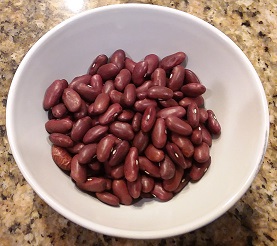
Another frequent complaint is that legumes are hard to digest and make us uncomfortable. Again, this may be true of some types such as red or garbanzo beans, and it is especially true if we are not used to them. Here are some steps that can help us to to become more accustomed to the regular use of legumes.
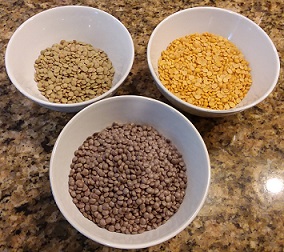
Start with the varieties that are easier to digest: Green and yellow lentils, split peas, mung beans.
Introduce harder legumes (beans, garbanzo) in small amount at the beginning.
Soak the harder beans for 8-12 hours. Lentils don’t need to be soaked, however soaking them even for 2-3 hours makes them more digestible.
Cook the legumes thoroughly. They should be soft but not mushy.
Soak them when you remember, you can use them later.
In this post I’ll talk about a variety of easily available legumes we can quickly incorporate in our daily meals and will provide approximate preparation time. The following is the basic procedure, once cooked legumes can be used in recipes to make delicious snacks, soups, and side dishes.
Lentils
Lentils are probably the easiest to start with. They come in many types, green, yellow, brown. They make a great side dish, soup or can also be used to make fritters. They are fairly easy and quick to prepare and they don’t need soaking if there is no time. Lentils, like all legumes, should be rinsed and checked before use. Green and yellow lentils can be soaked for 3-4 hours or boiled directly in a regular pot with water. They are ready in 15-20 minutes. Brown lentils can be soaked overnight (but it is not necessary) and pressure cooked for about 8 minutes. Brown lentils can be cooked in the pressure cooker directly with other vegetables so they make a very quick meal. I plan to post some delicious and quick lentil recipes in the recipe section of this blog.
Green, yellow, and brown lentils are great starters to get yourself used to legumes. They are easy to prepare and can be used in a variety of dishes.
Garbanzo beans
I mostly use two types of chick peas: white and black. Garbanzo beans should be washed and soaked for at least 8 hours as they are generally harder than lentils. The black variety requires at least 12 hours. They can be cooked in the pressure cooker for about 15 minutes and kept in the refrigerator for 1 or 2 days ready to use. Garbanzo beans make an excellent salad addition for lunch, but are also very good in soups and can be used as a side dish, cooked with spices and tomatoes. Garbanzo beans can also be used to make hummus to use as snack or in appetizers.
Garbanzo beans are excellent cooked with a variety of spices or in salads
Mung beans
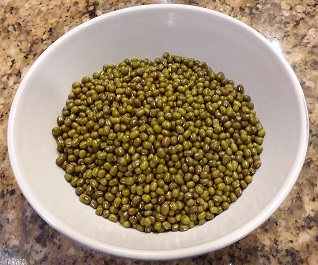
There are several types of mung beans (red, green,black). They make an excellent lunch, snack, or side dish. The best way is to soak them overnight before sprouting or cooking. Check out the easy sprouting procedure in the recipe section. Once soaked, cover the beans with water and bring to a gentle boil for about 15 minutes, make sure not to overcook them. They need to be just soft, but not mushy. Once boiled they can be cooked with spices and peanuts to make a great lunch or snack.
Mung beans cook very quickly after they have been soaked for 8 hours and don’t require a pressure cooker.
Beans including dried Lima beans
There is a great variety of beans, large, small, red, white, and more. Usually beans need to be soaked overnight and cooked for about 15 minutes in the pressure cooker depending on the beans and the cooker. Some can be quite hard, therefore the soaking and cooking part is important and should not be skipped. Beans can be added to salads, used in soups, or cooked in spices. One can get used to them starting with small portions.
Beans require soaking at least 8-12 hours and proper cooking to be more digestible
Peanuts
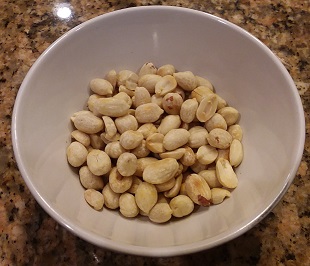
At last I’ll mention here peanuts. Although they are legumes, they are more similar to nuts. When lightly roasted they make a nice snack or can be used in small amount in a variety or recipes.
Peanuts are a sustainable food that can be added in small amount to dishes or used as snack
I hope this brief overview of some common legumes inspired you to include more of them in your daily diet. Including more legumes and less meat is one of the most important steps we can take to reduce greenhouse gases, reduce deforestation, and help our Earth.
The YouChoose app provides several links and information on global food issues and lists of sustainable and unsustainable foods including fish and vegetables, hopefully the information is useful.
In this blog there is a recipe section where I share meat-free recipes to help out. If you want to share your sustainable recipes to help others, I’ll be glad to post them in this blog.
Do you want to share your progress on eliminating meat from your diet? Send me an email at info@choosesustainable.org and I’ll add it to this blog.
Welcome to YouChoose, a blog where we explore ways of living sustainably. This week I would like to share some thoughts about food and meat consumption.
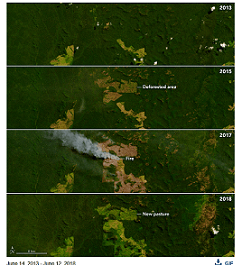
Meat consumption drives deforestation in two ways: 1. The forest is cleared to make room for cattle pastures and 2. The forest is replaced by large-scale soy plantations to be sold as food for cattle. Even in the USA almost half of the agricultural land is used to grow crop for cattle feeding. This has led to the destruction and near extinction of the great American Prairies and the entire ecosystem that depended on them, of which we’ll talk in another post.
In the above image (https://earthobservatory.nasa.gov) the progressive deforestation of a large area for cattle pasture between 2013 and 2018 is captured in satellite images.
I think the German philosopher Ludwig Feuerbach (1804-1872) was right when he declared that “Man is what he eats.” Turning upside down Feuerbach’s Marxist materialism it seems that what we eat is at the core of our identity and it is a very difficult part of us to change. Perhaps for this reason advocating the reduction in consumption of meat and animal products to save the Earth is not a popular topic. What we eat is an essential element of our culture and of the way we perceive ourselves as a species and as part of social groups.
A long time ago I decided to stop eating meat. This decision was very personal, it had nothing to do with the environment or sustainability, it was more part of a spiritual path that helped me find my own place in the world. As a result I had to face an unexpected wave of hostility from my family. There was no family meeting in which I didn’t have to explain, defend, and justify myself. I noticed that people took this choice almost as a personal offense, an act of defiance, a refusal of cultural and social norms. However, even in my own culture, in the past, meat consumption was limited to special occasions. It has been only in recent years that meat has become part of the daily diet with bad consequences for animal welfare and for the environment.
For the last 23 years I have worked on eliminating meat entirely from my diet and on cutting back on animal products in general, including fish, eggs, milk, and cheese. Cumulatively animal products constitute now less than 3% of my diet and meat has been entirely absent for about 20 years. I am far from perfect, but it has been a continuous improvement. By substantially reducing the amount of animal products, I am also in the position to purchase products that are more sustainable, which sometime means more expensive.
Recently there has been more awareness of the environmental impact of meat consumption and a plant-based diet is becoming more acceptable, still meat consumption is on the rise. Today we know that reducing meat and animal products is one of the most important actions we can take to reduce and stop deforestation, pollution, and degradation of the environment.
I would like to invite everybody to gradually reduce meat and animal product consumption to a minimum. It is important not to set expectations too high, it is easy to quickly run out of food choices and give up. Gradually one can try new grains, legumes, roots, and vegetables. The possibilities are endless. One doesn’t have to become a perfect vegan overnight. It is more important to become conscious consumers and develop our own path to sustainability, even veganism doesn’t necessarily mean 100% sustainable.
The YouChoose app provides several links and information on global food issues and lists of sustainable and unsustainable foods including fish and vegetables, hopefully the information is useful to get started.
Here are a few more suggestions to help getting started:
Be firm in the resolve, changing food habits is not easy. Please don’t give up
Set one reachable goal at a time. For example one meat-free day a week to start and progress from there
Buy unknown vegetables, grains, legumes and look them up at home. You will be surprised of how many pleasant discoveries you will make
Make a point to try one new grain/cereal (millet, barley, black rice, farro)
Make a point to try one new legume (yellow peas, chick peas, green lentils, mung beans, kidney beans, brown lentils)
Try different recipes for the same vegetable
Cook ahead, sometime you can boil the legumes ahead and keep them ready in the refrigerator
In this blog there is a recipe section where I share meat-free recipes to help out. If you want to share your sustainable recipes to help others, I’ll be glad to post them in this blog.
Do you want to share your progress on eliminating meat from your diet? Send me an email at info@choosesustainable.org and I’ll add it to this blog.
This recipe requires a few spices that are needed to add some extra flavor to the beans. You can adjust the ingredients to suit your taste. The recipe is very sustainable, it has only few ingredients and legumes are among the most sustainable crops. You don’t have to sprout the beans necessarily, they can also be cooked as they are. Below are some additional tips to go more sustainablefor those who have the time and availability .
Ingredient
Onions
More Sustainable
No plastic
Less Sustainable
Plastic bag
Useful things to have ready
Mung beans need about 48 hours to sprout. Once cooked they also make an excellent lunch or even a snack.
Preparation time: 48 hours to sprout the beans, 20 minutes to boil, 10 minutes to cook.
Ingredients (3-4 people)
Mung beans (2 fistful per person)
Two tablespoon of onions chopped in small pieces
1 garlic clove smashed (optional)
1/2 teaspoon turmeric
Red chili (optional)
1/2 teaspoon garam masala (or other spice, optional)
1/2 teaspoon mustard seeds
1/2 teaspoon cumin seeds
1 tablespoon of roasted peanuts (optional)
Salt
One tablespoon of vegetable oil
Procedure
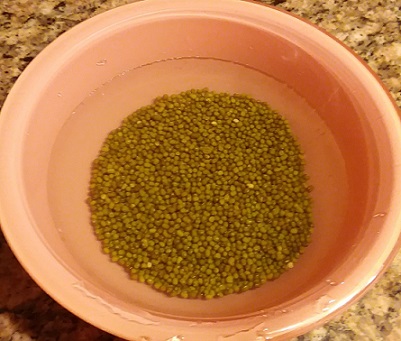
Rinse the mung beans and soak for at least 8 hrs in water.
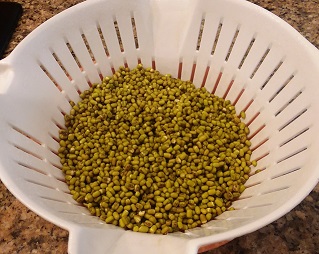
Drain and rinse the beans in a colander
Place a plate under the colander and store the beans in a dark place (no need to wrap in a cloth or to keep in a closed lid container)
Every about 8 hours take them out, rinse them and put them back in the dark
Soak the beans for ~8 hrs
The beans can be stored in a pantry this way
The beans will start sprouting after about 8 hours
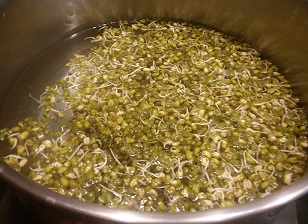
When they are fully sprouted place them in salty water and bring to a gentle boil
Here are the sprouted beans
Gently boil them in salty water
Boil the beans for about 15 minutes or until tender and drain
Heat the vegetable oil
Add cumin seeds and mustard seeds
Add onions and cook for a few minutes
Add red chili, turmeric, garam masala (or spices of your choice)
Add beans and salt
Add peanuts (optional)
You can accompany this with green vegetables or rice
Welcome to YouChoose, a blog where we explore ways of living sustainably. This week I would like to talk about achieving a palm oil-free life.
Avoiding palm oil is imperative to stop deforestation. It is also one of the most difficult tasks when transitioning to a sustainable lifestyle. Palm oil was a relatively unknown ingredient until a few decades ago, but now it has become one of the most pervasive components in the mass-produced products we buy every day.
Palm oil is found in almost everything we eat: cookies, crackers, candies, spreads, jellies, cereals, and packaged products. It is also found in many house products such as laundry soaps, and in personal care products such as shampoos, soaps, conditioners, lotions, lipsticks, creams, cosmetics, and toothpaste.
Occasionally we hear halfhearted declarations from some world leader about reducing the import of products that are responsible for deforestation, however, after doing research for the YouChoose App, I learned one important thing: If I wanted to find out who was responsible for the extensive deforestation of the past few decades, the decline in biodiversity, and the extinction of primates I needed to look no farther than the mirror.
The high and growing demand for this cheap oil by multinational corporations has led to widespread destruction of rain forests in South East Asia and is bringing primates and other species to the verge of extinction. These rain forests are cleared usually by setting them on fire and are replaced with mono-culture plantations of palm trees (which are not a native species to that region) to produce palm oil.
I checked the products in my house, in the pantry, in the bathrooms and kitchen and found out that most of them indeed contained (explicitly listed or hidden behind other names) ingredients that are derived from palm oil.
Look at the ingredients of every packaged item you want to purchase
Cleaning and personal care products don’t list the ingredient as palm oil, but hide it behind the names of the chemical compound derived from it. The YouChoose App provides a list of chemical compound names that usually indicate the presence of palm oil.
A common skin-care product found in convenience stores. Can you spot the palm oil?
I really had to take a hard look at myself, which is never easy to do. I could no longer blame others for my doing. In that painful moment of awakening, I decided to embark on a journey to free myself of palm oil.
Here is a list of actions we can take to eliminate or substantially reduce our dependence on palm oil. Each action in itself is a journey and will be discussed in separate posts.
Be firm in our resolve, this is a very difficult path, but we shouldn’t doubt that it is worth pursuing.
Read ingredients of every food item at the grocery store. Palm oil is found in the most unexpected places.
Read ingredients of personal care products and avoid those that are derived from palm oil. A list is provided in the YouChoose App and it will also be provided in a following post.
Read ingredients of house cleaning products and avoid those that include palm oil.
Read ingredients of beauty and cosmetic products and avoid those with palm oil. A list of these is provided in the YouChoose App and it will be provided in a following post.
Don’t be fooled by “vegan”, “green”, and “eco” labels or by statements from corporations on how they plan to make their palm oil sustainable by 2025 or 2030. These are empty words that only betray the callousness of these enterprises.
After you go through this list you will discover that there aren’t many products you can buy in stores and, if you are brave enough, your journey will begin. It will involve giving up things you like, abandoning easy choices, and probably some discussions with your friends and family.
It is also important to remember that not all palm oil is destructive, there are many small companies that source their palm oil from places were the plant Elaeis Guineensis is native (mostly West Africa) and grown responsibly. These are not the major brands found in big store shelves. Before purchasing products with this ingredient it’s important to check with the company to see where and how they source their ingredients and purchase only if the answer is satisfactory.
To answer our initial question: Is a palm oil free life possible? The answer is Yes, but it’s not easy. Here is one topic where doing the right thing involves choosing the narrow path. I’ll share my progress in following posts. The YouChoose App provides links and resources with information on this topic.
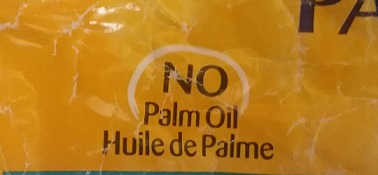
Labels like this are unfortunately rare
Do you want to share your progress on eliminating palm oil from you shopping list? Send me an email at info@choosesustainable.org
This is a very quick recipe with only three ingredients: okra, turmeric, and onion. It is a very nice side dish that can served with veggie burgers or rice. Below are some additional tips to go more sustainablefor those who have the time and availability .
Ingredient
More Sustainable
Less Sustainable
Okra Onion
Fresh No plastic
Frozen/plastic bag Plastic bag
Preparation time: 15-20 minutes
Ingredients (3-4 people)
1 pound (~450 g) of okra
1/2 onion sliced in small pieces
One table spoon of vegetable oil
Half teaspoon of red chili pepper (optional)
Salt
Half teaspoon of turmeric powder
Procedure
Wash the fresh okra
Cut the okra in medium pieces of about 1 inch
In a pan heat the oil
Add sliced onion
Add red chili
Cook a few minutes until the onion is golden
Add turmeric and cook one minute
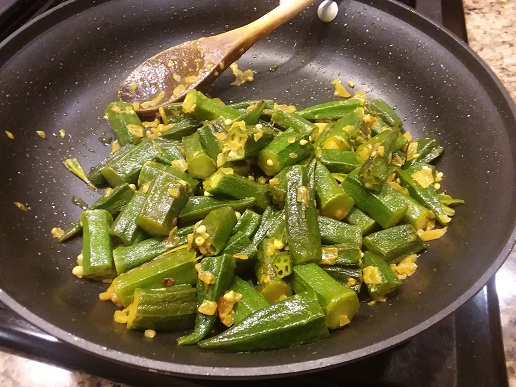
Add okra and cook on medium heat until soft but not slimy (about 10-15 minutes)
This is a very quick and sustainable recipe with only two ingredients: pasta and broccoli. For those who like whole wheat, the short pasta used in this recipe is available also in a whole wheat version which I have tried and is pretty good. Any type of short pasta will work. Below are some additional tips to go more sustainablefor those who have the time and availability .
Ingredient
More Sustainable
Less Sustainable
Broccoli
Fresh/Organic
Frozen/Regular
Preparation time: 15-20 minutes
Ingredients (3-4 people)
Enough broccoli for 3-4 portions
250-320 g of short pasta-regular or whole wheat-adjust based on personal preferences
One table spoon of olive oil
Half teaspoon of red chili pepper (optional)
Procedure
Remove the hard part and wash the broccoli
Transfer broccoli into a pot and cover them with lightly salted water
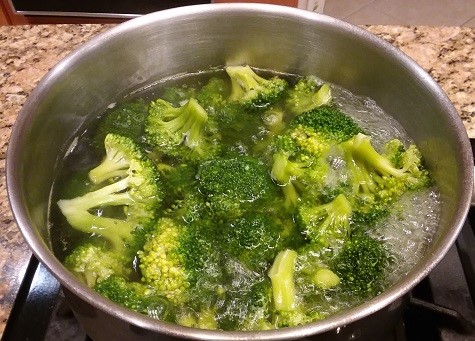
Boil until broccoli are tender, they need to be well cooked
Heat the oil in a pan
Add red chili (optional)
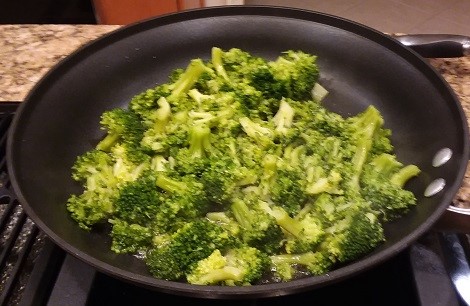
Add boiled broccoli and cook for a few minutes smashing them, I use a hand-held blender at the end to make the sauce more creamy
Add salt if necessary
Cook the pasta in salty water
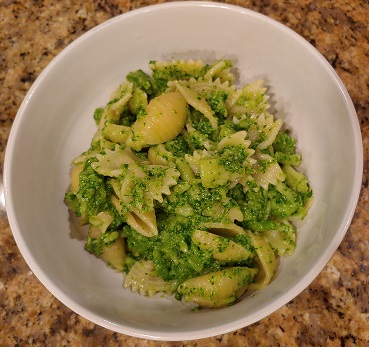
When ready toss the pasta in the pan with the broccoli for one minute















 You Choose