Welcome to ChooseSustainable.org a blog about individual climate action. As usual, my October post is a reminder of the destructive properties of palm oil, a common ingredient in Halloween candies.
Palm oil is one of the most devastating commodities, driving deforestation, the extinction of countless species, and rampant human right abuses. Unfortunately it is found found in mass produced Halloween candies as well as other countless products. This Halloween take a few extra minutes and read the ingredients to avoid candies that contain palm oil.
Below is a link to a list of candies without palm oil. However it is always better to read the label to make sure ingredients haven’t changed.
Industrial deforestation, driven by palm oil demand, is one of the largest contributor to climate change and the largest driver of loss of biodiversity and mass extinction on the planet. Don’t finance the suffering of countless species with your money, this Halloween go palm oil free.
Welcome to YouChoose, a blog about individual climate action.
This past summer, when talking about climate change with friends and family I often heard the argument that changes have always happened and the Sun or other natural causes are responsible for them. Invariably, past glaciations and the Little Ice Age are mentioned. I was curious to understand if this view was common and so I looked at recent statistics on the subject. That is when I found out that about 46% of the population believe that climate change is due to human activity and the remaining 54% of the population think that there is no evidence of change in temperature (14%) or believe that there is a change but is due to natural causes (26%) or is not sure (14%). I have therefore decided to start a series of short posts to address these perceptions hoping to clarify some doubts and misconceptions.
As a premise, I hold a PhD in physics and work and publish in the climate field. I am not a climate modeler but work with large datasets of observations of climate variables from satellite and ground observations and more importantly, have access to relevant journals. The topic of climate change is very complex and encompasses numerous specialized disciplines. In addition to the intrinsic complexity of the field, there is a lot of often deliberately confusing information published in the news. For all these reasons I am starting here a series of short posts that discuss the evidence leading scientists to conclude that current observed global temperatures are not a response to natural forcing, but are largely due to human activities. I deliberately keep each post short and limited only to one topic. In this first post we review how the Earth’s climate has changed during the course of millions of years. This knowledge gives us a broad perspective on how the short time span during which our human species has occupied the Earth compares to the past.
Our Earth’s past climate
To place climate change in a broader perspective it is important to study the climate of the past, when human activities did not exist. Knowledge of how the Earth’s climate has reacted to changes in the past helps us understand better what has been happening in the last 100 years against a background of natural climate variability and it also guides scientists to forecast future climate scenarios. The reconstruction of past climates from paleo data is a difficult field, and many uncertainties affect the data. The presence of uncertainty is an intrinsic part of the scientific process, however when analyzed and treated properly, uncertainties do not invalidate the results, rather they make them more reliable.
In past times, just as today, the Earth’s climate has changed periodically due to a combination of factors including orbital changes, changes in greenhouse gases, and changes in the extension of the ice caps. For example, for many million years, global surface temperatures were several degrees higher than they are now. Large scale changes to the climate are generally triggered by astronomical changes, usually related to the Earth’s orbital path, and are then amplified by melting (or freezing) of the glaciers and changes in greenhouse gases. We’ll review natural triggers to climate in detail in a next post. We currently live in an epoch called Holocene that has been one of relative climate stability and is called an interglacial age. During the Holocene and especially in the recent past until preindustrial times, the Earth average temperature has been quite stable, allowing human activities to develop relatively undisturbed.
A few million years ago…
Through the ages our Earth has experienced many changes. Fig. 1, from Hansen et al., 2013, shows a reconstruction of global surface temperature in the last 65 million years. The figure is freely accessible on the internet along with the publication. You can read at the end of this post how deep ocean sediments are used to reconstruct global surface temperature to track paleoclimate. The top panel shows the Earth surface temperature starting 65 million years ago until the current Holocene Epoch. The middle and bottom panels zoom in the last 5 million years and the last 800,000 years.
What does this figure tell us?
Fig. 1 (a–c) Surface temperature estimate for the past 65.5 million years, including an expanded time scale for (b) the Pliocene and Pleistocene and (c) the past 800,000 years. The red curve has a 500,000-year resolution. Figure from Hansen et al., 2013.
At the beginning of the Cenozoic, the Earth was much warmer than today, more than 10 degrees warmer. During those times sea levels were much higher, ice caps were smaller, and CO2 levels were about 3 times what they are today. From the beginning of the Cenozoic Era the Earth’s temperature has been decreasing, becoming about 12 degrees cooler on average in the course of 50 million years but with oscillations of warming and cooling periods visible in the middle panel. From the middle panel we can discern that the amplitude of these oscillations is 4-7 degrees.
Zooming into the last 800,000 years, shown in the last panel, we can have a better look at how these oscillations look like. In the past 800,000 years there have been 8-9 cold/warm cycles alternating glacial and interglacial ages, with the last ice age, marked by an arrow in the figure, happening approximately 12,000 years ago. These cycles of glacial-interglacial periods last about 100,000 years during which the temperature changes 4-7 degrees from minimum to maximum, oscillating between 8 and 15 degrees Celsius. The last inter glacial period that started 12,000 years ago is the Holocene and is the time during which we humans have lived. Two prior inter glacial periods were warmer than the Holocene: the Eemian (~ 130,000 years ago) and the Holsteinian (~ 400,000 years ago). In both periods the sea level height was at least 3-5 meters (9-15 feet) higher than today (see for example Cuffey and Marshall, 2000).
How does all this this relate to climate change?
Scientists use past climates to understand what caused changes in order to assess if current observed trends can be attributed to natural causes. They also use past temperatures to compare to current observations and especially to the current rate of temperature changes.
Take home points from this first post:
The Earth climate has changed during the past 60 million years, generally cooling, but also going through oscillations between glacial and inter glacial periods.
These oscillations took roughly 100,000 years to complete and during the 100,000 years it took to complete a cycle the Earth temperature changed 4-7 degrees from minimum to maximum.
We currently live in an interglacial period called Holocene
During the last 2 interglacial periods before the Holocene (about 400,000 and 130,000 years ago) temperatures probably reached at least 1 degree higher than the preindustrial temperature.
In the next post we’ll zoom into the Holocene (last 12,000 years) and then into the last few thousand years and we’ll compare those data with the more recent global temperature measurements.
References:
Hansen J., Sato M., Russell G. and Kharecha P., 2013: Climate sensitivity, sea level and atmospheric carbon dioxide, Phil. Trans. R. Soc. A. 371:20120294 http://doi.org/10.1098/rsta.2012.0294
Cuffey, K., Marshall, S., 2000: Substantial contribution to sea-level rise during the last interglacial from the Greenland ice sheet. Nature, 404, 591–594. https://doi.org/10.1038/35007053
Appendix
How are past global surface temperatures reconstructed?
Temperature back in time are reconstructed from oceanic sediments with the help of an isotope of oxygen (Oxygen-18) found in deep ocean sediments. This standard methodology uses the fact that most of the Oxygen has 8 neutron (Oxygen-16), but a small percentage of oxygen molecules occurs naturally with 10 neutrons (Oxygen-18). Oxygen-16 evaporates more promptly and enters in the Earth hydrologic cycle through precipitation and freezing. In a warmer climate the Oceans, and therefore its inhabitants, contains more of the Oxygen-16 isotope, in colder climate they contain more of the Oxygen-18. Moreover there is a well-defined relationship between the ratio of the 2 isotopes and the change in air temperature that allows to translate the sediments found into temperature once calibrated with a well-known reference. [https://pages.uoregon.edu/rdorsey/geo334/O-isotopes.html]
Additional web site
If you are interested in detailed information or in-dept discussions on recently published work I recommend this web site, maintained by climate scientists: https://www.realclimate.org
The NASA climate page explains the current state of the knowledge on climate at: https://climate.nasa.gov/
Share this post with your friends and take action against deforestation and the destruction of the Earth ecosystems!
Welcome to ChooseSustainable.org a blog about individual climate action. It’s almost Halloween and you have probably added to your grocery list a bag of candies to distribute to kids in a few weeks.
It takes a small effort to celebrate an Earth friendly Halloween by avoiding candies that contain palm oil. Just look at the list of ingredients and select candies that don’t contribute to deforestation. Is that simple!
Don’t be fooled by sustainable palm oil labels, there is no such a thing as sustainable palm oil. Read here from the World Wildlife Fund about the link between big money and deforestation. Here you can find the palm oil buyers scorecard and here you can search the score of industries that make Halloween candies such as Mondelez International. Even the best scoring companies such as Ferrero can’t entirely account for the provenance of their palm oil.
Industrial deforestation, driven by palm oil demand, is one of largest contributor to climate change and the largest driver of loss of biodiversity and mass extinction on the planet. Don’t finance the suffering of countless species with your money, this Halloween go palm oil free.
Welcome to YouChoose, a blog about individual climate action. We talked in previous posts about the importance of reducing the demand for palm oil. This week I would like to talk about food products that are more likely to contain palm oil.
It is a fact that, unless we stop buying, companies will keep deforesting.Avoiding palm oil is one of the actions we can take to stop deforestation. You will hear all kind of reasons why palm oil is actually good for the planet and how avoiding palm oil will do more harm than good. Don’t fall for the greenwashing. The skyrocketing demand for the cheap oil is fueled not by any necessity, but by an increase in demand for junk and fast food. The big conglomerates responsible for deforestation are also the biggest producers of junk food. Their palm oil suppliers are linked to human right violations, intimidation, and destruction of indigenous community. For this reason reducing the amount of junk and packaged food that we purchase is a fundamental step to invert the trend. When we purchase food containing or prepared with palm oil we are contributing to deforestation. Unfortunately there is no nice way to put this. Read here from Palm Oil Detectives how “sustainable palm oil” doesn’t really exist. It is just something invented to make consumers feel good and enable the continuous destruction of the rain forest.
Here is a list of foods where you are likely to find palm oil. Keep this in mind next time you go to the grocery store. I assure you that, after eliminating palm oil, my life hasn’t changed much, but my health and wallet may have actually improved.
Doughnuts: Fast food chains use palm oil for frying. I used to like doughnuts, but stopped buying them entirely and never looked back.
Candies: Almost all chocolate candies and bars in grocery stores contain palm oil. I used to buy some for my daughter when she was a kid or for Halloween. After realizing what I was doing, I stopped entirely purchasing them and lived happily everafter. I also noticed that, when I explained to my daughter the reason for it, she agreed and never asked for them anymore.
PopCorn: Please read the ingredients in microwave-ready popcorn packages and you will discover that all of them are made with palm oil.
Chocolate spreads: Products such as hazelnut spreads and sometime peanut butter spreads list palm oil among their ingredients.
Fast food, fried items, and hamburgers: Major fast food chains use palm oil for frying, especially in Asia, but also in the US. I know this is a little bit hard but limiting fast food as much as possible is important and not that depriving. It may actually be good for us.
Crackers, cereals, cookies, pancake mixes, soups, bread products: I read ingredients carefully and find palm oil in all these items. I invite you to do the same and look for available alternatives. There are few brands that don’t use palm oil.
Bakery products in grocery stores: A large percent of baked good in US grocery stores contains palm oil. In the grocery store where I shop, palm oil is found in almost all baked goods. I encourage you to check it out next time you shop and look for alternatives.
Frozen meals, ice creams, frozen waffles, and pancakes: Palm oil in ice cream? There are things I wouldn’t buy even if they were good for the environment.
Please share this post and do your part advocating a stop to palm oil consumption.
Welcome to YouChoose, a blog about individual climate action.
The UN 2023 water conference was held last month in NY. Water scarcity may very well become the most important side effect of climate change and deforestation. The link between deforestation and drought has been illustrated in a recent Nature article : Smith, C., Baker, J.C.A. & Spracklen, D.V.: Tropical deforestation causes large reductions in observed precipitation, Nature615, 270–275 (2023). You can read the article HERE.
Part of the UN conference outcome was the announcement of the largest river and wetland restoration initiative in history, proposed by the governments of Colombia, the Democratic Republic of Congo, Ecuador, Gabon, Mexico and Zambia. If you want to know more about the freshwater challenge and the importance of freshwater read about it on the WWF web page.
How about the US? Do you know that about half of the original wetland of the US has been destroyed and about 30% of the endangered species in this country live in wetland areas? The loss or degradation of wetlands puts entire ecosystems at risk. Read HERE, from the Xerces Society, on the importance of wetlands for biodiversity. One big threat to wetlands comes from pesticide use for agriculture and gardening. As homeowners we need to stop using chemicals in our lawns and gardens, especially herbicides and systemic pesticides. In our quest for the perfect lawn we introduce in the environment and in the water toxic chemicals that are deadly for pollinators and aquatic life.
Check out here from the Xerces society a list of deadly products easily available on the shelves of home improvement stores. Lawn fertilizers are just as bad. These products are marketed with catchy names such as “Green Light”, “Shrub Protect”, “Weed ‘n feed” but underneath the friendly and flowery packages are extremely toxic chemical that destroy the ecosystem. Please spread the word with your neighbors and encourage them to stop using chemical products in the backyard!
Keep the pressure on! Do your part to end deforestation by boycotting products that are the main drivers of destruction: cattle and livestock industry (which also drives conversion of forests to soy plantations), palm oil, timber from old growth forests and endangered trees.
Welcome to YouChoose, a blog about sustainable living. In this post I wanted to share some information about batteries and electric vehicles.
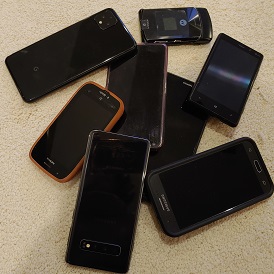
If you have a lot of old cell phones in your home you may be interested in this Argonne National Laboratory OutLoud lecture on battery recycling. It contains very useful information on how batteries from cell phones can provide useful material to make new batteries. It takes less than 200 old phones to make a new EV battery! It is a good incentive for all of us to find out where the nearest battery recycling facility is located and drop off the old batteries cluttering our drawers.
Welcome to YouChoose, a blog about sustainable living. In this post I wanted to share some great information provided by Ashok Nagella, MD, on the impact of a plant-based diet on our health and our planet. The intention is not to scare people off into a vegan diet, but rather to share a few good reasons to reduce our consumption of meat and animal ingredients to a minimum and make more room for a variety of plant-based food. The full set of slides can be found here.
Why is it important for our Earth that we reduce meat consumption?
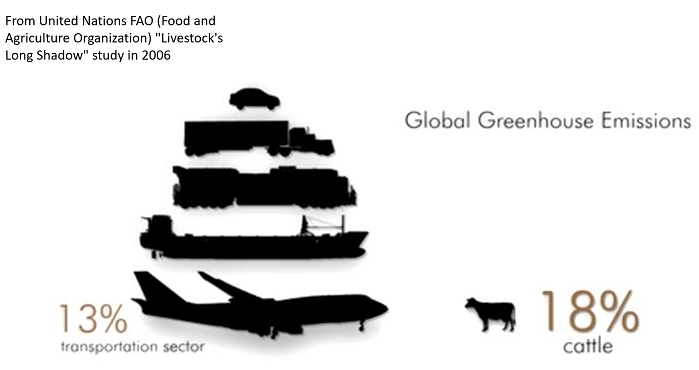
If it is true that a picture is worth a thousand words, then the following two images should speak for themselves.
Agriculture emissions (in green) constitute about one fourth of global emissions. A large portion of these are due to cattle and animal farming (website: drawdown.org)The animal industry alone is responsible for the same percentage of emissions as the entire transportation industry but with the additional damages of deforestation, loss of biodiversity, and enormous water consumption.
Electricity, agriculture, and industry are the largest sources of greenhouse gases. We, as individuals, can directly influence a few sectors, for example switching to electric vehicles, low consumption bulbs, and reducing the use of high consumption devices. The sector over which we can have the most effective impact is agriculture. In fact, emissions due to the cattle industry are higher than those due to the entire transportation sector. And it is not just greenhouse gases emissions, but also water consumption, because a great amount of water is necessary to raise, kill, and process animals.
Why is it important for Us to reduce meat consumption?
Check out these health benefits of a plant-based diet.
Significant increase in Fiber, Antioxidants, Omega 3 Fatty Acids, and Neurotransmitter Production
Significant reduction of Inflammation, saturated fat, and cholesterol
Increase in longevity while preventing cancer, heart disease, strokes, and dementia
Improvement in mood while reducing anxiety
Improvement in focus, attention, and memory
Often, we get frustrated about politicians not doing enough for the planet and the climate, at the same time feeling powerless and depressed. However, let’s think about this: We, as individuals, have complete control of what we eat. The greatest change we can make for our planet is also the one that requires the least effort and is good for us. We don’t have to wait for governments to take action on our behalf, we can take our own actions!
Welcome to YouChoose, a blog about sustainable living. In this post I wanted to share a few reflections about recent heat waves.
This year, like every year, I was in Southern Europe for about 2 months and found myself in the middle of one of the hottest summers on record. This is the second year in a row that I find myself in such a situation over there. I grew up there and I am old enough to remember that summers used to be hot, especially in August, but generally pleasant in June and July. Lately the heat has become unsustainable from the beginning of June until September. The extreme heat was compounded by a drought and extended wildfires. The situation was such that, perhaps for the first time, climate change was perceived by everybody as a real and incumbent crisis. The reality of warming is becoming apparent to everybody.
Deforestation plays a major role in accelerating climate change. Globally, until now, tropical forests have acted as carbon sinks, sequestering large amounts of carbon dioxide. Today, emissions caused by the process of deforestation and land conversion to agriculture are starting to exceed the forest carbon sequestration. Forests are now becoming carbon sources instead of carbon sinks. . This in addition to land degradation, loss of biodiversity, and change in rainfall patterns.
Please read this very interesting article in NOAA’s research news:
The contribution of deforestation to climate change includes (1) emissions from deforestation, (2) emissions associated with land use (i.e. cattle farming, soy plantation) and (3) reduced amount of carbon sequestration due to the loss of canopy. Industrial agriculture is responsible for the largest part of deforestation with the products of deforestation coming to our grocery cart and our kitchen. It is imperative that we become conscious buyer and learn which products are driving deforestation.
What can we do as consumers:
Reducing (or eliminating) meat and dairy consumption is the single most important step we can take to stop deforestation
Eliminate palm oil from the shopping cart
Purchase certified sustainable coffee and chocolate
If choosing to consume meat, choose grass-fed, soy-free products.
Although soy for human consumption constitutes an infinitesimal part of the global soy production, it is important, when using soy-based products to make sure they are sourced from sustainable agriculture.
Be vocal and participate in campaigns. Demand that governments and companies act to stop deforestation.
What are you waiting then? Be part of the movement to stop deforestation. Can’t go wrong!
The YouChoose app provides several links and information on products and cosmetics ingredients that are unsustainable and bad for the environment.
Welcome to YouChoose, a blog where we explore ways of living sustainably. This week I wanted to bring to your attention the recent UN resolution on curbing plastic pollution.
This past month United Nations representatives from 175 countries signed a pledge to come up by 2024 with an agreement to end plastic pollution. Even if the plan doesn’t materialize by then this is still good news. It means that single use plastic is finally becoming a global issue to be dealt with.
We all know the devastating effects of plastic on land and marine wildlife. However, it is still nearly impossible for us to complete one trip to any store without coming out with plastic items in our cart. And I am not one that is oblivious to the problem. I have eliminated plastic shopping bags, produce bags, plastic water bottles, single use utensils, and glasses. And yet, every week I still manage to collect what I consider a large amount of plastic to recycle.
It does feel like an uphill battle and it can be frustrating, so we can be tempted to give up. Although it is true that we can’t eliminate all plastic from our lives, we may be surprised to know that there are just a few items that disproportionately constitute the vast majority of the pollution. And these few items we can really do without. Food wrappers, beverage bottles, bottle caps, grocery bags, straws, take out containers, cups, and plates make a substantial component of ocean pollution. Just eliminating bottles and plastic bags would go a long way.
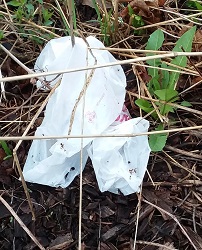
A discarded plastic bottle along the road lasts foreverPlastic bags easily escape the collection point
Recycling is not the solution because just as it takes energy to make things, it also takes energy to recycle them. Additionally, plastic bags can easily escape from the facilities where they are collected. I do see many plastic bags flying around where I live (I’m sure you do too) and we can easily multiply that by millions to imagine how many bags are dispersed in the environment every day. Even with our best intentions it is difficult to make sure that our bags end up where they are supposed to go.
If you want to add your voice there is a Greenpeace action to call on elected officials to take action on plastic pollution:
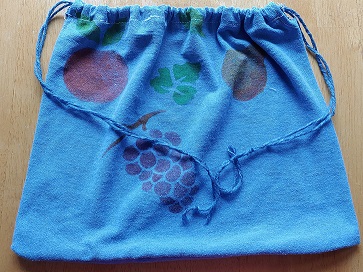
While we wait for actions at a government level we can also make plastic reduction a priority. You can start taking reusable bags with you, you don’t even have to buy them. They are easily made from old clothes and fabric. There are plenty of tutorial on the internet on how to make reusable bags. Do you have old shirts at home but don’t have a sewing machine? Don’t trash them, send them to me and I will send you back reusable shopping and produce bags.
Old T-shirts can be used to make reusable drawstring produce bags
With enough fabric from old tablecloths, curtains or sheets one can make reusable shopping bags
Here is some useful information on plastic pollution:
Welcome to YouChoose, a blog where we explore ways of living sustainably. This week I wanted to discuss an interesting article I read in the September 2021 issue of the IEEE Spectrum magazine.
The article [1] details how SUVs in the US and across the world are the sector responsible for the second largest increase in global CO2 emissions after the power sector. The increase is larger than that from heavy industry, aviation, and trucks. According to the article it is very possible that, if the trend continues, the increased emissions from SUVs will more than offset the carbon reduction due to electric vehicles.
I was especially struck by this particular article because it condenses in a certain way the very problem at the core of the climate crisis. Even after all the talking about reducing emissions, global warming, and polar ice melt, when we actually have the opportunity to exercise the power of choice and make a difference we still choose the most polluting and most energy consuming car, the one that contributes the most to the crisis. It is almost a global denial, a disconnect between what we see as a global problem and how we perceive our role in it. After all there is always somebody else to blame.
If we look around in parking lots we’ll get an idea of the magnitude of the problem
This is not about being good or bad, it is more about human behavior. People who purchase SUVs are not the bad people to shame and similarly those who purchase electric cars are not the good ones who get to moralize. In my opinion this trend tells us more about how difficult it is for us to settle for less when we can have more. It also tells us that the climate crisis is somewhere in our minds, but when it intersects our everyday choices other factors take priority: making a statement about our wealth, keeping up with the rest of the crowd, wanting a larger space or the latest gadget that car makers never fail to add to newer models.
At the end of the day it is really about personal choices. Perhaps the only way to break the circle is the hard path of learning to want less and consume less, not for the purpose of making a statement or because we have to do it, but because it is what makes us happy.
For those interested, a recent article on this topic can be found on the International Energy Agency (IEA) page:











 You Choose