A few reasons to give up dish soap

Welcome to YouChoose, a blog where we explore ways of living sustainably. This week I would like to talk about living without dish soap.

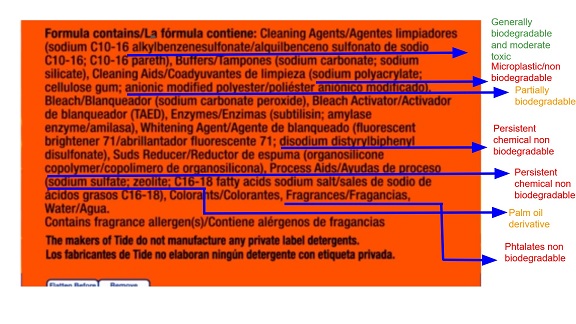
You may think it is ridiculous to write post about such a trivial topic, however this is one small step that goes a long way in reducing plastic pollution and reducing deforestation due to palm oil demand. I have been living without a specialized dish soap for some time since I came to the realization that I didn’t need one. Here are a few reasons to give up dish soap:

  • Liquid soap comes in a plastic bottle that ends up in a landfill or in the ocean
  • Some dish soaps contain petroleum based ingredients
  • Almost all commonly available dish soaps contain products derived from palm oil

Fortunately there are alternatives to big brand dish soap and I invite everybody to take the time to explore palm oil free and plastic free products for the dishes suitable for our own specific needs. On my end I tried a few solutions and settled for a simple olive oil soap bar.

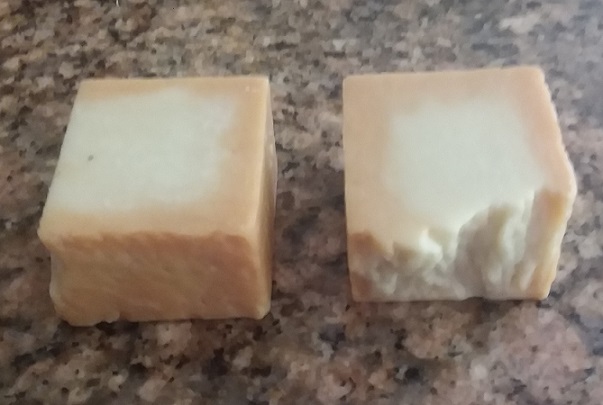
A basic 100% olive oil soap bar

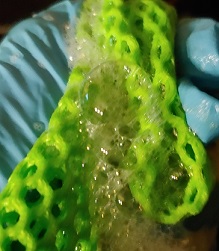
The bar comes in a paper box, just rub the bar on the dish cloth and you will get a nice foam that works really well even with oily pots and pans and doesn’t leave any residue on glass. Soap de Marseille is also effective, however most of it, these days, is unfortunately produced with palm oil instead of olive oil, so one needs to be careful to find the traditional one made with olive oil.

Another advantage of olive oil soap bars is that they are hard and last a long time without disintegrating under water.

You don’t have to give up clean dishes by giving up liquid dish soap

What are you waiting then? Eliminate something you don’t need, reduce plastic pollution, and reduce deforestation all in a small step. Can’t go wrong!
The YouChoose app provides several links and information on products and cosmetics ingredients that are unsustainable and bad for the environment.

Send me your experience at info@choosesustainable.org and I’ll add it to this blog.

If you liked this post please share it!

Zero waste lunch box

Welcome to YouChoose, a blog where we explore ways of living sustainably. This week I’ll talk about a few ideas to make our lunch box more sustainable.

If you go to work or have school age kids you probably choose between purchasing your lunch every day or bringing it from home. The first option is certainly more convenient, but it can be expensive in the long run. Long time ago, before the pandemic, I used to go to the office and took my lunch box with me. Because we are vegetarian, and sometime school cafeterias don’t offer great vegetarian choices, I also pack a school lunch box for my daughter.

As I was trying to minimize our environmental footprint I was concerned about the amount of trash produced by lunch packaging. If we think about it, a traditional school lunch box can leave a considerable trail of daily trash behind:

  • A zip lock bag for sandwich that is trashed every day.
  • A bag of chips.
  • A plastic bottle.
  • A single size milk or juice carton.
  • A paper napkin.
  • A plastic fork.
  • A second zip lock bag for fruit.

These are all items that on average are considered single use. Multiply all this by 180 days and you’ll see that just one kid can produce a large amount of plastic pollution in one school year. This is true for adults as well. I thought it was necessary to teach my daughter the importance of not producing trash, therefore I tried to train her to bring back everything that was in the lunch box so that it could be washed and re-used. It started when she was in elementary school and at the beginning it required some time to get used to it, but it has worked very well. I am proud of her because she has been now producing zero lunch waste for many years. Here are some ideas on how to pack a zero-waste lunch box.

  • Sandwiches can be packed in zip lock bags or in sandwich wraps. They both are washable and reusable. I wash both by hand with dish soap. The wraps last for years and the zip lock bags can be washed and used until they last, certainly more than once.
Reusable food wraps can be used for sandwiches, cookies and other items. They can be rinsed and reused
  • Provide one reusable water bottle to fill up at school. The bottle can be brought back home where is rinsed every day. For water there are also water fountains. Juices or milk can be carried in small reusable bottles that are washed at home.
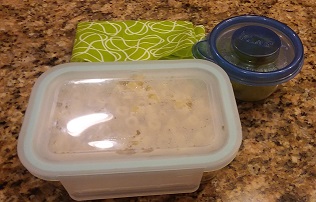
  • Now that my daughter is in high school I often pack dinner leftovers for lunch. A reusable, microwave safe food container and a metal fork or spoon can be brought back and placed in the dishwasher. Even plastic forks can be washed and reused multiple times.
Reusable glass boxes can be used to pack food that needs to be warmed up in the microwave
  • Chips, fruit and vegetables can be packed in zip lock bags or other reusable pouches. They can all be rinsed and reused multiple times.
Here is a zero waste soup and sandwich lunch with fruit

To reduce even more the use of plastic I lately have been thinking of making my own food pouches from fabric scraps that I have at home. I’ll post later about my progress (or lack of) on this topic.

Eliminating lunch trash is a great way to teach younger generations the importance of reducing pollution and our environmental footprint. This basic lesson will go a long way in guiding their future choices.

The YouChoose App provides several great links to resources on sustainable products. If you have an android phone you can download the app from Google Play using the link on the right.

Have you thought about reducing your lunch waste? Send me an email at info@choosesustainable.org

Ideas for a sustainable Christmas

Welcome to YouChoose, a blog where we explore ways of living sustainably. This is the time when we like to go out shopping for gifts for friends and family. Here are some ideas to make our Christmas more sustainable.

Take your own shopping bags

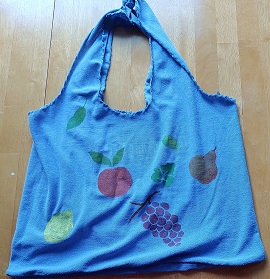
When we take our own bags for all Christmas shopping we save resources, pollution, and waste. It doesn’t matter whether we use cotton, plastic, or paper. The most important thing is to reuse as much as we can. Sometime we get bogged down in idle discussions about whether plastic, fabric, or paper take more resources to make, however the important point is to use what we already have to get away from waste and pollution. I have used my five reusable bags for years and they will probably last me for the rest of my life. They were collected at various conferences and I can’t think of a better use for them. This year I also made a new one from an old t-shirt that was too faded to donate. Old t-shirts or any old fabric you have at home can be repurposed to make nice produce bags, easily washable and light to carry.

I made this light produce bag from an old faded t-shirt
Buy second hand books

Second hand books make a great gift for readers. It is an excellent way to reuse resources and save trees and money. There are plenty of them all around and online and most of them are in excellent conditions. Used book shops have a variety of selection of different editions and unusual books. If you have books you are planning to dispose of you can also donate them to a library or resell them.

Second hand books save trees and resources
Make your own Christmas tree decorations from reused items or from the garden

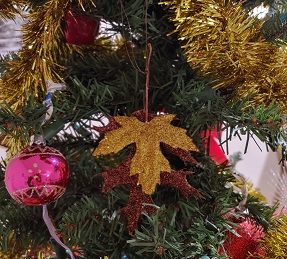
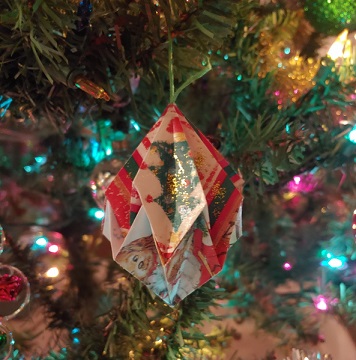
One nice thing about wildlife gardening is that it doesn’t end in September. I keep working in my yard all year round (snow permitting). In winter I bring the garden indoor to make Christmas decorations. I like to use garden items such as leaves and pine cones. Another thing I discovered is that you can reuse old pieces of wrapping paper from last year’s gifts or even cardboard to make decorations that last for a long time.

Cook a vegetarian menu for Christmas

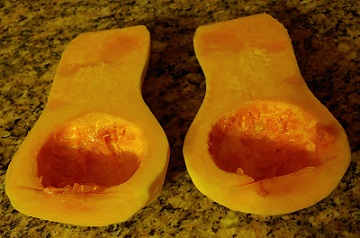
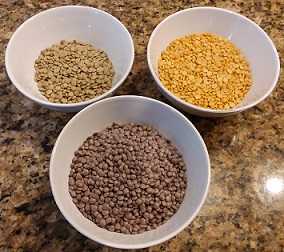
I know that holiday menus are supposed to include meat or fish, however a great dinner can be put together of vegetarian ingredients. Here is one idea for a holiday menu, I tried this for thanksgiving and it came out very good: Appetizer: Bruschetta with hummus, olives, and artichokes. Soup: Mushroom potage. Main entree: Lentil loaf with roasted butternut squash, sage, and chestnuts.

Buy something for yourself and the Earth

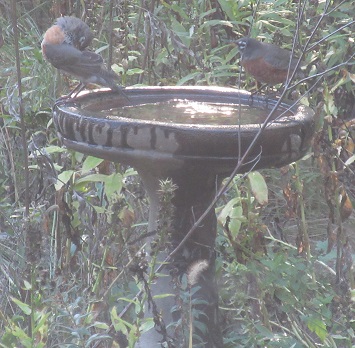
If you feel like buying something to embellish your backyard, owl houses and bird baths enhance the look of the garden and also help wildlife. We can also give a gift to Earth this Christmas and donate to a reforestation or conservation effort, there is much to be done.

There is nothing like a cool bath on a dry fall day

No matter what we do these holidays let’s include sustainability in your consumer choice equation and reward companies that care about the Earth.

The YouChoose App provides several great links to resources on sustainable products. If you have an android phone you can download the app from Google Play using the link on the right.

How do you make your Christmas more sustainable? Send me an email at info@choosesustainable.org

This gold is not for fools

Welcome to YouChoose, a blog where we explore ways of living sustainably. This week I would like to talk about one of my preferred times of the years: the time when leaves fall.

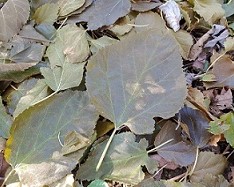
In winter a whole ecosystem lives beneath a carpet of leaves

There is something magic about standing under a shower of gold leaflets on a fall day. It always makes me think of enchanted forests where trees with precious glittering leaves grow. What? You may say, fallen leaves mean spending my afternoon collecting them, bagging them and trashing them, or spending money for a service.

If that is how you feel about leaves, I hope you will change your mind after reading this post. Leaves are a precious gift that our Earth gives us in fall and takes back in spring. I used to do exactly that, collect them and dispose them at the curb side as unwanted “garden waste”. No more. Here is what I learned about leaves and why it is so important to keep and reuse them.

Leaves are an essential component of the ecosystem. They improve the soil, keep the moisture, and provide essential living quarters for insects, amphibians, turtles and others to survive the harsh winter. Have you ever wondered where the fireflies go during the cold months? Their larvae overwinter in the fallen leaves and rotting wood. Keeping the leaves in your yard will ensure a wonderful display of fireflies in summer. I have seen that in my own backyard. Other species that rely on fallen leaves are several butterflies and almost all moths. Many non-migratory birds search for food in the fallen leaves during winter and rely on the emerging insects in spring. Removing and trashing leaves is an unsustainable practice that does great harm to biodiversity. Do you need more reasons to keep the leaves in your yard? Here are a few more.

It will save you money

This is a lose-lose situation. We pay somebody to come and pick up our leaves in fall and then in spring we pay somebody to bring them back into our yard in the shape of mulch. All we have to do is to utilize our leaves to achieve the same results for free. I started using my backyard leaves 2 years ago and I will discuss in future posts what worked and what didn’t work.

If you are really worried about your lawn suffering under the leaves you can select an area of your yard where you can collect all your leaves and let them stay there until spring. By then they will be ready to be distributed around trees or on planted areas.

You can keep a small portion of the yard to collect leaves
It will save you work

If you have a wooded area in your yard you can leave the fallen leaves where they are. No need to do any work. They will provide beautiful colors and habitat under the snow cover. On the lawn I like to spend one hour on a beautiful fall afternoon raking leaves, however a blower will also do if you can stand the noise. I usually collect a many as I can and move them, but also leave some where they are. Some suggest to shred the leaves to make them break down faster, however in my opinion this should really be the last option. Shredding the leaves will likely destroy the caterpillars and other bugs sheltering in them.

I hope this fall you will decide to stop mowing, blowing, shredding, bagging, hauling, and just enjoy all the treasures that our Earth provides for us.

The YouChoose App provides several great links to resources on native plants and sustainable gardening. If you have an android phone you can download the app from Google Play or using the link on the right.

Do you want to share your experience? Send me an email at info@choosesustainable.org

If you liked this post please share it!

Celebrating 2 years of palm oil free soap

Welcome to YouChoose, a blog where we explore ways of living sustainably. This week I would like to share a small victory in my effort to free myself of palm oil (and plastic bottles).

It has been about two years since I bought my last bottle of liquid soap. The original intention was to reduce the use of plastic bottles, after all there are plenty of soap bars that can be used as alternatives. However, as I learned more about the ingredients in common soap bars and how they contribute to deforestation I decided to look for soap without palm oil.

That is where the real challenge began. I naively went around looking for palm oil free soap and realized that it is virtually impossible to find one. Now you may look at the ingredients in the soap (liquid or solid) in your home and be at peace because you won’t see a single mention of palm oil, still you’ll see seemingly innocuous ingredients such as: Sodium laureth (lauryl) sulfate, glyceryn, sodium kernelate, or additional names containing the palm suffix. These ingredients signal the presence of palm oil in the product. For example components such as laureth sulfate can be produced synthetically from petroleum oil or made using coconut or palm oil. Unfortunately, unless it is clearly stated that the product is palm oil free, you can be 99% sure that it is produced using palm oil. Note that many of these products are advertised as “natural”, “vegan”, “green”, which of course technically they are, except that their production brings devastation and deforestation.

Having failed hard on my attempt to purchase a palm oil free soap bar locally I turned my attention to the web. There are online several companies that produce really great palm oil free soap bars, the prices are also quite steep. It is understandable how these products may not be for every pocket, which brings us to the more general question of whether one has to be wealthy to be able to afford sustainable products. As it happens some of these products were too pricey for my pockets as well.

At the end of the day a compromise had to be made. I had to give up a luscious, foaming, creamy soap and fall back on a 100% olive oil soap bar. I resolved to use the scented ones for hands and shower, and the unscented ones for dishes. The price is very reasonable, they come in a paper box and wrapped in paper. They however don’t make a nice rich foam and come in limited scents. In the end for me this is a small price to pay to avoid palm oil and all the trail of destruction that comes with it.

A basic 100% olive oil soap bar

I make liquid soap from the olive oil soap bar this way:

  • Bring 6 cups (or about 1.5 liters) of water to a boil
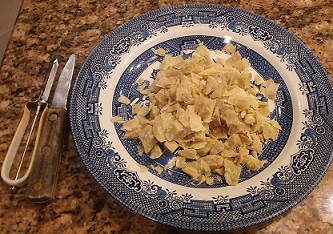
  • Grate 1 bar (or 3.5 ounces) of soap. Cutting the soap in small pieces also works
3.5 ounces of olive oil soap cut in small pieces
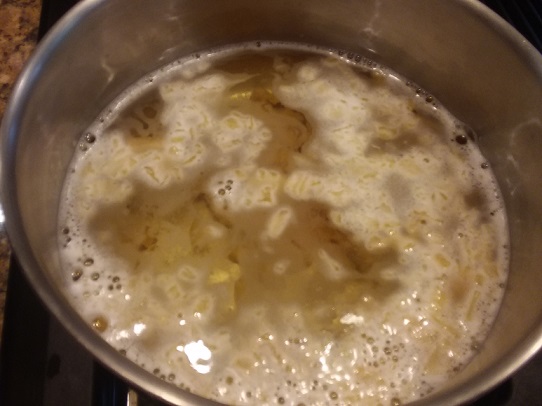
  • When the water is boiling lower the heat and place the soap in water
  • Turn off the heat and let the soap melt
Dissolve soap in water
  • Let it cool off
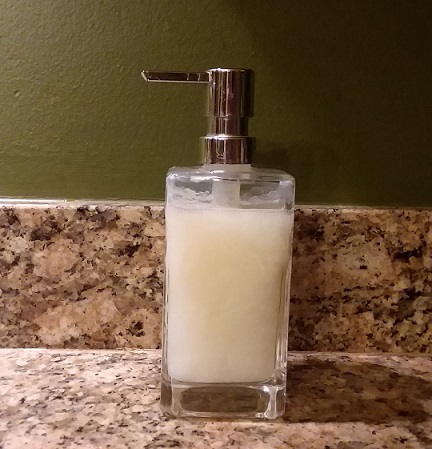
  • Transfer to a bottle, it is liquid at the beginning, but becomes dense later
A bottle of olive oil liquid soap

The amount of water may vary depending on the soap and on personal preferences so one may need to experiment a little. One can also add essential oils for specific fragrances. On my part I now use basic olive soap also for dishes and found it to be fairly good.

Olive oil soap works also for dishes

Perhaps in time I’ll find better alternatives, I recently found a possible substitute for the dishes, but haven’t tried it yet.

At the end of the day I have come to a conclusion that we can’t keep the same habits and hope that the outcome will change. We have to give up some things we like to switch to more sustainable products. We can argue that all these efforts are just a drop and don’t make a big difference, but if more people say no to products derived from palm oil the outcome may actually change.

The YouChoose app provides several links and information on beauty products and cosmetics ingredients that are unsustainable and bad for the environment.

Send me your experience at info@choosesustainable.org and I’ll add it to this blog.

If you liked this post please share it!

Identification and removal of invasive plants

Welcome to YouChoose, a blog about individual climate action. This week I would like to talk about invasive plants and how to remove them from our backyards.

In a previous post we reviewed the reasons why it is important to remove invasive plants from our backyard. Here we’ll review removal techniques. Again we’ll focus on buckthorn, honeysuckle, and garlic mustard.

These removal techniques worked for me, keeping in mind that I had a very bad infestation of a large area.  Removing invasive plants is not an easy task, it is physically tiring, frustrating, and it requires patience. Additionally it is never finished, because, until the unwanted persist in the area, new ones will always appear. However with time the task becomes routine maintenance. Winter, early spring and late fall are the best times to do this job.

Garlic mustard (alliaria petiolata) removal techniques.

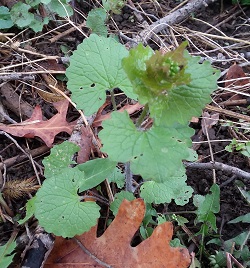
Garlic mustard is probably the easiest to remove. I went from having a large infestation to almost nothing very quickly. The fact that it has a two-year lifecycle works to our advantage because removing the plants before they bloom helps to reduce the population quickly. I was able to remove by pulling. For very large areas spraying with a herbicide may be necessary, however, for backyard-size areas, pulling should be a preferred technique. The population went down in about two seasons. Now I survey the area in spring and remove what I see coming up. Because garlic mustard self-seeds abundantly it is important to dispose of the pulled plants if they have flowers.

A small garlic mustard plant can be removed before it blooms

Buckthorn (Rhamnus cathartica) removal techniques.

Warning: As the name suggests buckthorn trees have very long and sharp spines. When working with developed plants it is important to use gloves and eye protection.

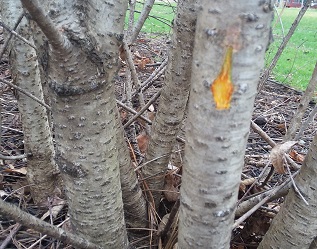
I had a large buckthorn infestation in one section of the yard. Working in winter or very early spring helps because leafless branches are easier to handle. Buckthorn can be recognized in winter by shaving off a small amount of the tree bark to expose what is immediately under. Buckthorn is of a very bright orange color.

Buckthorn has a bright orange color right under the tree bark

Smaller plants (up to 1.5 inches in diameter) can be easily removed by eradicating them with a digging shovel. I was able to remove many younger plants this way. It is a very labor-intensive task so it can be done little by little.

Here are small plants removed by digging. It took me about 1 hour for this amount.

Medium plants (2-3 inch in diameter) were removed with a small chainsaw that even I could handle. For the bigger plants I had to call the help of a professional tree service.

Whether you or a professional do the cutting part, after the tree is cut it is necessary to brush the stump with herbicide such as 19% Glyphosate. This will prevent regrowth.  Warning: 19% Glyphosate is found in commonly used Roundup. Despite their extensive availability herbicides should be used with extreme care and should go only on the interested area. Do not spray it as it increases the probability of inhaling it. You can use a brush to cover the stump.

Cutting the adult buckthorn tree is only the beginning of the battle. Buckthorn trees produce thousands of seeds that will generate small new plants for a few seasons after. It is therefore important to monitor the area and continuously remove the young plants. This is an easier task, monitoring the site a few times in a year will be enough to keep up with the regrowth.

Honeysuckle (Lonicera family) removal techniques

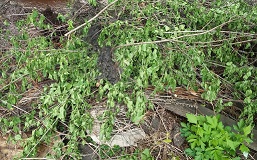
Once the buckthorn was gone the honeysuckle became more aggressive and was the second target of my battle against invasive plants. I was able to remove the younger plants with a digging shovel. However, the infestation was very bad, and it took two years of spring and summer working to achieve results. The few large plants were removed by a professional service, once the larger plants were cut it was necessary to brush the stump with 19% Glyphosate to prevent regrowth. New growths are now uprooted periodically as they emerge. Early spring and late fall are good months for honeysuckle removal as the plants are easily identifiable.

This small honeysuckle is easily removed by uprooting it

Once you have removed these invasive species from your yard, you can help our Earth by replacing them with native species that provide food and shelter to many creatures.

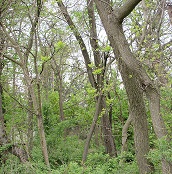
The buckthorn-free wooded area
Here is a list of alternatives to buckthorn
  • Dogwood (Cornus rugosa, Cornus alterifolia)
  • Serviceberry (Amelancher arborea, Amelanchier laevis)
  • Elderberry (Sambucus Canadensis)
  • Nannyberry (Viburnum lentago)
  • Chokeberry (Aronia melanocarpia)
  • Spice Bush (Lindera Benzoin)
  • Sumac (Rhus Glabra, Rhus Aromatica and similar)

The YouChoose App provides several great links to resources on native plants. If you have an android phone you can download the app from Google Play using the link on the right.

Do you want to share your experience? Send me an email at info@choosesustainable.org

A palm oil free life: Is it possible?

Welcome to YouChoose, a blog where we explore ways of living sustainably. This week I would like to talk about achieving a palm oil-free life.

Avoiding palm oil is imperative to stop deforestation. It is also one of the most difficult tasks when transitioning to a sustainable lifestyle. Palm oil was a relatively unknown ingredient until a few decades ago, but now it has become one of the most pervasive components in the mass-produced products we buy every day.

Palm oil is found in almost everything we eat: cookies, crackers, candies, spreads, jellies, cereals, and packaged products. It is also found in many house products such as laundry soaps, and in personal care products such as shampoos, soaps, conditioners, lotions, lipsticks, creams, cosmetics, and toothpaste.

Occasionally we hear halfhearted declarations from some world leader about reducing the import of products that are responsible for deforestation, however, after doing research for the YouChoose App, I learned one important thing: If I wanted to find out who was responsible for the extensive deforestation of the past few decades, the decline in biodiversity, and the extinction of primates I needed to look no farther than the mirror.

The high and growing demand for this cheap oil by multinational corporations has led to widespread destruction of rain forests in South East Asia and is bringing primates and other species to the verge of extinction. These rain forests are cleared usually by setting them on fire and are replaced with mono-culture plantations of palm trees (which are not a native species to that region) to produce palm oil.

I checked the products in my house, in the pantry, in the bathrooms and kitchen and found out that most of them indeed contained (explicitly listed or hidden behind other names) ingredients that are derived from palm oil.

Look at the ingredients of every packaged item you want to purchase

Cleaning and personal care products don’t list the ingredient as palm oil, but hide it behind the names of the chemical compound derived from it. The YouChoose App provides a list of chemical compound names that usually indicate the presence of palm oil.

A common skin-care product found in convenience stores. Can you spot the palm oil?

I really had to take a hard look at myself, which is never easy to do. I could no longer blame others for my doing. In that painful moment of awakening, I decided to embark on a journey to free myself of palm oil.

Here is a list of actions we can take to eliminate or substantially reduce our dependence on palm oil. Each action in itself is a journey and will be discussed in separate posts.

  • Be firm in our resolve, this is a very difficult path, but we shouldn’t doubt that it is worth pursuing.
  • Read ingredients of every food item at the grocery store. Palm oil is found in the most unexpected places.
  • Read ingredients of personal care products and avoid those that are derived from palm oil. A list is provided in the YouChoose App and it will also be provided in a following post.
  • Read ingredients of house cleaning products and avoid those that include palm oil.
  • Read ingredients of beauty and cosmetic products and avoid those with palm oil. A list of these is provided in the YouChoose App and it will be provided in a following post.
  • Don’t be fooled by “vegan”, “green”, and “eco” labels or by statements from corporations on how they plan to make their palm oil sustainable by 2025 or 2030. These are empty words that only betray the callousness of these enterprises.

After you go through this list you will discover that there aren’t many products you can buy in stores and, if you are brave enough, your journey will begin. It will involve giving up things you like, abandoning easy choices, and probably some discussions with your friends and family.

It is also important to remember that not all palm oil is destructive, there are many small companies that source their palm oil from places were the plant Elaeis Guineensis is native (mostly West Africa) and grown responsibly. These are not the major brands found in big store shelves. Before purchasing products with this ingredient it’s important to check with the company to see where and how they source their ingredients and purchase only if the answer is satisfactory.

To answer our initial question: Is a palm oil free life possible? The answer is Yes, but it’s not easy. Here is one topic where doing the right thing involves choosing the narrow path. I’ll share my progress in following posts. The YouChoose App provides links and resources with information on this topic.

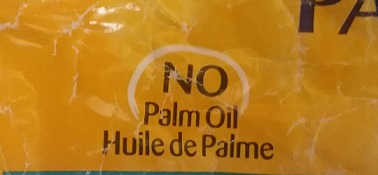
Labels like this are unfortunately rare

Do you want to share your progress on eliminating palm oil from you shopping list? Send me an email at info@choosesustainable.org

Why we should remove invasive plants

Welcome to YouChoose, a blog about individual climate action. This week I would like to talk about invasive plants and why we should remove them from our backyards.

In this post we’ll focus on buckthorn, honeysuckle, and garlic mustard, of which I have extensive experience, however this same argument can apply to other invasive plants in other regions.

Because my property borders with a neighboring subdivision, one side of the yard was left wooded presumably as a delimiter between the subdivisions. The area was infested with buckthorn, honeysuckle, and garlic mustard. These plants had created a thick border between the two properties. Honestly I wasn’t aware of their devastating effects on the native oaks. For this reason I left them unchecked for many years, thinking that they provided a nice thick screening, until I realized that I was contributing to the destruction of Illinois ecosystem.

After the offenders were removed other plants could grow, such as the elderberry that still provides a nice screening between the properties in addition to having a high value for wildlife.

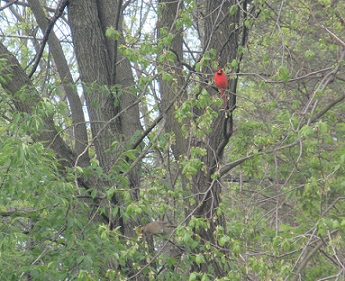
A couple of red cardinals enjoys the buckthorn-free wooded area in the backyard. Can you spot the female?

Unfortunately my yard was nothing exceptional, I see a lot of buckthorn left between backyards and between backyards and roads. Therefore, let’s first review here the reasons why it is important that we do our part and remove these plants.

Garlic mustard (alliaria petiolata)
Here is a small garlic mustard plant in early spring.

Garlic mustard is an aggressive invasive herb imported from Eurasia. It has a two-year lifecycle and it spreads aggressively in wooded area. It can quickly occupy large areas of a forest and it does not allow other native plants to germinate. For these reasons it is responsible for the decline in population of many woodland species.

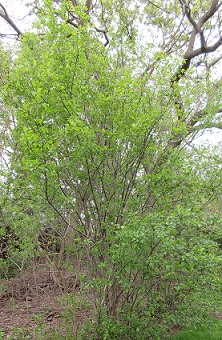
Buckthorn (Rhamnus cathartica)
Buckthorn plant

Buckthorn is an aggressive shrub originating from Europe. It quickly spreads in shaded areas. Leaves are developed early in the season and they last until late fall, thereby casting a shade that doesn’t allow sunshine to reach the younger oaks. The emergence of early leaves impacts the bloom of spring ephemerals. In addition these plants grow densely, reducing the growth and survival of native shrubs and trees.

Buckthorn affects the chemical composition of the soil making it inhospitable to other plants. The plant produces thousands of seeds that are also spread to remote areas by birds. The larger impact is the destruction of oak forests and the entire ecosystem that depends on them.

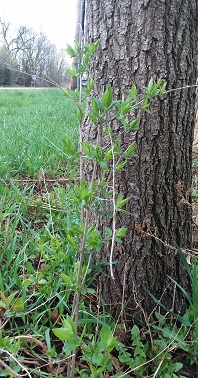
Honeysuckle (Lonicera family)
Honeysuckle plant

Just like buckthorn honeysuckle is a fast- growing shrub or vine from Eurasia. It has a devastating effect on the forests of the Midwest because it spreads quickly, grows leaves early and doesn’t allow other plants to emerge. I have first-hand experience of the infesting capability of this plant which is in my opinion worse than that of buckthorn.

Other regions may have different invasive species, however their impact on the ecosystem is similar. Wherever you are, you should research whether invasive plants are present in your yard. If you do have them, but are hesitant (as I was) to remove them because you like the screening or the look they provide, I strongly encourage you to go ahead and replace them with native shrubs. The damages produced by these foreign species far outweigh the few advantages that they may procure.

By removing these invasive species from your yard, you will be doing a great service to the ecosystem and to our Earth and by replacing them with native species you will provide food and shelter to many creatures.

Here is a list of alternatives to buckthorn
  • Dogwood (Cornus rugosa, Cornus alterifolia)
  • Serviceberry (Amelancher arborea, Amelanchier laevis)
  • Elderberry (Sambucus Canadensis)
  • Nannyberry (Viburnum lentago)
  • Chokeberry (Aronia melanocarpia)
  • Spice Bush (Lindera Benzoin)
  • Sumac (Rhus Glabra, Rhus Aromatica and similar)

The YouChoose App provides several great links to resources on native plants. If you have an android phone you can download the app from Google Play using the link on the right.

 In the next post we’ll discuss identification and removal techniques.

Do you want to share your experience? Send me an email at info@choosesustainable.org

Start a native garden: Motivation

Welcome to YouChoose, a blog where we explore ways of living sustainably. This week I would like to share the first steps we can take towards sustainable gardening. There are many topics to be discussed on this subject and I plan to share several postings about my journey to achieve a 100% sustainable backyard.

The focus of this post is motivation. It is important to be confident that our efforts make a difference. My experience bears witness to this fact: I have seen my backyard quickly transform from a lawn wasteland to an ecosystem full of life.

After-A part of the tall prairie section in my backyard
Before-My backyard as it was with the traditional suburban landscape

Here is just a quick overview, we’ll go into the details in future posts.

QUICK TIPS TO START – STEPS to DO

  • Be motivated and be sure that your efforts make a difference
  • Don’t be overwhelmed; small steps go a long way
  • Remove invasive plants (if any)
  • Reduce the amount of lawn in the yard
  • Plant native forbs and shrubs
  • Provide wildlife with places to live and shelter
  • Plant native trees
  • Provide water

QUICK TIPS TO START – things to AVOID

  • Being obsessed with lawn appearance
  • Being afraid of making mistakes
  • Using herbicides or pre-emergent chemicals
  • Using pesticides
  • Collecting and disposing of leaves

My neighborhood is a typical Midwest suburban neighborhood with single family homes surrounded by yards landscaped with lawn (a lot of it) and mulched areas planted with evergreens, roses, and plants readily available at general home improvement stores or nurseries. As a foreigner in a foreign land my initial efforts were devolved to maintaining what was found. Therefore, I joined the chorus, hired a lawn maintenance company to take care of the lawn and visited local nurseries or whatever was nearby to purchase familiar plants: roses, azaleas, peony, etc. Plant diseases or parasites were treated with chemicals recommended by the nurseries and, occasionally, a mosquito treatment kept the yard free of bugs.

It is likely that my experience mirrors the one of many homeowners. It was only later that I realized that the weed-free, picture-perfect look of the suburban homes is achieved at a very high environmental cost. The perfect lawn is maintained by pouring herbicides and fertilizers, in addition to constant mowing. The weed-free mulched areas are loaded with pre-emergent chemicals, and the bug-free backyard requires the use of non-selective pesticides that have repercussions on the entire food chain of the creatures living (or better trying to survive) in our backyards.

The eye opener for me came one day when I was going for a walk in the neighborhood and came across a road that was developed on one side and undeveloped on the other. The developed side had new homes surrounded by a luscious lawn of an intense green. The mulched areas were planted with flowers of almost a neon color that matched some of the house details, nothing was out of place, the whole view was studied to the detail. The undeveloped side in the front was filled with milkweed and other tall grasses and had the messy look of the summer prairie. When I stopped and listened, the developed part was dead silent, not a buzz to be heard, not a bug to be seen; the undeveloped side was a concert of sounds and voices of creatures living there.  This was when the realization came to me, that my move into a suburban acre was forcing all the other creatures living there to move out or die. I was depriving many species of food and shelter and was poisoning the soil and water.

Since that day my yard has changed very much and it is still an ongoing effort. I have also become addicted to bugs and can’t stop taking pictures of them and being amazed at their shapes and colors.

Are you ready to start the transition? Don’t wait and don’t be afraid of the messy look, there are wonderful native plants that are perfect for the front yard. My only regret is that I didn’t start earlier. It takes about 3 growing seasons to go from nothing to an initial blooming backyard.

In a next post we’ll discuss the first step: How to identify and remove invasive plants.

Do you want to share your motivation for starting a native gardening? Send me an email at info@choosesustainable.org

How to reduce plastic bags

Welcome to YouChoose, a blog where we explore ways of living sustainably. This month I would like to share one step we can all take to reduce our environmental footprint: Reduce the use of plastic bags. This seems like a fairly straightforward step, however, as it always happens when trying to change long ingrained habits, it takes some discipline, planning, and a little time. There is more to plastic than just bags and some plastic is difficult to eliminate depending on where one lives because of the lack of alternatives. For this reason we’ll focus on different items in different posts.

If you look around you will see that there is still much to do in this area. In some places plastic bags are banned altogether, however, while we wait for businesses to help out, individual actions are fundamental in making a difference and this is really one area where they can. The fact is that no matter how large or small the item we purchase is, we seldom get out of a store without holding a plastic bag, big or small, plain or decorated, distinctive or unremarkable. Even if the purchased object is something that could easily fit in a pocket or a purse, it is invariably placed and handed to us in a plastic bag and we, like automata, extend our hand and grab the bag before heading out of the store.

Free produce bags and cotton bags upcycled from old fabric are available. Check them out here.

QUICK TIPS TO REDUCE PLASTIC BAGS

  • Recognize the importance of the problem and the need to take action
  • Be disciplined and train yourself to refuse plastic bags
  • Set realistic goals and achieve them one by one
  • Keep a set of reusable canvas bags in the car
  • Keep a set of reusable produce bags in the car
  • When checking out of any store ask yourself: “Do I really need a bag?”
  • Buy produce that is not packaged in plastic bags
  • Consider alternatives to plastic bags in the house

First of all, why is it important that we reduce plastic bags? Because they are contributors to a large percent of the plastic pollution of our planet on both sea and land and because they are for the most part unnecessary. That is also the reason why I find it really puzzling that we still rely so much on them. No day goes by without a news article or a talk about the scourge of plastic pollution in the oceans, and yet we fail to make a connection between that problem and our everyday habits. In fact I still see 99% of buyers coming out of stores carrying plastic bags. There is definitely room for improvement.

I routinely finds grocery store plastic bags in my backyard

I myself used to not worry so much about it, thinking that I recycled the bags after using them. However I realized later that recycling should be the last resort for the plastic we really can’t dispense with, not a feel-good excuse. In fact, recycling is not a sustainable option because it requires energy and because much of what we put in the recycle bin ends up somewhere in some other country still polluting land and rivers, just out of our sight.

WHERE TO START?

Step 1: Find the source

Action #1: Find out the provenance of the plastic bags in your home. At the beginning I tried to find the source of the plastic bags in my home. Certainly, the grocery store was one major source of plastic bags.  I used to be flooded with plastic, from packaged vegetables (for example a bag of potato, onions, and apples, etc.), frozen items, not to even mention plastic containers. Some high-end grocery stores have a paper bag only policy. Very few grocery stores in my area do offer a paper option, however it seems that most people opt for plastic. Additional, but less frequent, sources of plastic bags included other stores such as clothing, household, home improvement, or anything else. Therefore my first target was the trip to the grocery store.

Step 2: Eliminate grocery store bags

Action #2: Check if you have reusable bags in your home to put to a good use! If not available, you can purchase a set of washable canvas bags and train yourself to carry them with you in the store. After thinking about it I realized that several canvas bags collected throughout the years from meetings, conferences, and organizations I support were unused in the closet. I decided to take those with me every time I went shopping. The biggest challenge at the beginning was to remember to put the bags in the car and take them with me in the shop. It took me a while, but I can assure you that after a few months of persevering it becomes second nature to remember to carry the reusable bags with you. Now I keep the bags in the car (trunk or the back seat) and it has become a part of my habits so that I also carry them when shopping in other stores.

Step 3: Eliminate produce bags

Action #3: Get organized with reusable bags for fruits and vegetables. Once I settled with the reusable canvas bags I focused on the plastic produce bags. Reusing these didn’t work out very well because they tear easily and sometime become dirty so I ended up with shreds of dirty plastic bags that couldn’t even be recycled. I then decided to just place the vegetables directly in the shopping cart and then in the canvas bag with everything else at the checkout, this is an option, however it didn’t work out well for me.

For this reason, I decided to invest a little amount of money (perhaps $30) to purchase reusable produce bags. I purchased two types: One is a natural fiber that has the consistency of a net, the second one is a synthetic pouch. They both come in a set of many sizes which are large enough to contain any amount of vegetables. Especially the canvas ones seem small, however they stretch and expand with the weight of the vegetables. I use the natural fiber bags at the grocery store and the other type to store the vegetables in the refrigerator, this way I never run out of them.

At the beginning I was a little bit worried about rotting, but I can definitely say that it is not the case and this system has worked very well for me for several years. Both models are washable in the washer so I just add them to the load and dry them quickly by hanging.

Step 4: Eliminate packaged fruit and vegetables

Action #4: Make a point to purchase plastic-free produce. The simple steps described above have definitely helped eliminate the vast majority of plastic bags entering the house. After settling in this routine (it took me several months) I focused my attention on selecting bag-free fruits and vegetables. Instead of purchasing potatoes and onions in five-pound bags, I now buy everything that is non packaged. It is true that sometimes it’s impossible to find what we like without plastic. For example we used to buy some small apples that were available only in plastic bags. I stopped buying them and now look for similar products without the plastic. Similarly, if organic vegetables come in plastic I opt for regular. Buying in bulk may be slightly cheaper, however if possible bag-free produce is a better choice.

Step 5: Reduce plastic bags in the house

Action #5: Think of ways to reduce plastic bags use in your home. Before I decided to reduce plastic bags, I used to keep one large trash bag in the bin and smaller bags around the house which were replaced weekly. In addition there were small bags to clean the cats’ litter box and Ziploc storage bags to pack my daughter’s lunch. We’ll talk about zero waste lunches and eliminating Ziploc storage in a different post. After thinking this through I realized that replacing all those plastic bags every week was really unnecessary. The kitchen bag was replaced with a compostable bag for all waste. There was an initial worry that a compostable bag in the kitchen will leak, however I found an excellent 13-gallon compostable bag that lasts the entire week without any leak. Similarly, all other bags in the house are not replaced weekly anymore but on a need basis. As for the waste from the cats’ litter box it now goes in small paper bags. In total we are down to one plastic bag per week.

In spite of all my efforts, I still produce enough plastic bags that occasionally a trip to the recycle collection is necessary, the amount of plastic that goes to recycle however is now considerably reduced. Where it used to be the equivalent of one grocery bag full of plastic every about 2 weeks it is now the same every 2-3 months. Additional sources that I am trying to reduce are bread and frozen vegetable bags.

To conclude this blog, I would like to extend two challenges here:

The first challenge is to ask ourselves whenever we are checking out of any store: Do I need a bag for this? Is this something that I can just carry to my car?

The second challenge is to take ownership of the plastic problem and make a conscious effort to take reusable bags with us every time we go in any store and tell the cashier: I brought my own bag, no need for plastic.

Do you want to share your experience about reducing plastic bags? Send me an email at info@choosesustainable.org