Welcome to ChooseSustainable.org a blog about individual climate action. In this series of short posts I present a native plant to encourage everybody to abandon our traditional way of gardening (basically a continuous fight against nature) and engage in sustainable gardening practices that nurture the ecosystem, sustain wildlife and foster biodiversity. I show the plants in a garden setting to dispel the myths depicting them as weedy and unsuitable for gardens.
In this post I’ll talk about one of the most important plants for us living in the Midwest of the USA: Asclepias Syriaca (common milkweed). There are many native varieties of Asclepias, some of which are listed as threatened or endangered in various states. I start here with one of the varieties that used to be the most common. This variety has been steadily declining due to agricultural practices and suburban development.
Quick facts:
- Zones:3-8
- Bloom time: Summer (June-July)
- Sun: Sun to part sun
- Soil Moisture: Medium wet to dry
- Aggressive: No
- Front yard: YES
- Height: 3-5 feet
- Status: Declining
- Maintenance: LOW
- Wildlife value: Very High
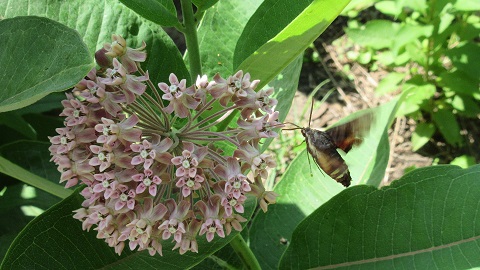
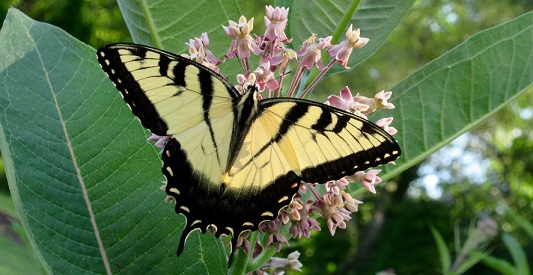
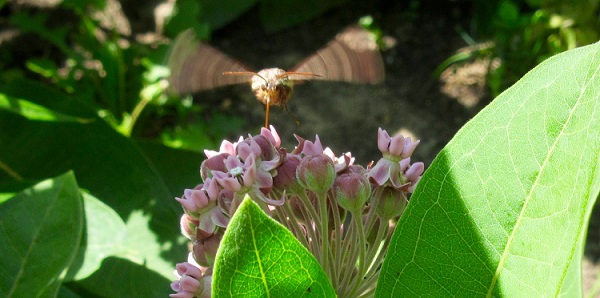
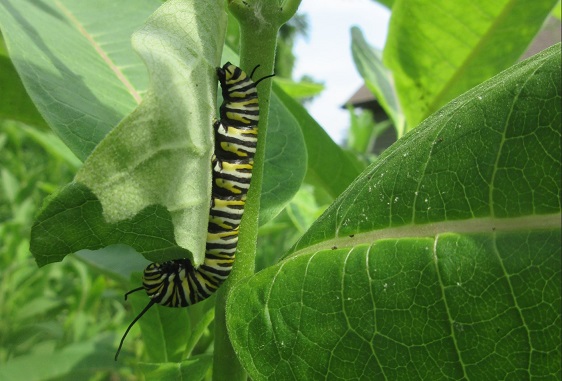
Wildlife connection: The flowers of the plant attract many insects, including butterflies, moths, bees and bumblebees. The foliage is the only source of food for the caterpillars of the monarch butterfly and the tussock tiger moth, and is a preferred source for other varieties of moths.
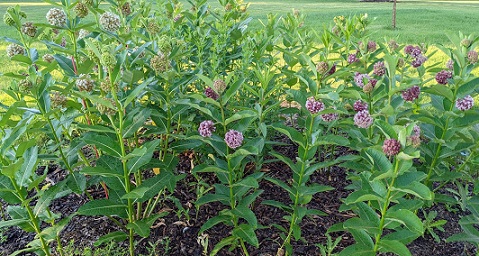
In spite of its name containing the unflattering ‘weed’ designation, Asclepias Syriaca is a marvelous plant with a showy bloom and a scent reminiscent of lilacs. It has an undeserved reputation for being weedy and aggressive. In truth I have had the opposite experience, as I struggle to maintain the population. It seems to me that this plant doesn’t like competition and, after having nearly lost the entire population, I resorted to making an area just for them, hoping that they will be able to increase in number.
The plant takes about 3 years to fully develop from seed. If purchased as a young plug it usually blooms in the second year. The foliage is very attractive through the summer, and it becomes yellowish and sometime brown in late summer and early fall. Through the summer you will notice a lot of activity on the leaves and flowers.
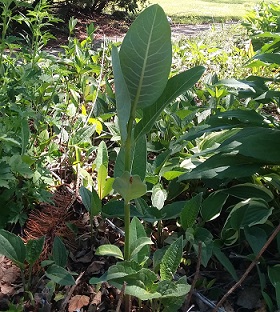
The bloom starts in late June and lasts several weeks. During this time many visitors approach the plant. The importance of the plant, however, goes beyond its bloom as the leaves are highly prized by many insects. For this reason we should never spray milkweed with any kind of insecticide or pesticide. Doing so will cause extensive damage on many levels of the food chain and will kill caterpillars feeding on the plants.
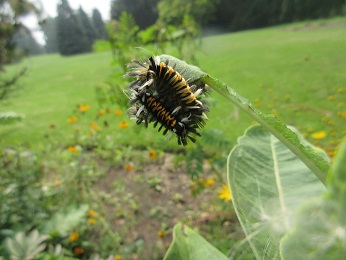
On this topic I would like to talk about another caterpillar that feeds on milkweed: the Tussock Tiger moth caterpillar. In late summer you may find such visitors on the plants. These caterpillars are voracious and they will eat an entire plant from top to bottom. For this reason you may be tempted to eliminate them. The Tussock Tiger moth caterpillar is also a native species that relies on milkweed and has the right to feed on it. We should not destroy other species for the sake of the monarch butterflies. In 15 years I have had one instance where tiger moth caterpillars consumed a large number of plants. Having a large population of milkweed is the best way to ensure that everybody can make use of it.
Besides providing beauty and value for your yard from spring to fall, Asclepias syriaca will enrich your winter garden with large seed pods that release seeds. I collect seeds but also leave some for dispersal through wind.
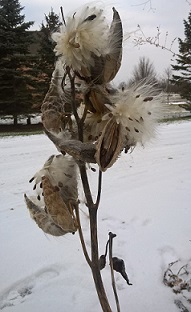
Choosing the right source for your milkweed plants is a very important first step. I do see milkweed in nurseries (usually not the asclepias syriaca) sold as already blooming plants. Usually milkweed doesn’t take transplant well and establishing an already developed plant can be very difficult. Additionally, according to The Xerces Society, pesticides are found in milkweed sold in nurseries, read HERE the report. It is better to purchase young plants at local forest preserve sales, conservation societies, or from specialized nurseries that openly declare their policy on pesticides and neonicotinoids.
I hope you will consider Asclepias syriaca for your garden, Every native plant you add brings back a piece of ecosystem that is vital to biodiversity.
Would you like to talk about a native plant in your backyard? Please send me your post at info@choosesustainable.org
If you liked this post please share it!
 You Choose