Welcome to ChooseSustainable.org where we explore ways of living sustainably. In this series of short posts I present a native plant to encourage everybody to abandon our traditional way of gardening (basically a continuous fight against nature) and engage in sustainable gardening practices that nurture the ecosystem, sustain wildlife, and foster biodiversity.
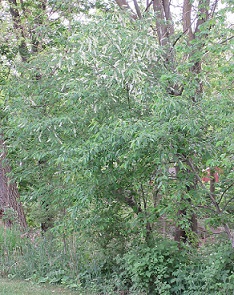
In this post I’ll talk about a large cherry tree: Prunus Serotina (Black Cherry).
Quick facts:
- Zones:3-7
- Bloom time: Early spring (Apr-May)
- Sun: Sunny area to shade
- Soil Moisture: Wet-dry
- Aggressive: NO
- Front yard: YES
- Height: (60-80’)
- Status: OK
- Maintenance: NONE
- Wildlife value: Very High
Wildlife connection: A host of insects, birds and mammals depend on this tree for survival. The early flowers provide food for many species of bees and bumblebees, along with smaller insects. The leaves provide food for the caterpillars of several butterflies and moths and for a large variety of beetles. The fruits are extremely important for birds and mammals such as foxes, raccoons, opossums, chipmunks and squirrels.
I consider myself very lucky because I had a large black cherry in my yard. The tree was able to survive the invasive buckthorn and, after the buckthorn was cleared, two new small trees emerged. The large tree died last year, but the young trees are growing fast.
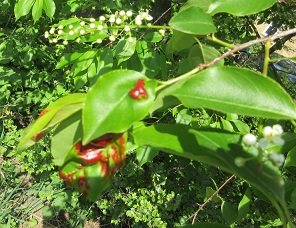
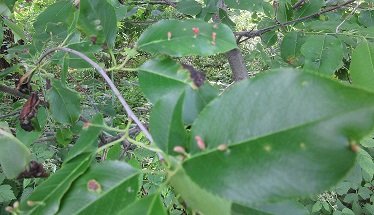
The leaves of this tree are bright green and shiny. If you look at them up close you will notice that many leaves have bumps and holes. There is no need to worry, it just means that the tree is serving its purpose and it is being used by insects, as it should be.
In mid spring (mid to late May in my yard) the tree blossoms with nice white flowers that unfortunately don’t last very long, perhaps 2-3 weeks. In summer the flowers are replaced by small black cherries that look more like berries. It is hard to catch a glimpse of them as they quickly disappear, eaten by birds.
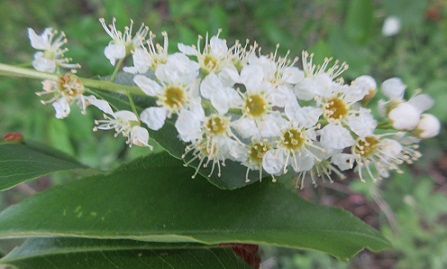
The importance of this tree to the ecosystem is hard to overstate and it is on the same level as the oak’s. Both trees provide to the essential needs of a large number of species. If you do have some room in your yard and are thinking of planting a tree, Prunus serotina is an excellent choice for conservation.

Please make sure to purchase native flowers from nurseries that don’t use neonicotinoids and look out for the full botanical name to avoid cultivars. The YouChoose App provides resources and several links to useful sites for sustainable gardening.
Would you like to talk about a native plant in your backyard? Please send me your post at info@choosesustainable.org and if you liked this post please share it with others.
 You Choose