Welcome to ChooseSustainable.org where we explore ways of living sustainably. In this series of short posts I present a native plant to encourage everybody to abandon our traditional way of gardening (basically a continuous fight against nature) and engage in sustainable gardening practices that nurture the ecosystem, sustain wildlife and foster biodiversity.
In this post I’ll talk about a mystical flowering plant of striking beauty that I recently planted in my garden: Cimicifuga Racemosa (Black cohosh).

Quick facts:
- Zones:4-8
- Bloom time: Summer (June-September)
- Sun: Shade to part shade
- Soil Moisture: Medium, Wet
- Aggressive: No
- Front yard: YES
- Height: 5-7 feet
- Status: At risk in most native areas. Rare and endangered in Illinois and Massachusetts
- Maintenance: LOW
- Wildlife value: Medium-High
Wildlife connection: This plant attracts many small insects, including small flies, bees, and bumblebees. It is also the host plant for the Appalachian Azure butterfly caterpillars.
Sometime we feel it is hard to grow anything of value in the shaded areas of our yard. In the front of my house there is just such a space where sunshine is limited. The traditional suburban gardening solution for those “unwanted” areas is to plant hostas. I used to think along those lines and that is why it took me so long to come up with a planting strategy for the front. I now have learned that there are magnificent native plants for shade and regret not having more shaded areas. This past spring while looking for shade loving ideas I came across this marvelous perennial.
Although black cohosh is not common here and the region where I live is at the western far end of the native range, I couldn’t resist planting one next to the front door. In Illinois black cohosh is rare and listed as endangered. The plant is more common on the Appalachian Mountains where it is harvested for its medicinal properties and generally classified as at risk. Sometime I look at it and imagine how beautiful this plant must look in its native environment.
Because of its slow growth it is not recommended to start from seeds, therefore I planted a mid size plant (about 1 foot) in spring. Black cohosh loves a rich soil typical of the deciduous woodlands of which is native, it also needs space because, if everything goes well, should reach 6-7 feet in height. So far it seems happy where I planted it. The plant develops with a base of broad leaves of an intense green.
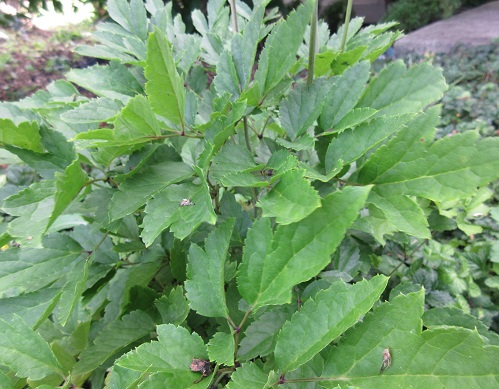
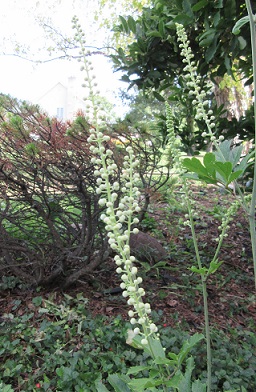
The leaves cover the base of the plant giving it a nice full appearance. From the base spikes of white small flowers stand up. The small flowers open up to create a feather like appearance of the spikes. The plant bloomed in summer and it grew quickly about one foot. The full bloom started at the beginning of August and it lasted until September.
If you have a shaded area in your yard that you wish to fill up with a spectacular and unusual plant black cohosh is an option. A few things to keep in mind are the following:
- Make sure you have room. If everything goes well the plant should grow to a large size.
- Please make sure you purchase from a reputable source. The population of this plant is in rapid decline everywhere and the species is generally considered at risk. Major threats come from excessive harvesting for its medicinal use and loss of habitat due to deforestation and development. I purchased mine from a conservation society which has the conservation of species at heart and doesn’t harvest plants from the wild.
Because this is one of the latest additions to my garden I’ll report more here once the plant grows to its final size, hopefully it’ll be good news.
The YouChoose App provides several links to resources to get you started with sustainable gardening. It also provides links to native plants in specific regions. You can download it from Google Play or through the link on the right. Please make sure to purchase native flowers from nurseries that don’t use neonicotinoids and look out for the full botanical name to avoid cultivars.
Would you like to talk about a native plant in your backyard? Please send me your post at info@choosesustainable.org
If you liked this post please share it!
 You Choose