Welcome to ChooseSustainable.org where we explore ways of living sustainably. In this series of short posts I present a native plant to encourage everybody to abandon our traditional way of gardening (basically a continuous fight against nature) and engage in sustainable gardening practices that nurture the ecosystem, sustain wildlife and foster biodiversity.
This past week the US Fish and Wildlife Service declared 22 species (including several birds) extinct. Among the reasons for extinction loss of habitat is the most important. Essentially we cut down the forests that sustained some of these species. Loss of habitat however is also due to agriculture and suburban development. The sad news reminded me of the importance to restore native habitat in our backyard. It is too late to save the species that have disappeared, but is not too late to save those that are still surviving. In this post I’ll talk about a native plant that is fighting for survival and that could disappear before most of us even know of its existence: Sanguisorba Canadensis (Canadian Burnet).
Quick facts:
- Zones:4-8
- Bloom time: Spring (Aug-Oct)
- Sun: Sunny to part sunny
- Soil Moisture: Medium wet, wet
- Aggressive: NO
- Front yard: YES but it grows tall
- Height: 5’
- Status: Threatened, Rare, or Endangered in most of its original habitat including Illinois
- Maintenance: NONE
- Wildlife value: Medium
Wildlife connection: This plant is one of the last fall blooming plants. It attracts bees, bumblebees and small insects when the other fall plants are done. Besides its wildlife value the plant has value for biodiversity.
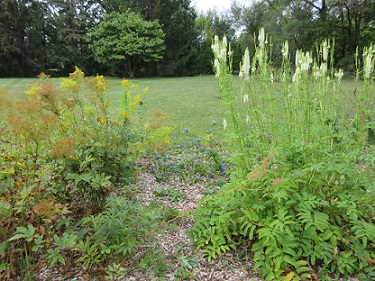
One section of my backyard presents a slope that, being of course covered with lawn, caused storm water to runoff and accumulate at the bottom, creating a flooded area with standing water that lasted for few days after heavy rain. For this reason I decided to create a planting area where the water accumulated. One of the plants I chose for this area was the Canadian Burnet. I planted three bare roots and watched them grow into three marvelous plants in about 3-4 seasons.
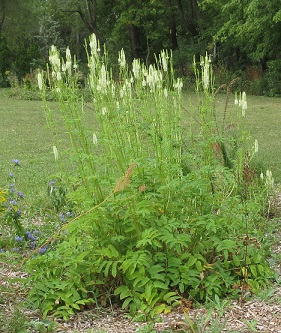
The plants grew quite large, more than I expected, reaching a height of about 5′, they emerge in early spring with a nice foliage and fully develop by summer.

Around the end of August the flowers are ready to bloom. Full bloom is in September and lasts until mid October if the weather is favorable. The leaves are quite large and the flowers have a feather-like appearance.

The plant is happy in medium wet soil, however, once established, it can sustain long droughts. If you have a section of the yard that gets good rainwater it is a good place for this plant. The plant is beautiful, however if it rains a lot it can fall over due its large size and it may be necessary to provide support to keep it up.

Given its size and unusual appearance, the plant can be used as a focal point for the fall garden. It doesn’t fail to catch the attention. The white bloom goes very well with the purple and yellow colors that dominate the season.
In conclusion, if you live in the native range of the Canadian burnet and you have room for it, you should consider it as a fantastic addition to your backyard.
Please make sure to purchase native flowers from nurseries that don’t use neonicotinoids and look out for the full botanical name to avoid cultivars.
The YouChoose App provides several links to resources to get you started with sustainable gardening. It also provides links to native plants in specific regions. You can download it from Google Play or through the link on the right. Would you like to talk about a native plant in your backyard? Please send me your post at info@choosesustainable.org
If you liked this post please share it!
 You Choose