Actions and News: Agreement reached at the UN conference on marine biodiversity

Welcome to YouChoose, a blog about individual climate action.

An agreement was reached at the UN Fifth Intergovernmental Conference, or IGC5, to protect Oceans’ biodiversity.

Thank you to all who signed the petition. Below is the link to Greenpeace press release.

Historic UN Ocean Treaty agreed

Keep the pressure on!

Stop buying fish from grocery stores that disregard basic environmental and human right protections. Click HERE to sign the Greenpeace petition to US giant grocery store chains to stop selling tuna linked to environmental destruction.

Do you want to know where your grocery store stands in the tuna scorecard? Check out here the Greenpeace report to find out. You need to place your cursor on the image and advance the pages at the bottom of the image. The report scorecard is on page 4. Think of this report next time you want to buy tuna!

If you liked this post please share it!

Is this a key to sustainable EVs?

Welcome to YouChoose, a blog about sustainable living. In this post I wanted to share some information about batteries and electric vehicles.

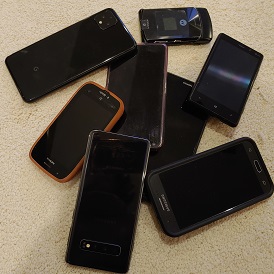
If you have a lot of old cell phones in your home you may be interested in this Argonne National Laboratory OutLoud lecture on battery recycling. It contains very useful information on how batteries from cell phones can provide useful material to make new batteries. It takes less than 200 old phones to make a new EV battery! It is a good incentive for all of us to find out where the nearest battery recycling facility is located and drop off the old batteries cluttering our drawers.

Below is the link:

If you liked this post please share it!

Actions and News: UN conference on marine biodiversity resumes in NY

Welcome to YouChoose, a blog about individual climate action.

The UN Fifth Intergovernmental Conference, or IGC5, to protect Oceans’ biodiversity is underway in New York.

https://www.un.org/bbnj/

Here is a WWF article that explains why it is important that we protect oceans from destruction. Click on the link below to go the WWF article:

https://wwf.panda.org/wwf_news/?7704966/high-seas-treaty-2023

Grocery stores are largely responsible for relying on supply chains that disregard the environment as well as human rights.

What can we do?

We can stop buying fish from grocery stores that disregard basic environmental and human right protections. Click HERE to sign the Greenpeace petition to US giant grocery store chains to stop selling tuna linked to environmental destruction.

Do you want to know where your grocery store stands in the tuna scorecard? Check out here the Greenpeace report to find out. You need to place your cursor on the image and advance the pages at the bottom of the image. The report scorecard is on page 4. Think of this report next time you want to buy tuna!

If you liked this post please share it!

Don’t wait to be saved

Welcome to YouChoose, a blog about sustainable living. In this post I wanted to share some great information provided by Ashok Nagella, MD, on the impact of a plant-based diet on our health and our planet. The intention is not to scare people off into a vegan diet, but rather to share a few good reasons to reduce our consumption of meat and animal ingredients to a minimum and make more room for a variety of plant-based food. The full set of slides can be found here.

https://docs.google.com/presentation/d/1BYlGiR6qPDcjtZatSCsziKoPtV_qwxSebRY39VKoHTc/edit?usp=sharing

Why is it important for our Earth that we reduce meat consumption?

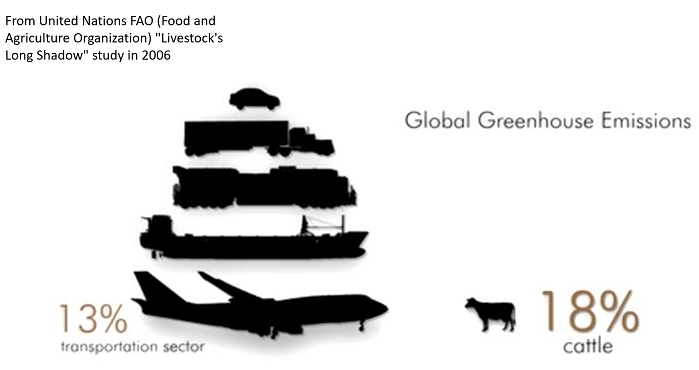
If it is true that a picture is worth a thousand words, then the following two images should speak for themselves.

Agriculture emissions (in green) constitute about one fourth of global emissions. A large portion of these are due to cattle and animal farming (website: drawdown.org)

The animal industry alone is responsible for the same percentage of emissions as the entire transportation industry but with the additional damages of deforestation, loss of biodiversity, and enormous water consumption.

Electricity, agriculture, and industry are the largest sources of greenhouse gases. We, as individuals, can directly influence a few sectors, for example switching to electric vehicles, low consumption bulbs, and reducing the use of high consumption devices. The sector over which we can have the most effective impact is agriculture. In fact, emissions due to the cattle industry are higher than those due to the entire transportation sector. And it is not just greenhouse gases emissions, but also water consumption, because a great amount of water is necessary to raise, kill, and process animals.

Why is it important for Us to reduce meat consumption?

Check out these health benefits of a plant-based diet.

  • Significant increase in Fiber, Antioxidants, Omega 3 Fatty Acids, and Neurotransmitter Production
  • Significant reduction of Inflammation, saturated fat, and cholesterol
  • Increase in longevity while preventing cancer, heart disease, strokes, and dementia
  • Improvement in mood while reducing anxiety
  • Improvement in focus, attention, and memory

Often, we get frustrated about politicians not doing enough for the planet and the climate, at the same time feeling powerless and depressed. However, let’s think about this: We, as individuals, have complete control of what we eat. The greatest change we can make for our planet is also the one that requires the least effort and is good for us. We don’t have to wait for governments to take action on our behalf, we can take our own actions!

Send me your experience at info@choosesustainable.org and I’ll add it to this blog.

If you liked this post please share it!

United Nations resolution on plastic

Welcome to YouChoose, a blog where we explore ways of living sustainably. This week I wanted to bring to your attention the recent UN resolution on curbing plastic pollution.

This past month United Nations representatives from 175 countries signed a pledge to come up by 2024 with an agreement to end plastic pollution. Even if the plan doesn’t materialize by then this is still good news. It means that single use plastic is finally becoming a global issue to be dealt with.

We all know the devastating effects of plastic on land and marine wildlife. However, it is still nearly impossible for us to complete one trip to any store without coming out with plastic items in our cart. And I am not one that is oblivious to the problem. I have eliminated plastic shopping bags, produce bags, plastic water bottles, single use utensils, and glasses. And yet, every week I still manage to collect what I consider a large amount of plastic to recycle.

It does feel like an uphill battle and it can be frustrating, so we can be tempted to give up. Although it is true that we can’t eliminate all plastic from our lives, we may be surprised to know that there are just a few items that disproportionately constitute the vast majority of the pollution. And these few items we can really do without. Food wrappers, beverage bottles, bottle caps, grocery bags, straws, take out containers, cups, and plates make a substantial component of ocean pollution. Just eliminating bottles and plastic bags would go a long way.

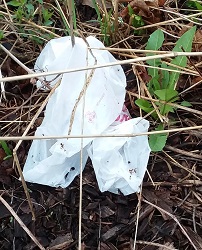
Recycling is not the solution because just as it takes energy to make things, it also takes energy to recycle them. Additionally, plastic bags can easily escape from the facilities where they are collected. I do see many plastic bags flying around where I live (I’m sure you do too) and we can easily multiply that by millions to imagine how many bags are dispersed in the environment every day. Even with our best intentions it is difficult to make sure that our bags end up where they are supposed to go.

If you want to add your voice there is a Greenpeace action to call on elected officials to take action on plastic pollution:

https://engage.us.greenpeace.org/HUlucLmSFE-JF181Aa3-pA2?utm_source=website&utm_medium=blog&utm_campaign=ppp_blog&sourceid=1009130&_ga=2.182390183.1246355678.1649607004-2069384434.1649458050

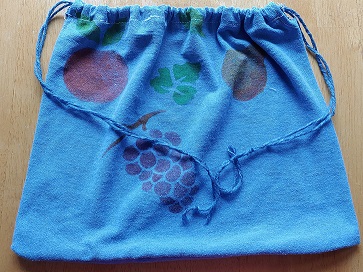
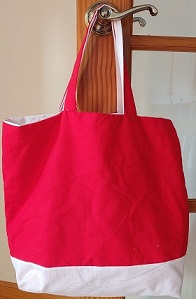
While we wait for actions at a government level we can also make plastic reduction a priority. You can start taking reusable bags with you, you don’t even have to buy them. They are easily made from old clothes and fabric. There are plenty of tutorial on the internet on how to make reusable bags. Do you have old shirts at home but don’t have a sewing machine? Don’t trash them, send them to me and I will send you back reusable shopping and produce bags.

Old T-shirts can be used to make reusable drawstring produce bags

With enough fabric from old tablecloths, curtains or sheets one can make reusable shopping bags

Here is some useful information on plastic pollution:

https://oceanservice.noaa.gov/hazards/marinedebris/plastics-in-the-ocean.html

More on the UN resolution can be found at:

https://news.un.org/en/story/2022/03/111314

Spread the word! If you found this information useful, please share this post.

Food for thoughts: The rise of SUVs

Welcome to YouChoose, a blog where we explore ways of living sustainably. This week I wanted to discuss an interesting article I read in the September 2021 issue of the IEEE Spectrum magazine.

The article [1] details how SUVs in the US and across the world are the sector responsible for the second largest increase in global CO2 emissions after the power sector. The increase is larger than that from heavy industry, aviation, and trucks. According to the article it is very possible that, if the trend continues, the increased emissions from SUVs will more than offset the carbon reduction due to electric vehicles.

I was especially struck by this particular article because it condenses in a certain way the very problem at the core of the climate crisis. Even after all the talking about reducing emissions, global warming, and polar ice melt, when we actually have the opportunity to exercise the power of choice and make a difference we still choose the most polluting and most energy consuming car, the one that contributes the most to the crisis. It is almost a global denial, a disconnect between what we see as a global problem and how we perceive our role in it. After all there is always somebody else to blame.

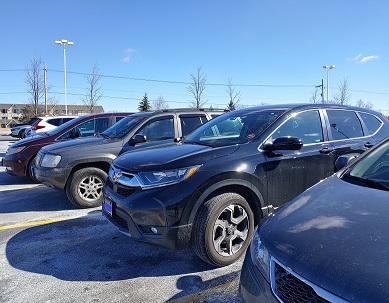
If we look around in parking lots we’ll get an idea of the magnitude of the problem

This is not about being good or bad, it is more about human behavior. People who purchase SUVs are not the bad people to shame and similarly those who purchase electric cars are not the good ones who get to moralize. In my opinion this trend tells us more about how difficult it is for us to settle for less when we can have more. It also tells us that the climate crisis is somewhere in our minds, but when it intersects our everyday choices other factors take priority: making a statement about our wealth, keeping up with the rest of the crowd, wanting a larger space or the latest gadget that car makers never fail to add to newer models.

At the end of the day it is really about personal choices. Perhaps the only way to break the circle is the hard path of learning to want less and consume less, not for the purpose of making a statement or because we have to do it, but because it is what makes us happy.


For those interested, a recent article on this topic can be found on the International Energy Agency (IEA) page:

IEA (2021), Carbon emissions fell across all sectors in 2020 except for one – SUVs, IEA, Paris https://www.iea.org/commentaries/carbon-emissions-fell-across-all-sectors-in-2020-except-for-one-suvs

[1] Smil, V. : “SUV’s ascendant,” IEEE Spectrum, September issue, pp. 22-23, 2021

Looking back to the past year

Welcome to YouChoose, a blog where we explore ways of living sustainably. This week I wanted to share a few thoughts about the past year.

I have never been one for new year celebrations and even less for new year resolutions. When I was younger perhaps, but lately new years always bring mixed feelings of time passing by and uncertain future.

A few years ago, as I started on a path to be more sustainable I focused on few goals easily achievable: Reducing dairy products and eliminating shopping plastic bags. One by one I introduced more and more goals such as eliminating palm oil, reducing waste, and consuming less. When trying to change lifelong habits it is easy to feel overwhelmed and frustrated. For this reason I share here a few achievements of the past year, focusing on the positive and knowing that there is much more that could be done, but we can’t do everything at once.

Palm oil elimination: Switched to sustainable laundry soap

This past year I have been able to keep up with the no-palm oil policy. Still occasionally I discover that I made a mistake and didn’t look carefully at the labels, however overall I have eliminated the noxious ingredient from more than 95% of my purchases. In the process I discovered wonderful alternatives to what I used to buy. The same holds for liquid soap, dish soap and shampoo which I have been making from palm oil-free soap bars. In 2021 I went one step further and switched to palm oil free conditioner and laundry soap. I think there are still a few more items on the list and hopefully I’ll work on those this year.

CO2 reduction: Switched to hybrid car

In 2021 I had to replace my car of 15 years and for the first time we purchased a hybrid model. We also downsized and got a smaller car that uses less gasoline. This choice was somewhat controversial as I wasn’t entirely sure of the environmental benefits of hybrid cars when we consider the entire lifecycle of the product. I’ll try to discuss this more in a future post.

Waste reduction: Started a compost pile

This is an area were I still have much improvement to achieve. Last fall when I collected the fall leaves I started a leaf compost pile and have been adding food waste there: Fruit and vegetable peels, green leaves, stems, and also coffee ground. Since starting, I noticed that my kitchen waste decreased almost 50%. I had never realized how much organic waste we were generating. Composting will be the topic of a future post once I see how the compost experiment turns out.

Outreach: Started to share what I am learning

One big achievement in 2021 was starting this blog (I think it has been one year this month!) and publishing the app. Hopefully I’ll be able to keep up with both this coming year. I also picked up two meetup groups that everybody is welcome to join (they are listed on the right). We meet virtually and in person to discuss sustainability and climate topics.

Now a quick look at some ideas for this year 2022. I am looking forward to expand my native garden to the front yard, grow indoor herbs, and venture in the realm of up-cycling. We’ll see what comes out of it!

If you want to share your achievements or failures in becoming more sustainable send me a post. I am looking for collaborators for the blog and the meetups!

What is to be done

Welcome to YouChoose, a blog where we explore ways of living sustainably. This week I wanted to share a few thoughts about the recent Glasgow climate conference that ended this past week.

After all the news and coverage the conference ended as expected with little agreement among the parties. It is hard to convert goodwill into action when countries economies are at stake.

For those of us who are convinced of the urgency of the matter it is easy to feel discouraged and come to the conclusion that we have no control over the decision making process. What is lost in the process is the notion that we are the buyers that are at the end of the supply chain. If we remove the buyer from the process the producers are forced to change. What can we do as single individuals to achieve what the world conferences constantly fail to achieve? In this post let’s go over one of the topics discussed, one that I consider perhaps the most important: Trees and forests.

Deforestation poses an existential threat to our Earth and to our very physical and spiritual being. It causes loss of biodiversity, extinction of species, soil erosion, air quality deterioration, and a change in the precipitation patterns that affects the entire hydrologic cycle. In addition, it causes the loss of life and spiritual heritage of communities whose livelihood depends on the forests. It is not an exaggeration to say that by erasing forests we are erasing our very soul. Many, but not all, of the countries participating in the meeting have agreed to stop deforestation by 2030. Whether we believe it or not is a different story.

Powerful economic interests are at the source of the problem. Let’s have a look at the economic drivers of deforestation and how we as consumers are part of it. Deforestation is mostly driven by these sectors: Agriculture (mostly palm oil, soy, cocoa and coffee), mining and logging (mostly industrial logging, mining, oil and gas), urbanization: (urban expansion with related consequences).

Although there are complex issues behind each sector the majority of the products causing deforestation are found in our homes and on our tables. In other words we are financing deforestation with our shopping. Here are some things we can do to avoid that our money is used to destroy the planet.

What finances agriculture driven deforestation?

Among companies responsible for deforestation we find the biggest retail chains. Their shelves are packed with meat and palm oil ingredients sourced with the destruction of forests. Amazon Watch (amazonwatch.org) keeps a record of the commodities companies that cause the largest deforestation, the banks that finance them, and the retail stores that buy from them. You can check it out to find out where your money is going. For those of us who don’t want to finance large scale environmental damages avoiding meat in general and specifically meat from fast foods goes a long way. Fast food companies are among the largest customers of meat suppliers known for their destructive practices.

Just as meat, leather products are linked to deforestation. The fashion industry, including luxury brands, has a very poor record of checking the provenance of their leather materials.

Another important step is to avoid all products with palm oil (Yes! you can survive without it). Many grocery stores use palm oil in their own baked good, in addition to purchase from companies known for their poor environmental records. Palm oil of untraceable origin is also widely used in big brand cosmetic industry.

Bananas (except perhaps organically grown), avocados, cocoa and coffee have a negative environmental impact, unless grown sustainably. Be careful when buying and only buy products with certified sustainable practices.

What finances logging and mining driven deforestation?

High demand for new furniture and wood products is a driver of deforestation. You may be surprised to find out that many popular furniture stores in the US are fueling deforestation. I myself was fooled long time ago when I bought a dining set in a major US furniture store because I trusted the word of the store employee who ensured me that their wood was sourced by traceable suppliers. I later found out that the store in question had a poor record of choosing their wood suppliers and acquired wood from unverified sources. I never forgave myself for not having researched better the store ahead of time.

For this reason it is important to research the store record on deforestation before purchasing furniture and to avoid furniture made from tropical woods. Unfortunately too many furniture stores still have no problems dealing with tropical woods from Asia and South America, wood from endangered Eastern European forests, African and North American old growth forests without controlling the entire supply chain.

Gold, lithium, and rare earths elements are used in the jewelry business and in the manufacturing of electronics and batteries. An average phone can easily last more than 5 years, yet on the average people replace their phones every 2.5 years. Our continuous demand for the latest smart phone model contributes to deforestation. Keeping our smart phones and tablets as long as we can is a good practice to reduce the demand for always new devices.

This week the EU, whose insatiable hunger for meat, soy, coffee, cocoa, and palm oil makes it one of the largest financier of deforestation announced that they are considering blocking the imports of such goods from high risk regions unless the products are certified deforestation free. I am sure the proposed legislation will find much opposition from big conglomerates. We consumers however can control where our money goes by researching companies and following the money trail. Although it is not possible to be 100% sure of what we buy we can certainly be better informed. So this Christmas instead of asking for a new smart phone, a new piece of jewelry, a new SUV, or thinking of replacing the entire living room because we are just tired of it let’s all reflect on what we can give back to our Earth and instead plant a tree or make a small donation towards a reforestation effort.

The YouChoose app provides several links and information on unsustainable wood and food, hopefully the information is useful.
If you found this post useful, please share it and spread the word and if you want to contribute to this blog send me a post!