
Welcome to ChooseSustainable.org a blog about individual climate action.
When talking to people about native seeds, more often than not I hear stories of failures. The story usually goes like this: “I have a flower bed where I sprinkled seeds, but nothing came out”. I know this story very well because I have had the very same experience several times when I started my native garden. For example, the first time I decided to convert a section of lawn into tall prairie plants, I dug out a section of the lawn in fall (still didn’t know about no-dig techniques) and ordered some seeds that I proceeded to plant in November. Nothing came out, with few exceptions that will be discussed later. I then resorted to purchase small plants, however if you have a large area to cover, using only plants can get expensive.

A few years ago I started growing from seeds again. I collect them from my own yard and have been much more successful. In this post I provide some information on how to maximize your chances of success. At the end of the post there is a list of easy and not-so-easy species based on my experience. I hope the following tips can be useful if you are starting your native garden or want to expand it. However if you are planning to convert a large section of land to prairie you need to sow directly in the soil. In that case you need to prepare the soil accordingly and it will take about 3 years for your prairie to bloom. We’ll discuss no-dig methods and weed suppression in a future post.
When to plant
One of the things I love about native gardening is that there is never a dead season. If we follow nature’s pattern, fall and winter are the seasons when we prepare for spring. In colder climates seeds go through the winter and germinate in spring when temperatures and sunlight become favorable to the survival of the plant. For this reason, several (not all) native plant seeds of the Midwest need to experience a transition from cold to warm to germinate. Sometime people refer to this process as “cold stratification”. One way to mimic the transition from cold to warm weather is to place the seeds in the refrigerator for a prescribed amount of time before planting. I have never been successful with this technique. For me it works better sowing in late fall or at the beginning of winter. It is important to wait until the outdoor temperature drops below 50 F (or about 10 C). Here in Illinois I start sowing in late October or November. One can even wait longer and plant in the middle of winter, however it is difficult to work outside once snow accumulates.

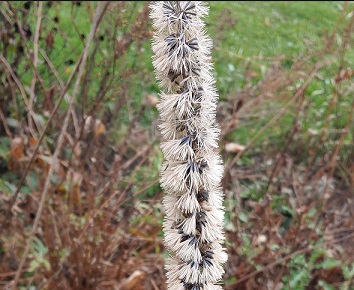


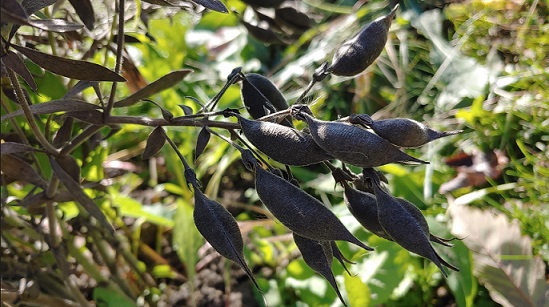
Prepare what you need
The biggest mistake I used to make was to sow directly in the soil. The reason why germination in the soil is low in a garden setting is that seeds get displaced by water and animals, possibly dug out and eaten by birds, and have to compete with weeds. I was able to grow only 5 species in the soil: wild bergamot, wild senna (with some effort), New England aster, wild geranium, and heliantus grosseratus. When I transitioned to small pots my germination success went from ~0% to about 90%.
I suggest collecting as many small pots as you can from previous plant purchases. I keep small containers and reuse them year after year. The second thing one needs is soil. You don’t need to go crazy with very expensive potting soil, one good quality medium potting soil will do. Finally, no matter how prodigious your memory is, I guarantee that you will forget what is in the pots (it happens to me every year), so labels are essential. You can be creative and make your own planting labels or buy them. Use a lasting marker because the ink fades quickly outdoor.

Sow the seeds
You are now ready to sow the seeds. Wait for a nice cool day in late fall, fill up 3/4 of the pots with soil, sprinkle a few seeds and cover them lightly with soil. Some seeds may need specific precautions, for example they may need sunlight and should be sprinkled on the surface of the soil. It is important to check specific requirements for the plant. Place the labels in the pots as you go, before forgetting.

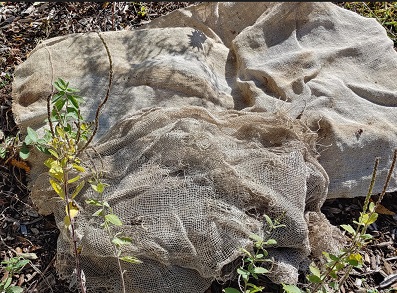
When you are done, locate a suitable location for the pots. I place them near the house in an area that gets afternoon sunshine and is also easily reachable with the hose. You’ll need water in spring when the seeds sprout. I avoid locations that are too shaded as it may cause mold in the soil. When the pots are in the desired location cover them with a burlap cloth or an old cotton bed sheet. The cover helps preserve the seeds by discouraging squirrels and birds from digging and it also prevents the growth of weeds.
You are now ready to wait for spring
Early spring
Left outside, under the burlap, your seeds will be covered with snow most of the time and will experience the cold winter. Wait until the winter snow melts and days become longer to check on the pots. On sunny days, you can remove the burlap for a few hours during the morning, but it is better to keep the seeds covered until you see germination. Even then, it is better to leave the sprouts covered at night and to check the weather because there is always the risk of late season icing through the month of April and sometime even May. During this phase it is better to keep the soil moist by watering as needed with a gentle sprinkle.
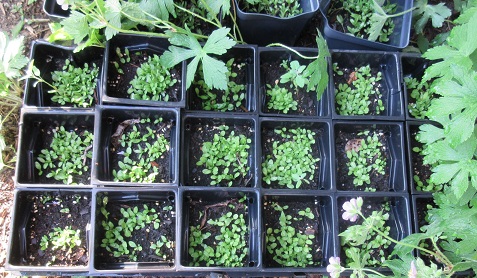
By mid May the cover can be entirely removed. Keep the soil moist while you wait to plant.
Planting time
I have transplanted the small plants as early as mid-June. However my suggestion is to wait until the plants are grown enough that you don’t risk breaking them while transplanting. After the plants are in the soil, you need to keep the soil moist by gently watering at least twice a week for a month or so (if it doesn’t rain) and possibly remove excess weeds around. Depending on the species it takes about 2 or 3 years from seeds to flowers.
Easy and not-so-easy seeds (my experience)
Below is a list of seeds I tried. I will add to this list as I try (or retry) more varieties.
- Monarda fistulosa (Wild bergamot): Easy, high germination rate, grows fast
- Senna hebecarpa (Wild senna): Medium, initial germination rate is low, the population grows once established.
- Heliantus grosseserratus (Sawtooth sunflower): Easy, self seeds, quick growth
- Lobelia siphilitica (Blue lobelia): Easy, but it may have mixed success after transplant
- Lobelia cardinalis (Cardinal flower): Medium, I have had mixed success getting this established
- Silene regia (Royal catchfly): Easy in pots but needs right location for transplant-slow to grow
- Liatris spicata (Blazing star): Easy, high germination in pots-develops quickly
- Penstemon grandiflorus (Showy penstemon): Easy, high germination rate-develops quickly, tolerant of various conditions.
- Asclepias syriaca (Common milkweed): Medium, I have had mixed success in the soil and pots-Better to plant the small sprouts in an are with no competition.
- Geranium maculatum (wild geranium): Easy, I have had enough success in the soil. High germination rate, fast growing, spreads once established. Good starter.
- Aster Novae Angliae (New England aster): Easy, I was able to start this in the soil. High germination rate, fast growing, spreads once established
- Antennaria neglecta (pussytoe): Difficult, I have had zero success so far but will try again
- Monarda punctata (spotted bee balm): Difficult, I am trying this again this year, last year I was able to germinate it, but none survived the transplant.
Growing native plants from seeds is a very rewarding experience. I hope this information is useful if you are starting your native garden, and remember that trials and errors are the key to discover which plants grow and do well in your garden. If you would like seeds, send me an email at info@choosesustainable.org and I’ll be happy to provide what I can.
If you liked this post please share it!
 You Choose