
Welcome to YouChoose, a blog where we explore ways of living sustainably. This week I would like to share some thoughts about reducing meat consumption.
Today, the link between meat consumption, deforestation, and emission of greenhouse gases is well established. Therefore one of the most important steps we can take for the benefit of our Earth is to eliminate meat from our diet. Legumes are among the most Eco friendly food we can consume and they are an important source of proteins. They are also beneficial for the soil and don’t require excessive water use.
Sometime when we think of legumes we get discouraged because we have to remember to soak them and need time to boil them. While this is true for some, not all legumes require long preparation time. Additionally it is possible to soak the desired amount in advance and keep it for one day or two. Soaking is an important step necessary to make legumes more digestible and eliminate anti nutrients. If we are pressed for time some limited variety of legumes are ready available in cans. This is very helpful, however there is a much greater variety of dry legumes so I suggest to explore ethnic grocery stores and see what is available.
Another frequent complaint is that legumes are hard to digest and make us uncomfortable. Again, this may be true of some types such as red or garbanzo beans, and it is especially true if we are not used to them. Here are some steps that can help us to to become more accustomed to the regular use of legumes.
- Start with the varieties that are easier to digest: Green and yellow lentils, split peas, mung beans.
- Introduce harder legumes (beans, garbanzo) in small amount at the beginning.
- Soak the harder beans for 8-12 hours. Lentils don’t need to be soaked, however soaking them even for 2-3 hours makes them more digestible.
- Cook the legumes thoroughly. They should be soft but not mushy.
- Soak them when you remember, you can use them later.
In this post I’ll talk about a variety of easily available legumes we can quickly incorporate in our daily meals and will provide approximate preparation time. The following is the basic procedure, once cooked legumes can be used in recipes to make delicious snacks, soups, and side dishes.
Lentils
Lentils are probably the easiest to start with. They come in many types, green, yellow, brown. They make a great side dish, soup or can also be used to make fritters. They are fairly easy and quick to prepare and they don’t need soaking if there is no time. Lentils, like all legumes, should be rinsed and checked before use. Green and yellow lentils can be soaked for 3-4 hours or boiled directly in a regular pot with water. They are ready in 15-20 minutes. Brown lentils can be soaked overnight (but it is not necessary) and pressure cooked for about 8 minutes. Brown lentils can be cooked in the pressure cooker directly with other vegetables so they make a very quick meal. I plan to post some delicious and quick lentil recipes in the recipe section of this blog.
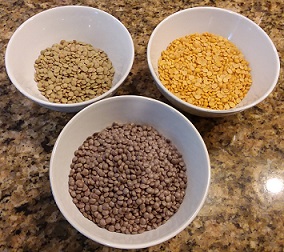
Garbanzo beans
I mostly use two types of chick peas: white and black. Garbanzo beans should be washed and soaked for at least 8 hours as they are generally harder than lentils. The black variety requires at least 12 hours. They can be cooked in the pressure cooker for about 15 minutes and kept in the refrigerator for 1 or 2 days ready to use. Garbanzo beans make an excellent salad addition for lunch, but are also very good in soups and can be used as a side dish, cooked with spices and tomatoes. Garbanzo beans can also be used to make hummus to use as snack or in appetizers.

Mung beans
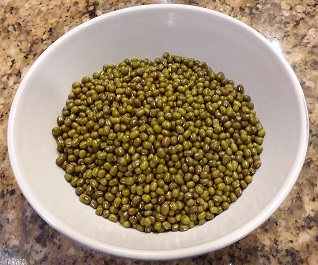
There are several types of mung beans (red, green,black). They make an excellent lunch, snack, or side dish. The best way is to soak them overnight before sprouting or cooking. Check out the easy sprouting procedure in the recipe section. Once soaked, cover the beans with water and bring to a gentle boil for about 15 minutes, make sure not to overcook them. They need to be just soft, but not mushy. Once boiled they can be cooked with spices and peanuts to make a great lunch or snack.
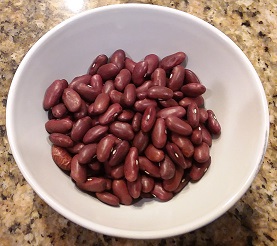
Beans including dried Lima beans
There is a great variety of beans, large, small, red, white, and more. Usually beans need to be soaked overnight and cooked for about 15 minutes in the pressure cooker depending on the beans and the cooker. Some can be quite hard, therefore the soaking and cooking part is important and should not be skipped. Beans can be added to salads, used in soups, or cooked in spices. One can get used to them starting with small portions.
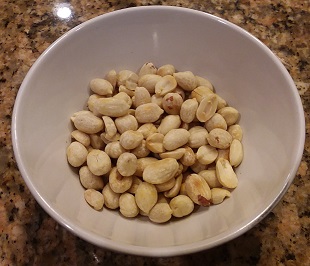
Peanuts
At last I’ll mention here peanuts. Although they are legumes, they are more similar to nuts. When lightly roasted they make a nice snack or can be used in small amount in a variety or recipes.
I hope this brief overview of some common legumes inspired you to include more of them in your daily diet. Including more legumes and less meat is one of the most important steps we can take to reduce greenhouse gases, reduce deforestation, and help our Earth.
The YouChoose app provides several links and information on global food issues and lists of sustainable and unsustainable foods including fish and vegetables, hopefully the information is useful.
In this blog there is a recipe section where I share meat-free recipes to help out. If you want to share your sustainable recipes to help others, I’ll be glad to post them in this blog.
Do you want to share your progress on eliminating meat from your diet? Send me an email at info@choosesustainable.org and I’ll add it to this blog.
 You Choose