Welcome to YouChoose, a blog about individual climate action.
The second session of the UN meeting on plastic pollution is scheduled for the end of May 2023. The first session took place in December 2022. The goal is to reach a binding agreement between nations to stop plastic pollution on land and oceans.
If you are not convinced of the urgency of the problem, please read more on the WWF plastic initiative and learn how our oceans are flooded with tons of plastic every hour.
Make your voice heard, ask the Biden administration tosupport strong measures to end plastic pollution by signing the GREENPEACE PETITION
Welcome to YouChoose, a blog where we explore ways of living sustainably. This week I wanted to bring to your attention the recent UN resolution on curbing plastic pollution.
This past month United Nations representatives from 175 countries signed a pledge to come up by 2024 with an agreement to end plastic pollution. Even if the plan doesn’t materialize by then this is still good news. It means that single use plastic is finally becoming a global issue to be dealt with.
We all know the devastating effects of plastic on land and marine wildlife. However, it is still nearly impossible for us to complete one trip to any store without coming out with plastic items in our cart. And I am not one that is oblivious to the problem. I have eliminated plastic shopping bags, produce bags, plastic water bottles, single use utensils, and glasses. And yet, every week I still manage to collect what I consider a large amount of plastic to recycle.
It does feel like an uphill battle and it can be frustrating, so we can be tempted to give up. Although it is true that we can’t eliminate all plastic from our lives, we may be surprised to know that there are just a few items that disproportionately constitute the vast majority of the pollution. And these few items we can really do without. Food wrappers, beverage bottles, bottle caps, grocery bags, straws, take out containers, cups, and plates make a substantial component of ocean pollution. Just eliminating bottles and plastic bags would go a long way.
A discarded plastic bottle along the road lasts foreverPlastic bags easily escape the collection point
Recycling is not the solution because just as it takes energy to make things, it also takes energy to recycle them. Additionally, plastic bags can easily escape from the facilities where they are collected. I do see many plastic bags flying around where I live (I’m sure you do too) and we can easily multiply that by millions to imagine how many bags are dispersed in the environment every day. Even with our best intentions it is difficult to make sure that our bags end up where they are supposed to go.
If you want to add your voice there is a Greenpeace action to call on elected officials to take action on plastic pollution:
While we wait for actions at a government level we can also make plastic reduction a priority. You can start taking reusable bags with you, you don’t even have to buy them. They are easily made from old clothes and fabric. There are plenty of tutorial on the internet on how to make reusable bags. Do you have old shirts at home but don’t have a sewing machine? Don’t trash them, send them to me and I will send you back reusable shopping and produce bags.
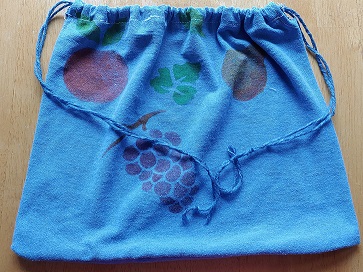
Old T-shirts can be used to make reusable drawstring produce bags
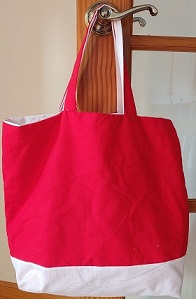
With enough fabric from old tablecloths, curtains or sheets one can make reusable shopping bags
Here is some useful information on plastic pollution:
Welcome to YouChoose, a blog where we explore ways of living sustainably. This month I would like to share one step we can all take to reduce our environmental footprint: Reduce the use of plastic bags. This seems like a fairly straightforward step, however, as it always happens when trying to change long ingrained habits, it takes some discipline, planning, and a little time. There is more to plastic than just bags and some plastic is difficult to eliminate depending on where one lives because of the lack of alternatives. For this reason we’ll focus on different items in different posts.
If you look around you will see that there is still much to do in this area. In some places plastic bags are banned altogether, however, while we wait for businesses to help out, individual actions are fundamental in making a difference and this is really one area where they can. The fact is that no matter how large or small the item we purchase is, we seldom get out of a store without holding a plastic bag, big or small, plain or decorated, distinctive or unremarkable. Even if the purchased object is something that could easily fit in a pocket or a purse, it is invariably placed and handed to us in a plastic bag and we, like automata, extend our hand and grab the bag before heading out of the store.
Free produce bags and cotton bags upcycled from old fabric are available. Check them out here.
QUICK TIPS TO REDUCE PLASTIC BAGS
Recognize the importance of the problem and the need totake action
Be disciplined and train yourself to refuse plastic bags
Set realistic goals and achieve them one by one
Keep a set of reusable canvas bags in the car
Keep a set of reusable produce bags in the car
When checking out of any store ask yourself: “Do I really need a bag?”
Buy produce that is not packaged in plastic bags
Consider alternatives to plastic bags in the house
First of all, why is it important that we reduce plastic bags? Because they are contributors to a large percent of the plastic pollution of our planet on both sea and land and because they are for the most part unnecessary. That is also the reason why I find it really puzzling that we still rely so much on them. No day goes by without a news article or a talk about the scourge of plastic pollution in the oceans, and yet we fail to make a connection between that problem and our everyday habits. In fact I still see 99% of buyers coming out of stores carrying plastic bags. There is definitely room for improvement.
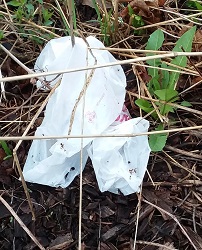
I routinely finds grocery store plastic bags in my backyard
I myself used to not worry so much about it, thinking that I recycled the bags after using them. However I realized later that recycling should be the last resort for the plastic we really can’t dispense with, not a feel-good excuse. In fact, recycling is not a sustainable option because it requires energy and because much of what we put in the recycle bin ends up somewhere in some other country still polluting land and rivers, just out of our sight.
WHERE TO START?
Step 1: Find the source
Action #1: Find out the provenance of the plastic bags in your home. At the beginning I tried to find the source of the plastic bags in my home. Certainly, the grocery storewas one major source of plastic bags. I used to be flooded with plastic, from packaged vegetables (for example a bag of potato, onions, and apples, etc.), frozen items, not to even mention plastic containers. Some high-end grocery stores have a paper bag only policy. Very few grocery stores in my area do offer a paper option, however it seems that most people opt for plastic. Additional, but less frequent, sources of plastic bags included other stores such as clothing, household, home improvement, or anything else. Therefore my first target was the trip to the grocery store.
Step 2: Eliminate grocery store bags
Action #2: Check if you have reusable bags in your home to put to a good use! If not available, you can purchase a set of washable canvas bags and train yourself to carry them with you in the store. After thinking about it I realized that several canvas bags collected throughout the years from meetings, conferences, and organizations I support were unused in the closet. I decided to take those with me every time I went shopping. The biggest challenge at the beginning was to remember to put the bags in the car and take them with me in the shop. It took me a while, but I can assure you that after a few months of persevering it becomes second nature to remember to carry the reusable bags with you. Now I keep the bags in the car (trunk or the back seat) and it has become a part of my habits so that I also carry them when shopping in other stores.
Step 3: Eliminate produce bags
Action #3: Get organized with reusable bags for fruits and vegetables. Once I settled with the reusable canvas bags I focused on the plastic produce bags. Reusing these didn’t work out very well because they tear easily and sometime become dirty so I ended up with shreds of dirty plastic bags that couldn’t even be recycled. I then decided to just place the vegetables directly in the shopping cart and then in the canvas bag with everything else at the checkout, this is an option, however it didn’t work out well for me.
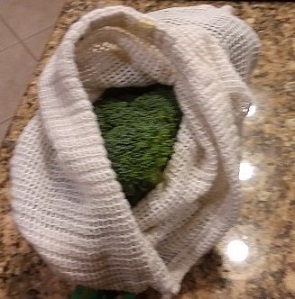
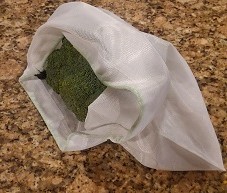
For this reason, I decided to invest a little amount of money (perhaps $30) to purchase reusable produce bags. I purchased two types: One is a natural fiber that has the consistency of a net, the second one is a synthetic pouch. They both come in a set of many sizes which are large enough to contain any amount of vegetables. Especially the canvas ones seem small, however they stretch and expand with the weight of the vegetables. I use the natural fiber bags at the grocery store and the other type to store the vegetables in the refrigerator, this way I never run out of them.
At the beginning I was a little bit worried about rotting, but I can definitely say that it is not the case and this system has worked very well for me for several years. Both models are washable in the washer so I just add them to the load and dry them quickly by hanging.
Step 4: Eliminate packaged fruit and vegetables
Action #4: Make a point to purchase plastic-free produce. The simple steps described above have definitely helped eliminate the vast majority of plastic bags entering the house. After settling in this routine (it took me several months) I focused my attention on selecting bag-free fruits and vegetables. Instead of purchasing potatoes and onions in five-pound bags, I now buy everything that is non packaged. It is true that sometimes it’s impossible to find what we like without plastic. For example we used to buy some small apples that were available only in plastic bags. I stopped buying them and now look for similar products without the plastic. Similarly, if organic vegetables come in plastic I opt for regular. Buying in bulk may be slightly cheaper, however if possible bag-free produce is a better choice.
Step 5: Reduce plastic bags in the house
Action #5: Think of ways to reduce plastic bags use in your home. Before I decided to reduce plastic bags, I used to keep one large trash bag in the bin and smaller bags around the house which were replaced weekly. In addition there were small bags to clean the cats’ litter box and Ziploc storage bags to pack my daughter’s lunch. We’ll talk about zero waste lunches and eliminating Ziploc storage in a different post. After thinking this through I realized that replacing all those plastic bags every week was really unnecessary. The kitchen bag was replaced with a compostable bag for all waste. There was an initial worry that a compostable bag in the kitchen will leak, however I found an excellent 13-gallon compostable bag that lasts the entire week without any leak. Similarly, all other bags in the house are not replaced weekly anymore but on a need basis. As for the waste from the cats’ litter box it now goes in small paper bags. In total we are down to one plastic bag per week.
In spite of all my efforts, I still produce enough plastic bags that occasionally a trip to the recycle collection is necessary, the amount of plastic that goes to recycle however is now considerably reduced. Where it used to be the equivalent of one grocery bag full of plastic every about 2 weeks it is now the same every 2-3 months. Additional sources that I am trying to reduce are bread and frozen vegetable bags.
To conclude this blog, I would like to extend two challenges here:
The first challenge is to ask ourselves whenever we are checking out of any store: Do I need a bag for this? Is this something that I can just carry to my car?
The second challenge is to take ownership of the plastic problem and make a conscious effort to take reusable bags with us every time we go in any store and tell the cashier: I brought my own bag, no need for plastic.
Do you want to share your experience about reducing plastic bags? Send me an email at info@choosesustainable.org



 You Choose