Welcome to ChooseSustainable.org where we explore ways of living sustainably. In this series of short posts I present a native plant to encourage everybody to abandon our traditional way of gardening (basically a continuous fight against nature) and engage in sustainable gardening practices that nurture the ecosystem, sustain wildlife and foster biodiversity.
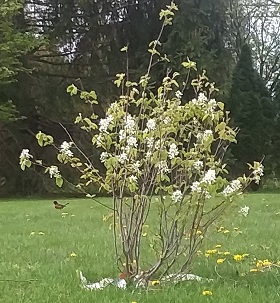
In this post I’ll talk about a small tree I planted in my yard a few years ago: Amelanchier Arborea (Downy Serviceberry).
Quick facts:
- Zones:4-9
- Bloom time: Early spring (March-May)
- Sun: Sunny area to shade
- Soil Moisture: Medium, Wet
- Aggressive: NO
- Front yard: YES
- Height: (15-25’) But it can vary
- Status: OK
- Maintenance: NONE
- Wildlife value: High
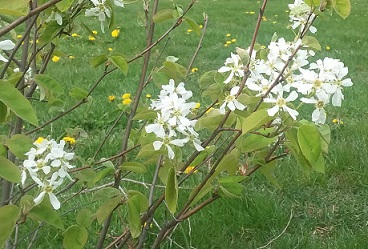
Wildlife connection: The trunk, flowers, leaves, and fruits of this plant are very important for wildlife. Serviceberry is the host plant to caterpillars of several butterflies and moths. Several other insects use this plant for their larvae. The flowers attract bees, honeybees, and other early insects and the berries are food to birds and small mammals.
I planted a very small serviceberry tree in my backyard several years ago. Not being very familiar with the plant I placed it in a location where it was unhappy. Thinking in retrospect, the soil was probably too dry. Although the plant is tolerant of a wide range of soil moisture it prefers moist and well drained soil.
After waiting for a few seasons I decided to transplant it to a different location. Since then the tree has been growing better and this year it bloomed for the first time.
If you are looking for a small tree, Serviceberry is a very good choice. Its size makes it suitable for small yards but it can be a nice decorative addition to a big yard as well. It provides early spring flowers, fruits, and foliage color in fall and it seems fairly low maintenance. The spring flowers are particularly important for early bees, when other flowers are still not available.

Please make sure to purchase native flowers from nurseries that don’t use neonicotinoids and look out for the full botanical name to avoid cultivars. Contact me for suggestions on where to buy.
Would you like to talk about a native plant in your backyard? Please send me your post at info@choosesustainable.org
 You Choose