Welcome to YouChoose, a blog about individual climate action.
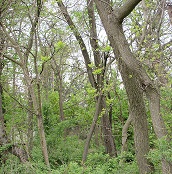
Forests are the soul of the Earth and deforestation is an existential threat to all life on our planet. Old growth forests in particular are home to countless species of plants and animals. If you have ever been in a forest you may have felt the connection to your very own spiritual essence.
The US Forest service is seeking out public comments on its forest management plans. If you care about forests and biodiversity this is a time to make your voice heard and let the government know that you care about protecting our forests.
This is the link to the US Forest Service page where information on the proposal is given.
Please tell our government to conserve and restore old growth forests and protect them from logging and exploitation.
Here is the link to the Defenders of Wildlife petition page where you can add your name to urge the US Forest Service to stop logging and conserve US forests.
Please share the link.
Do you want to do more? Palm oil, meat, and livestock industry are the #1 cause of deforestation worldwide. Don’t finance deforestation with your own money, boycott the products of deforestation.
Welcome to YouChoose, a blog about individual climate action.
This past summer, when talking about climate change with friends and family I often heard the argument that changes have always happened and the Sun or other natural causes are responsible for them. Invariably, past glaciations and the Little Ice Age are mentioned. I was curious to understand if this view was common and so I looked at recent statistics on the subject. That is when I found out that about 46% of the population believe that climate change is due to human activity and the remaining 54% of the population think that there is no evidence of change in temperature (14%) or believe that there is a change but is due to natural causes (26%) or is not sure (14%). I have therefore decided to start a series of short posts to address these perceptions hoping to clarify some doubts and misconceptions.
As a premise, I hold a PhD in physics and work and publish in the climate field. I am not a climate modeler but work with large datasets of observations of climate variables from satellite and ground observations and more importantly, have access to relevant journals. The topic of climate change is very complex and encompasses numerous specialized disciplines. In addition to the intrinsic complexity of the field, there is a lot of often deliberately confusing information published in the news. For all these reasons I am starting here a series of short posts that discuss the evidence leading scientists to conclude that current observed global temperatures are not a response to natural forcing, but are largely due to human activities. I deliberately keep each post short and limited only to one topic. In this first post we review how the Earth’s climate has changed during the course of millions of years. This knowledge gives us a broad perspective on how the short time span during which our human species has occupied the Earth compares to the past.
Our Earth’s past climate
To place climate change in a broader perspective it is important to study the climate of the past, when human activities did not exist. Knowledge of how the Earth’s climate has reacted to changes in the past helps us understand better what has been happening in the last 100 years against a background of natural climate variability and it also guides scientists to forecast future climate scenarios. The reconstruction of past climates from paleo data is a difficult field, and many uncertainties affect the data. The presence of uncertainty is an intrinsic part of the scientific process, however when analyzed and treated properly, uncertainties do not invalidate the results, rather they make them more reliable.
In past times, just as today, the Earth’s climate has changed periodically due to a combination of factors including orbital changes, changes in greenhouse gases, and changes in the extension of the ice caps. For example, for many million years, global surface temperatures were several degrees higher than they are now. Large scale changes to the climate are generally triggered by astronomical changes, usually related to the Earth’s orbital path, and are then amplified by melting (or freezing) of the glaciers and changes in greenhouse gases. We’ll review natural triggers to climate in detail in a next post. We currently live in an epoch called Holocene that has been one of relative climate stability and is called an interglacial age. During the Holocene and especially in the recent past until preindustrial times, the Earth average temperature has been quite stable, allowing human activities to develop relatively undisturbed.
A few million years ago…
Through the ages our Earth has experienced many changes. Fig. 1, from Hansen et al., 2013, shows a reconstruction of global surface temperature in the last 65 million years. The figure is freely accessible on the internet along with the publication. You can read at the end of this post how deep ocean sediments are used to reconstruct global surface temperature to track paleoclimate. The top panel shows the Earth surface temperature starting 65 million years ago until the current Holocene Epoch. The middle and bottom panels zoom in the last 5 million years and the last 800,000 years.
What does this figure tell us?
Fig. 1 (a–c) Surface temperature estimate for the past 65.5 million years, including an expanded time scale for (b) the Pliocene and Pleistocene and (c) the past 800,000 years. The red curve has a 500,000-year resolution. Figure from Hansen et al., 2013.
At the beginning of the Cenozoic, the Earth was much warmer than today, more than 10 degrees warmer. During those times sea levels were much higher, ice caps were smaller, and CO2 levels were about 3 times what they are today. From the beginning of the Cenozoic Era the Earth’s temperature has been decreasing, becoming about 12 degrees cooler on average in the course of 50 million years but with oscillations of warming and cooling periods visible in the middle panel. From the middle panel we can discern that the amplitude of these oscillations is 4-7 degrees.
Zooming into the last 800,000 years, shown in the last panel, we can have a better look at how these oscillations look like. In the past 800,000 years there have been 8-9 cold/warm cycles alternating glacial and interglacial ages, with the last ice age, marked by an arrow in the figure, happening approximately 12,000 years ago. These cycles of glacial-interglacial periods last about 100,000 years during which the temperature changes 4-7 degrees from minimum to maximum, oscillating between 8 and 15 degrees Celsius. The last inter glacial period that started 12,000 years ago is the Holocene and is the time during which we humans have lived. Two prior inter glacial periods were warmer than the Holocene: the Eemian (~ 130,000 years ago) and the Holsteinian (~ 400,000 years ago). In both periods the sea level height was at least 3-5 meters (9-15 feet) higher than today (see for example Cuffey and Marshall, 2000).
How does all this this relate to climate change?
Scientists use past climates to understand what caused changes in order to assess if current observed trends can be attributed to natural causes. They also use past temperatures to compare to current observations and especially to the current rate of temperature changes.
Take home points from this first post:
The Earth climate has changed during the past 60 million years, generally cooling, but also going through oscillations between glacial and inter glacial periods.
These oscillations took roughly 100,000 years to complete and during the 100,000 years it took to complete a cycle the Earth temperature changed 4-7 degrees from minimum to maximum.
We currently live in an interglacial period called Holocene
During the last 2 interglacial periods before the Holocene (about 400,000 and 130,000 years ago) temperatures probably reached at least 1 degree higher than the preindustrial temperature.
In the next post we’ll zoom into the Holocene (last 12,000 years) and then into the last few thousand years and we’ll compare those data with the more recent global temperature measurements.
References:
Hansen J., Sato M., Russell G. and Kharecha P., 2013: Climate sensitivity, sea level and atmospheric carbon dioxide, Phil. Trans. R. Soc. A. 371:20120294 http://doi.org/10.1098/rsta.2012.0294
Cuffey, K., Marshall, S., 2000: Substantial contribution to sea-level rise during the last interglacial from the Greenland ice sheet. Nature, 404, 591–594. https://doi.org/10.1038/35007053
Appendix
How are past global surface temperatures reconstructed?
Temperature back in time are reconstructed from oceanic sediments with the help of an isotope of oxygen (Oxygen-18) found in deep ocean sediments. This standard methodology uses the fact that most of the Oxygen has 8 neutron (Oxygen-16), but a small percentage of oxygen molecules occurs naturally with 10 neutrons (Oxygen-18). Oxygen-16 evaporates more promptly and enters in the Earth hydrologic cycle through precipitation and freezing. In a warmer climate the Oceans, and therefore its inhabitants, contains more of the Oxygen-16 isotope, in colder climate they contain more of the Oxygen-18. Moreover there is a well-defined relationship between the ratio of the 2 isotopes and the change in air temperature that allows to translate the sediments found into temperature once calibrated with a well-known reference. [https://pages.uoregon.edu/rdorsey/geo334/O-isotopes.html]
Additional web site
If you are interested in detailed information or in-dept discussions on recently published work I recommend this web site, maintained by climate scientists: https://www.realclimate.org
The NASA climate page explains the current state of the knowledge on climate at: https://climate.nasa.gov/
Share this post with your friends and take action against deforestation and the destruction of the Earth ecosystems!
Welcome to YouChoose, a blog about individual climate action.
With all the confusing information we read every day from the most diverse sources we may wonder how do we know that human activities are causing changes in the climate. I am posting here a link to the European Space Agency (ESA) web site that nicely summarizes decades of satellite observations of the so-called essential climate variables that are the indicators of change in the planet’s ecosystems.
What do satellite data tell us? See here in the ESA web page “Climate Change: The evidence from Space” how satellites monitor our Earth and provide long term continuous record of the changes happening over time. One important piece of information tells us that data from space are in agreement with climate projections from the warming scenarios provided by the IPCC, giving us some confidence that projected warming effects are realistic.
This is worrisome because the latest IPCC AR6 Synthesis report released in March 2023 provides a glimpse in possible future scenarios caused by a global temperature increase.
What can we do as individuals?
The IPCC report lists stopping deforestation, reforestation, and reconversion of degraded ecosystem among the most impactful mitigation strategies. Agriculture and livestock farming are major contributor to greenhouse gases and loss of biodiversity; reduce meat consumption and avoid using products that cause deforestation such as meat, palm oil, unsustainable sourced cocoa, and tropical woods. Urge your governments to take action against deforestation and loss of biodiversity.
Share this post with your friends and take action against deforestation and the destruction of the Earth ecosystems!
Welcome to YouChoose, a blog about sustainable living. In this post I wanted to share a few reflections about recent heat waves.
This year, like every year, I was in Southern Europe for about 2 months and found myself in the middle of one of the hottest summers on record. This is the second year in a row that I find myself in such a situation over there. I grew up there and I am old enough to remember that summers used to be hot, especially in August, but generally pleasant in June and July. Lately the heat has become unsustainable from the beginning of June until September. The extreme heat was compounded by a drought and extended wildfires. The situation was such that, perhaps for the first time, climate change was perceived by everybody as a real and incumbent crisis. The reality of warming is becoming apparent to everybody.
Deforestation plays a major role in accelerating climate change. Globally, until now, tropical forests have acted as carbon sinks, sequestering large amounts of carbon dioxide. Today, emissions caused by the process of deforestation and land conversion to agriculture are starting to exceed the forest carbon sequestration. Forests are now becoming carbon sources instead of carbon sinks. . This in addition to land degradation, loss of biodiversity, and change in rainfall patterns.
Please read this very interesting article in NOAA’s research news:
The contribution of deforestation to climate change includes (1) emissions from deforestation, (2) emissions associated with land use (i.e. cattle farming, soy plantation) and (3) reduced amount of carbon sequestration due to the loss of canopy. Industrial agriculture is responsible for the largest part of deforestation with the products of deforestation coming to our grocery cart and our kitchen. It is imperative that we become conscious buyer and learn which products are driving deforestation.
What can we do as consumers:
Reducing (or eliminating) meat and dairy consumption is the single most important step we can take to stop deforestation
Eliminate palm oil from the shopping cart
Purchase certified sustainable coffee and chocolate
If choosing to consume meat, choose grass-fed, soy-free products.
Although soy for human consumption constitutes an infinitesimal part of the global soy production, it is important, when using soy-based products to make sure they are sourced from sustainable agriculture.
Be vocal and participate in campaigns. Demand that governments and companies act to stop deforestation.
What are you waiting then? Be part of the movement to stop deforestation. Can’t go wrong!
The YouChoose app provides several links and information on products and cosmetics ingredients that are unsustainable and bad for the environment.
Remember that saving our Earth starts at home with our everyday actions. Please don’t doubt for a second that even small changes in our habits make a difference.
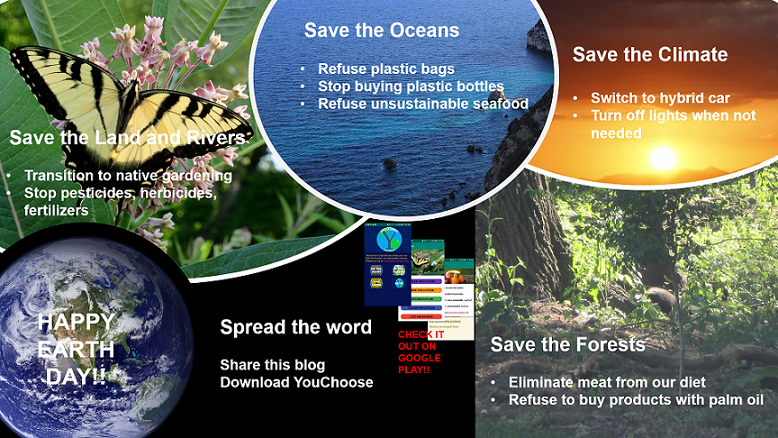
Here are 10 actions we can all take every day for our Earth:
Save the Forests:
Reduce meat consumption
Refuse to buy products responsible for deforestation
Save the Oceans:
Refuse unsustainable seafood
Stop using plastic bags
Stop plastic bottles and single-use plastic as much as you can
Save the Land:
Stop using pesticides, herbicides, and fertilizers in your yard
Reduce lawns and help restore native plants
Reduce waste
Save the climate
Reduce use of electricity
Buy local
Get informed
Want to know more? Download the YouChoose Android app from Google Play (free and no ads)
I am sure there are many more things we can do. Please send me your thoughts at info@choosesustainable.org




 You Choose