United Nations resolution on plastic

Welcome to YouChoose, a blog where we explore ways of living sustainably. This week I wanted to bring to your attention the recent UN resolution on curbing plastic pollution.

This past month United Nations representatives from 175 countries signed a pledge to come up by 2024 with an agreement to end plastic pollution. Even if the plan doesn’t materialize by then this is still good news. It means that single use plastic is finally becoming a global issue to be dealt with.

We all know the devastating effects of plastic on land and marine wildlife. However, it is still nearly impossible for us to complete one trip to any store without coming out with plastic items in our cart. And I am not one that is oblivious to the problem. I have eliminated plastic shopping bags, produce bags, plastic water bottles, single use utensils, and glasses. And yet, every week I still manage to collect what I consider a large amount of plastic to recycle.

It does feel like an uphill battle and it can be frustrating, so we can be tempted to give up. Although it is true that we can’t eliminate all plastic from our lives, we may be surprised to know that there are just a few items that disproportionately constitute the vast majority of the pollution. And these few items we can really do without. Food wrappers, beverage bottles, bottle caps, grocery bags, straws, take out containers, cups, and plates make a substantial component of ocean pollution. Just eliminating bottles and plastic bags would go a long way.

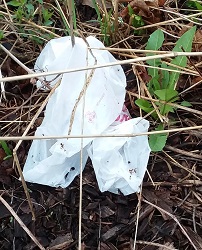
Recycling is not the solution because just as it takes energy to make things, it also takes energy to recycle them. Additionally, plastic bags can easily escape from the facilities where they are collected. I do see many plastic bags flying around where I live (I’m sure you do too) and we can easily multiply that by millions to imagine how many bags are dispersed in the environment every day. Even with our best intentions it is difficult to make sure that our bags end up where they are supposed to go.

If you want to add your voice there is a Greenpeace action to call on elected officials to take action on plastic pollution:

https://engage.us.greenpeace.org/HUlucLmSFE-JF181Aa3-pA2?utm_source=website&utm_medium=blog&utm_campaign=ppp_blog&sourceid=1009130&_ga=2.182390183.1246355678.1649607004-2069384434.1649458050

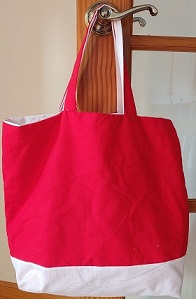
While we wait for actions at a government level we can also make plastic reduction a priority. You can start taking reusable bags with you, you don’t even have to buy them. They are easily made from old clothes and fabric. There are plenty of tutorial on the internet on how to make reusable bags. Do you have old shirts at home but don’t have a sewing machine? Don’t trash them, send them to me and I will send you back reusable shopping and produce bags.
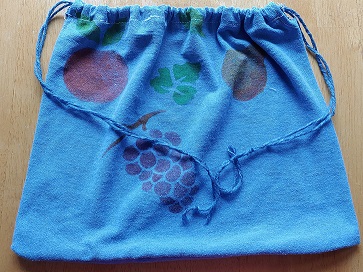
Old T-shirts can be used to make reusable drawstring produce bags

With enough fabric from old tablecloths, curtains or sheets one can make reusable shopping bags

Here is some useful information on plastic pollution:

https://oceanservice.noaa.gov/hazards/marinedebris/plastics-in-the-ocean.html

More on the UN resolution can be found at:

https://news.un.org/en/story/2022/03/111314

Spread the word! If you found this information useful, please share this post.

Food for thoughts: The rise of SUVs

Welcome to YouChoose, a blog where we explore ways of living sustainably. This week I wanted to discuss an interesting article I read in the September 2021 issue of the IEEE Spectrum magazine.

The article [1] details how SUVs in the US and across the world are the sector responsible for the second largest increase in global CO2 emissions after the power sector. The increase is larger than that from heavy industry, aviation, and trucks. According to the article it is very possible that, if the trend continues, the increased emissions from SUVs will more than offset the carbon reduction due to electric vehicles.

I was especially struck by this particular article because it condenses in a certain way the very problem at the core of the climate crisis. Even after all the talking about reducing emissions, global warming, and polar ice melt, when we actually have the opportunity to exercise the power of choice and make a difference we still choose the most polluting and most energy consuming car, the one that contributes the most to the crisis. It is almost a global denial, a disconnect between what we see as a global problem and how we perceive our role in it. After all there is always somebody else to blame.

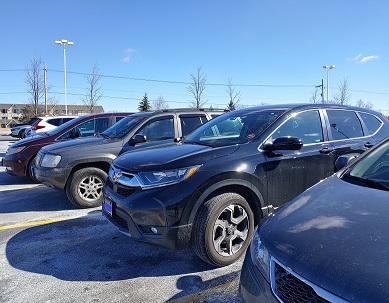
If we look around in parking lots we’ll get an idea of the magnitude of the problem

This is not about being good or bad, it is more about human behavior. People who purchase SUVs are not the bad people to shame and similarly those who purchase electric cars are not the good ones who get to moralize. In my opinion this trend tells us more about how difficult it is for us to settle for less when we can have more. It also tells us that the climate crisis is somewhere in our minds, but when it intersects our everyday choices other factors take priority: making a statement about our wealth, keeping up with the rest of the crowd, wanting a larger space or the latest gadget that car makers never fail to add to newer models.

At the end of the day it is really about personal choices. Perhaps the only way to break the circle is the hard path of learning to want less and consume less, not for the purpose of making a statement or because we have to do it, but because it is what makes us happy.


For those interested, a recent article on this topic can be found on the International Energy Agency (IEA) page:

IEA (2021), Carbon emissions fell across all sectors in 2020 except for one – SUVs, IEA, Paris https://www.iea.org/commentaries/carbon-emissions-fell-across-all-sectors-in-2020-except-for-one-suvs

[1] Smil, V. : “SUV’s ascendant,” IEEE Spectrum, September issue, pp. 22-23, 2021

Looking back to the past year

Welcome to YouChoose, a blog where we explore ways of living sustainably. This week I wanted to share a few thoughts about the past year.

I have never been one for new year celebrations and even less for new year resolutions. When I was younger perhaps, but lately new years always bring mixed feelings of time passing by and uncertain future.

A few years ago, as I started on a path to be more sustainable I focused on few goals easily achievable: Reducing dairy products and eliminating shopping plastic bags. One by one I introduced more and more goals such as eliminating palm oil, reducing waste, and consuming less. When trying to change lifelong habits it is easy to feel overwhelmed and frustrated. For this reason I share here a few achievements of the past year, focusing on the positive and knowing that there is much more that could be done, but we can’t do everything at once.

Palm oil elimination: Switched to sustainable laundry soap

This past year I have been able to keep up with the no-palm oil policy. Still occasionally I discover that I made a mistake and didn’t look carefully at the labels, however overall I have eliminated the noxious ingredient from more than 95% of my purchases. In the process I discovered wonderful alternatives to what I used to buy. The same holds for liquid soap, dish soap and shampoo which I have been making from palm oil-free soap bars. In 2021 I went one step further and switched to palm oil free conditioner and laundry soap. I think there are still a few more items on the list and hopefully I’ll work on those this year.

CO2 reduction: Switched to hybrid car

In 2021 I had to replace my car of 15 years and for the first time we purchased a hybrid model. We also downsized and got a smaller car that uses less gasoline. This choice was somewhat controversial as I wasn’t entirely sure of the environmental benefits of hybrid cars when we consider the entire lifecycle of the product. I’ll try to discuss this more in a future post.

Waste reduction: Started a compost pile

This is an area were I still have much improvement to achieve. Last fall when I collected the fall leaves I started a leaf compost pile and have been adding food waste there: Fruit and vegetable peels, green leaves, stems, and also coffee ground. Since starting, I noticed that my kitchen waste decreased almost 50%. I had never realized how much organic waste we were generating. Composting will be the topic of a future post once I see how the compost experiment turns out.

Outreach: Started to share what I am learning

One big achievement in 2021 was starting this blog (I think it has been one year this month!) and publishing the app. Hopefully I’ll be able to keep up with both this coming year. I also picked up two meetup groups that everybody is welcome to join (they are listed on the right). We meet virtually and in person to discuss sustainability and climate topics.

Now a quick look at some ideas for this year 2022. I am looking forward to expand my native garden to the front yard, grow indoor herbs, and venture in the realm of up-cycling. We’ll see what comes out of it!

If you want to share your achievements or failures in becoming more sustainable send me a post. I am looking for collaborators for the blog and the meetups!