Welcome to ChooseSustainable.org where we explore ways of living sustainably. In this series of short posts I present a native plant to encourage everybody to abandon our traditional way of gardening (basically a continuous fight against nature) and engage in sustainable gardening practices that nurture the ecosystem, sustain wildlife and foster biodiversity.
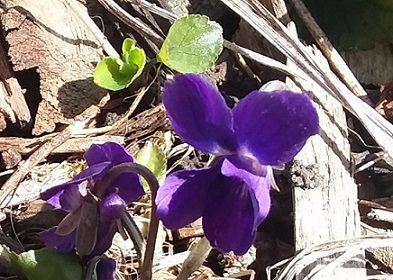
In this post I’ll talk about a spring flower that comes up in my backyard: Viola Sororia (Common violet).

Quick facts:
- Zones:3-9
- Bloom time: Early spring (March-May)
- Sun: Sunny area to shade
- Soil Moisture: Medium, Dry
- Aggressive: YES (but keep in mind it is a 3 inch plant)
- Front yard: YES
- Height: (3-4’’)
- Status: OK
- Maintenance: NONE
- Wildlife value: High
Wildlife connection: Viola sororia is the host plant of several marvelous butterflies whose populations have been declining. The caterpillars of at least five different Fritillary butterflies feed on the foliage, the seeds are attractive to ants. Several birds and small mammals eat the seeds and occasionally the leaves of this plants. Read more at https://www.fs.fed.us/wildflowers/pollinators/pollinator-of-the-month/fritillary.shtml
I wasn’t really thinking of writing this post until last week when I was placing an order to purchase a few violets for the front yard and did a quick internet search on common violet. I was surprised and saddened to read the conversations about this little plant and felt that it deserves better than the constant disdain it gets. The discussions around this flower usually include terminology such as weed, extirpate, smother, eradicate and similar. One is even warned not be fooled by its innocent look! I quickly realized I was dealing with the public enemy #1 of the gardening world.
Apparently the unforgivable crime of this tiny warrior is that it refuses to die and go extinct like so many other less resilient native plants. In some posts the plant is tagged as an invasive! However if we look at the definition of invasive plants from the USDA we find that an “invasive species” is defined as a species that is:
- Non-native (or alien) to the ecosystem under consideration; and,
- Whose introduction causes or is likely to cause economic or environmental harm or harm to human health.
Our little viola sororia is a native plant, which means it was here before we Europeans even arrived, and it doesn’t cause any harm to anybody. It is actually an edible and medicinal plant. In addition, as the host plant of several butterflies, is beneficial to the environment. By this definition we humans are a more invasive species than the viola sororia!
In fact the gentle violet has been gracing our landscapes for thousand of years. Known in ancient Greece as ion, the violet was borne from an act of kindness of our Mother Earth (the goddess Gaia) to feed Io, a young girl turned into a cow by the always vengeful Greek gods. It speaks a lot of our gardening habits the fact that a gift from our Earth, a symbol of love and gentleness has become the object of so much hatred.
I welcome violets in my yard wherever they come up, usually in patches here, there, and everywhere. Hopefully this short post will inspire others to see violets in a different light, to see that they have an important purpose and perhaps to stop and think before removing them. By letting this ancient flower thrive in your yard you will be feeding small herbivores and birds, and you will be sustaining a declining population of butterflies. If you think your efforts won’t make a difference think again. For the first time this past summer I was able to snap a picture of a Fritillary in my backyard.
Welcome back dear violets, resist, I am glad you haven’t become another casualty of our suburban gardening.

Please make sure to purchase native flowers from nurseries that don’t use neonicotinoids and look out for the full botanical name to avoid cultivars. Contact me for suggestions on where to buy.
Would you like to talk about a native plant in your backyard? Please send me your post at info@choosesustainable.org
 You Choose