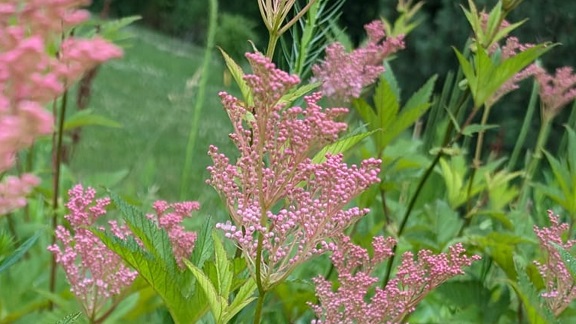
Filipendula rubra (queen of the prairie)

Welcome to ChooseSustainable.org a blog about individual climate action. In this series of short posts I present a native plant to encourage everybody to abandon our traditional way of gardening (basically a continuous fight against nature) and engage in sustainable gardening practices that nurture the ecosystem, sustain wildlife and foster biodiversity. I show the plants in a garden setting to dispel the myths depicting them as weedy and unsuitable for gardens.

In this post I want to talk about a stunning perennial, ideal for a variety of soil conditions: Filipendula rubra. The plant is ideally a wetland species, but it will also grow in moist conditions. It spreads if it finds the right place, colonizing an area. This plant is ideal if you have a part of your garden that gets flooded when it rains.

Established queen of the prairie in July

Quick facts:

  • Zones: 3-6
  • Bloom time: June-July
  • Sun: Sun
  • Soil Moisture: Wet, moist, well drained. Rich soil is preferred.
  • Aggressive: MODERATE it spreads through roots and occupies an area
  • Front yard: YES
  • Height: 4-5 feet
  • Status: Endangered in Illinois, threatened in Iowa and Michigan.
  • Maintenance: LOW
  • Wildlife value: LIMITED

Wildlife connection: The plant is visited by small insects such as small flies and beetles. It has no nectar but plenty of pollen. I don’t see much activity on the leaves, however the leaves provide nice shade for frogs.

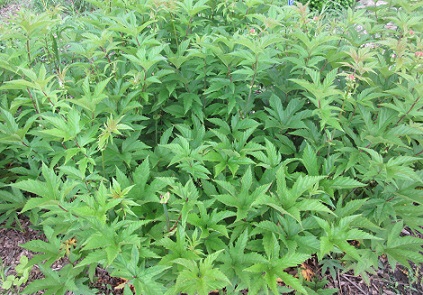
I originally removed the lawn in an area where water used to accumulate after rain and planted 5 small plugs (along with other water loving species). After more than 10 years the 5 plugs have grown nicely, but not overwhelmingly, and so they haven’t reached the point where I need to pull them back. Queen of the prairie does well in rich soil. After the lawn is removed the soil is generally terrible and it takes time to bring it back to life. I leave all organic material from the previous year’s cuttings in place, together with leaves. All material gets quickly decomposed in spring and summer and with time the soil improves. In spring the large, attractive leaves form a nice ground cover before the stems develop to their full height.
In early summer the plant blooms with large feather-like flowers that remind me of cotton candy. The large inflorescence is made up of small flowers. The bloom lasts for a few weeks.
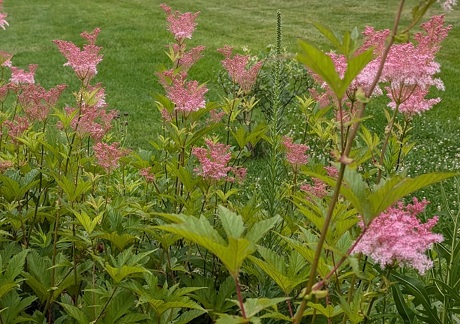
The large inflorescence reminiscent of cotton candy provides a great bloom in the garden

In fall the plant produces small reddish fruits that provide a nice fall accent.

In late summer and fall the plant produces small reddish fruits

Here is how to transform a soggy mess into a most attractive well-drained part of your yard without digging. The first step is to get rid of the lawn by covering it in fall with a few layers of cardboard covered with mulch (I use wood chips also). If you don’t have enough cardboard boxes you can use rolls of construction paper. In spring purchase some moist-loving native plants. Here are a few choices (there are many more):

Filipendula rubra (Queen of the prairie), Gentiana andrewsii (Bottle gentian), Liatris pycnostachyaI (Blazing star), Aster Novae Angliae (New England aster), Chelone glabra (White turtle head), Echinacea purpurea (Purple coneflower). You can add some grasses and sedges, however select them carefully because they may take over the place.

The deep roots of native plants help the water go in the soil quickly reducing standing water. In a few years you will have a beautiful pollinator haven. Plant dense or let the plants self-seed to reduce weeds.

Every native plant you add brings back a piece of ecosystem that is vital to biodiversity.

Would you like to talk about a native plant in your backyard? Please send me your post at info@choosesustainable.org

If you liked this post please share it!
Helianthus Grosseserratus (sawtooth sunflower)

Welcome to ChooseSustainable.org a blog about individual climate action. In this series of short posts I present a native plant to encourage everybody to abandon our traditional way of gardening (basically a continuous fight against nature) and engage in sustainable gardening practices that nurture the ecosystem, sustain wildlife and foster biodiversity. I show the plants in a garden setting to dispel the myths depicting them as weedy and unsuitable for gardens.

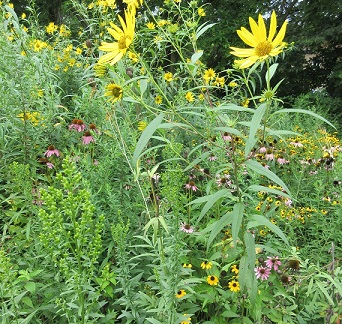
It is not Autumn without sunflowers. Around mid September, when I start thinking about the upcoming winter I look outside at my outrageous sunflowers and the gloomy feeling is instantly dispelled. They smile back at me, while leaning on top of other plants, unorganized, and excessively tall. Yes they are bold and difficult to constrain, but after all that is exactly the reason why I had chosen them, for their high wildlife value.

You guessed right, this post is about native sunflowers, specifically the Heliantus Grosseserratus (sawtooth sunflower) variety.

Sawtooth sunflowers in September

Quick facts:

  • Zones:3-9
  • Bloom time: Fall (Sept)
  • Sun: Sun
  • Soil Moisture: Medium dry to medium wet
  • Aggressive: Yes but well manageable
  • Front yard: MAYBE
  • Height: 6-8 feet
  • Status: OK
  • Maintenance: LOW
  • Wildlife value: VERY HIGH

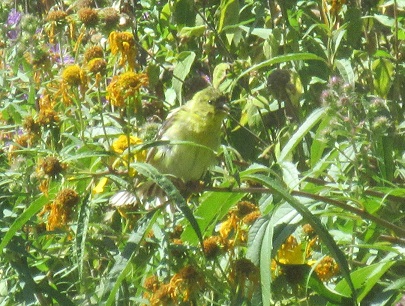
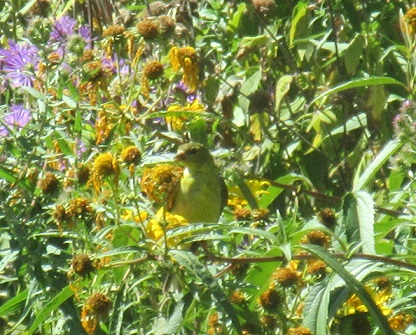
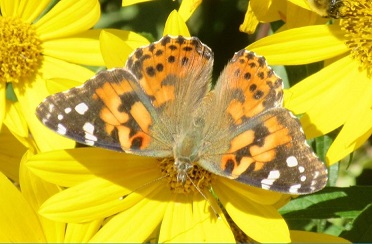
Wildlife connection: The entire plant from stems to leaves, from seeds to flowers is valuable to a variety of insects and birds. Rabbits like the emerging leaves in early spring. Caterpillars of dozens of butterflies and moths feed on the plant. Bees, including bumblebees, small flies, moths, and beetles visit the flowers. Birds, squirrels and small mammals eat the seeds through winter. Even my groundhog takes a shot at the small plants in spring.

I’ll start saying the this is the tallest sunflower in Illinois and it may not be suitable for small yards. It does spread but is actually not difficult to control because the roots are not too deep, so it is not difficult to remove occasional plants that may grow out of place. I mostly let it spread and remove it only when it starts encroaching on other plants.

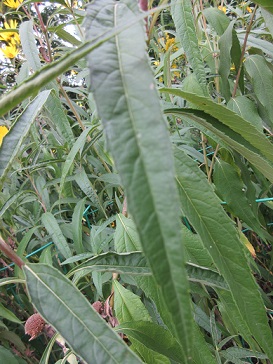
The plant emerges in spring and develops during summer providing a beautiful deep green cover. The leaves are elongated and they have irregular edges that give the name to the plant. Multiple flowers generally branch out of the main stem in late summer.

Attractive flowers develop in early September lasting for several weeks. The flowers attract numerous visitors.

Attractive flowers last for several weeks attracting multiple visitors.

The usefulness and beauty of sunflowers doesn’t end with its bloom. The seeds accessible from spent flowers attract birds through fall and winter.

If you feel this is too much for your backyard, consider that there are other fantastic varieties of native sunflower that are easiliy grown and not as tall. For example downy sunflower (heliantus mollis) is only 5 feet tall. There are even some species such as the woodland sunflower (heliantus divaricatus) suitable for shade. I hope you will consider livening up your fall garden with native sunflowers. Every native plant you add brings back a piece of ecosystem that is vital to biodiversity.

Would you like to talk about a native plant in your backyard? Please send me your post at info@choosesustainable.org

If you liked this post please share it!

Gentiana Andrewsii (Bottle gentian)

Welcome to ChooseSustainable.org a blog about individual climate action. In this series of short posts I present a native plant to encourage everybody to abandon our traditional way of gardening (basically a continuous fight against nature) and engage in sustainable gardening practices that nurture the ecosystem, sustain wildlife and foster biodiversity. I show the plants in a garden setting to dispel the myths depicting them as weedy and unsuitable for gardens.

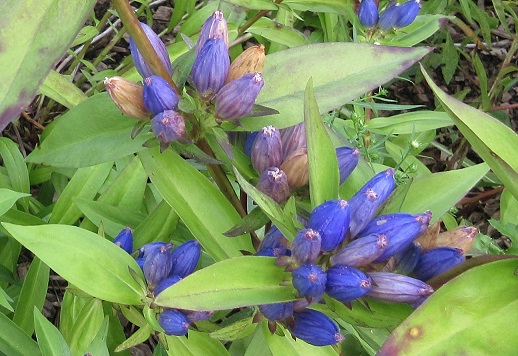
In this post I talk about a fall blooming plant of unusual appearance: Gentiana Andrewsii (bottle gentian). The population of this plant is declining due to loss of habitat and the species has recently become of concern is several states.

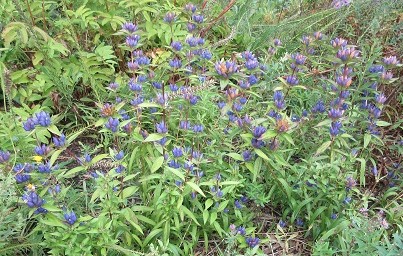
Bottle gentian at the end of September

Quick facts:

  • Zones:3-6
  • Bloom time: Fall (Sept-Oct)
  • Sun: Sun
  • Soil Moisture: Medium wet to medium
  • Aggressive: No
  • Front yard: YES
  • Height: 2 feet
  • Status: Declining and classified as threatened or species of concern in several states
  • Maintenance: LOW
  • Wildlife value: Medium

Wildlife connection: The flowers of the plant attract mostly bumble bees who are the only ones able to access the closed flowers. Although its wildlife value is limited, the plant provides a beautiful fall bloom and supports bumblebees late in the season, when other plants are not available.

I bought this plant by chance at a Forest Preserve sale. While I was waiting in line, I started talking to a nice lady next to me and she mentioned bottle gentian. She was very passionate about it and when we went in, she placed 3 small plugs in my cart recommending me to plant them. At home I was converting a patch of lawn into a mulched bed. The area used to be flooded with standing water for days after each rain and I was looking for water-loving native plants. I planted the small gentians there, they were a little slow to establish, but they have been there since, filling up year after year.

The plant grows 2-3 feet making it an excellent choice for the front yard. It is in full bloom in late September, and the flowers last about one month, extending the life of your garden’s bloom until October. The unusual flowers of a deep blue and dark violet color, with shades of yellow and pink are a sure attraction.

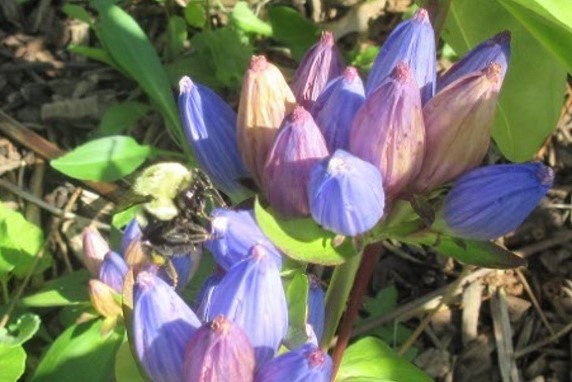
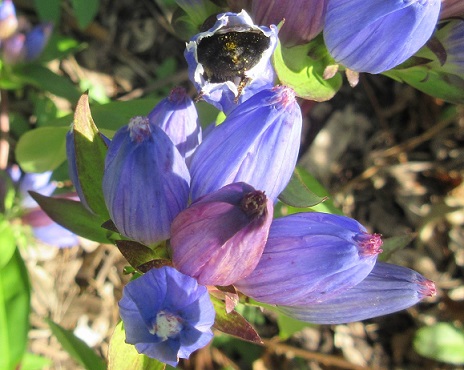
The attractive and unusual shape of blue gentian.

The plant is a magnet for bumblebees. They are the only ones strong enough to open the flowers and dive in, re-emerging with nectar and pollen.

Success!

I hope you will consider Gentiana Andrewsii for your garden. Every native plant you add brings back a piece of ecosystem that is vital to biodiversity.

Would you like to talk about a native plant in your backyard? Please send me your post at info@choosesustainable.org

If you liked this post please share it!