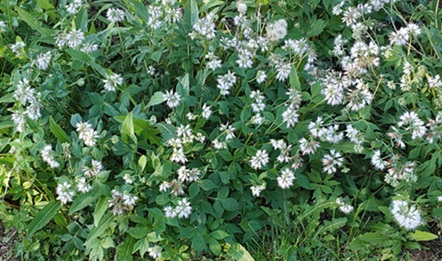
Hydrophyllum virginianum (Virginia waterleaf)

Welcome to ChooseSustainable.org a blog about individual climate action. In this series of short posts I present a native plant to encourage everybody to abandon our traditional way of gardening (basically a continuous fight against nature) and engage in sustainable gardening practices that nurture the ecosystem, sustain wildlife and foster biodiversity. I show the plants in a garden setting to dispel the myths depicting them as weedy and unsuitable for gardens.

In this post I want to talk about a shade perennial, ideal for areas under trees: Hydrophyllum virginianum. The plant is a ground cover, only one foot tall and is ideal for shaded locations. It may become aggressive if it finds the right conditions filling up the entire area.
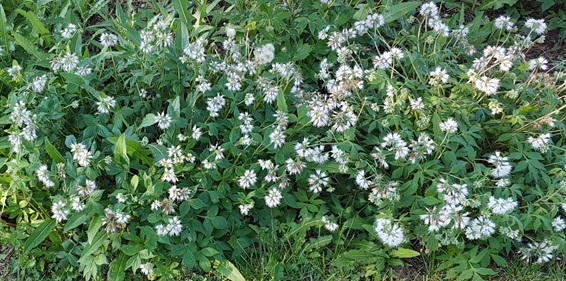
Virginia waterleaf in May

Quick facts:

  • Zones: 4-9
  • Bloom time: May, early June
  • Sun: Part-shade, shade
  • Soil Moisture: Wet, moist, well drained. Rich soil is preferred.
  • Aggressive: MODERATE; It does spread if it finds the right conditions
  • Front yard: YES
  • Height: 1-2 feet max
  • Status: OK.
  • Maintenance: LOW
  • Wildlife value: LIMITED

Wildlife connection: The plant is an early bloomer and as such is important for bees, bumblebees, and other small insects early in the season.

I planted this plant because I was looking for an aggressive ground cover in an area that was in partial shade. Unfortunately the chosen location wasn’t the right one because of the poor soil, insufficient soil moisture, and probably excessive afternoon sun in summer. In spite of the non-ideal location the plant has expanded and covered a large part of the intended area. It is easy to transplant, so last fall I decided to move some of the plant to a more suitable location and I am expecting a much better outcome.

Based on my mistakes I can say that the plant is extremely resilient and it will manage even in conditions that are not ideal. Depending soil and sun, it may suffer during extended early-summer drought and may need occasional watering. The plant makes a great ground cover/first layer reducing your weeding activity substantially.

Virginia waterleaf emerges in April, when other perennials are still dormant, blooms in May, and the foliage persists until fall.
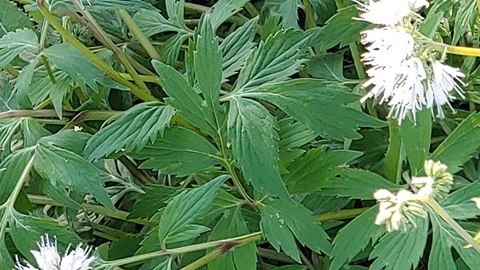
The foliage of Virginia waterleaf in early May.

The foliage is dark green with characteristic small white discolored areas that my give the impression of water drops. The foliage is dense in springs, but it thins out at the end of summer. The compound leaves are made of 4-7 lobes as visible in the photo.
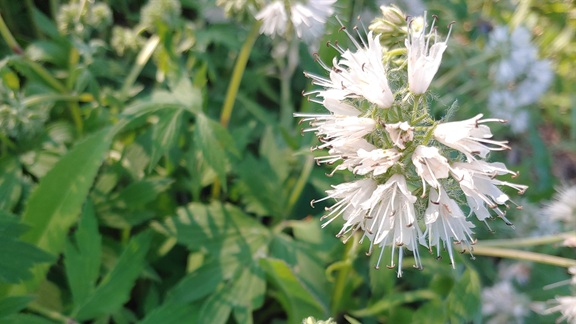
Virginia waterleaf bloom in early May

The bloom consists of clusters of small, bell-shaped light pink flowers that sometime they can take on a lavender shade. The clusters are large enough that they are noticeable. The flowers last for one or two weeks before releasing a large amount of seeds.

The importance of ground covers

I take this opportunity to talk about the importance of ground covers in your native garden. Over the years I have experimented with several non-chemical weed management techniques. So far, the only truly successful way that I have been able to reduce or eliminate the need for weeding has been through ground covers and dense planting. Virginia waterleaf is one to try. In my next post I’ll talk more about this topic and discuss great tested ground covers for sun and shade.

Every native plant you add brings back a piece of ecosystem that is vital to biodiversity.

Would you like to talk about a native plant in your backyard? Please send me your post at info@choosesustainable.org

If you liked this post please share it!
Trash to treasure: Winter gardening in your native prairie

Welcome to ChooseSustainable.org a blog about individual climate action. In this post I talk about winter gardening in your native prairie. Have you given a thought about transitioning your gardening habits from an endless list of “getting rid of” to welcoming, sustaining, and restoring of lost habitat? Do you know that restoring a piece of native ecosystem in your backyard is one of the most effective ways you can fight soil degradation, pollution, and loss of biodiversity?

In this post I talk about winter activities that help biodiversity. Remember that wildlife, just like us, inhabits the land all year round, not just in summer, and needs food, water, and shelter all year, just like we do. The good news is that when it comes to winter gardening less is more. In fact, our obsession with fall cleaning deprives other species of their winter shelter and eliminates important sources of food for birds that don’t migrate. Let’s get started then with our fall and winter trash to treasure list.

Leaves

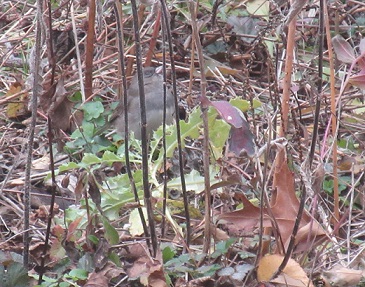
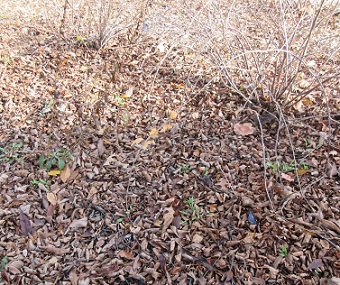
Trash to us treasure to...Birds, insects, turtles, moths butterflies, fireflies, bumblebees, chipmunks, frogs and other amphibians…and the list goes on. Don’t trash the fallen leaves, gently push them out of the lawn area and collect them in a designated corner of your yard. They appear to be a lot, but after a couple of rainfalls they reduce to little. You can also divide them among the planted areas and around trees. I add to them all that is produced in the kitchen, mostly fruit and vegetable peels, and coffee grounds.

perennial STEMS

https://xerces.org/sites/default/files/publications/22-005_01_web-press.pdf

Beautiful perennials that provide good nesting for stem bees are: Elderberry, Joe Pye Weed, Goldenrods, Bee Balm, and Purple Coneflower.

SNAGS, branches, and twigs

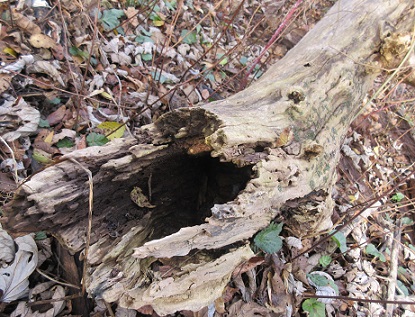
Trash to us treasure to...Birds, bees, chipmunks, lizards, rabbits, squirrels. Our fall and winter cleaning often includes complete removal of fallen branches, twigs, and dead trees. Trees continue to live after they die. Hollow wood provides nesting places for wood nesting bees, birds, and small mammals. If you are lucky enough to have a wooded area in you backyard, you can leave dead trees (snags) properly shortened to avoid hazards, branches, and small piles of wood material. Dead trees at the edge of a backyard can also be kept and just cut back enough so that they are not hazardous. Fallen twigs and smaller branches can be piled up in a corner and left there to decompose. Here is a link to know more about wood nesting bees and nesting for pollinators:

https://xerces.org/pollinator-conservation/nesting-resources

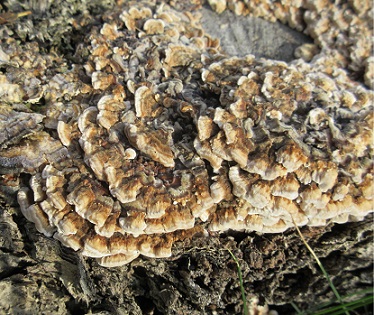
Wood mushrooms decompose the hard part of the wood releasing nutrients that enrich the soil. Keeping snags and branches as much as we can ensures that the full cycle of life takes place in our yard.

LAWN imperfections

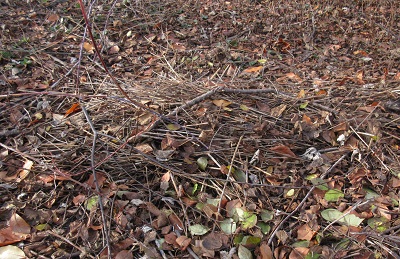
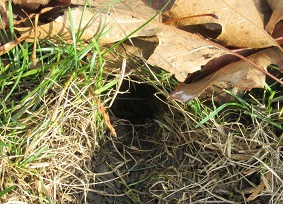
Trash to us treasure to...Ground nesting bees, bumblebees, chipmunks to name a few. Small holes in flowerbeds and lawns are likely due to wildlife trying to find a place to overwinter. Ground nesting bees can dig their own holes where the soil is soft, or they can also reuse holes dug by other wildlife. Extensive pesticide use on the lawn and obsession with lawn appearance are harmful to everybody and especially ground nesting bees. Read more here:

https://www.xerces.org/blog/clear-space-for-bees-why-pollinators-in-your-yard-need-access-to-bare-ground

A small hole in the lawn can be used by ground nesting bees or other wildlife as winter refuge.

enjoy winter gardening

Finally, fall and winter gardening is a lot about observing, discovering, and planning for spring. Already in February we’ll be planning our cutting and sowing if we haven’t done it in late fall. Sustainable fall and winter activities ensure that life continues in your yard through the seasons and allow wildlife to survive harsh winters. HAPPY SOLSTICE DAY!

Would you like to talk about a native plant in your backyard? Please send me your post at info@choosesustainable.org

If you liked this post please share it!
Helianthus Grosseserratus (sawtooth sunflower)

Welcome to ChooseSustainable.org a blog about individual climate action. In this series of short posts I present a native plant to encourage everybody to abandon our traditional way of gardening (basically a continuous fight against nature) and engage in sustainable gardening practices that nurture the ecosystem, sustain wildlife and foster biodiversity. I show the plants in a garden setting to dispel the myths depicting them as weedy and unsuitable for gardens.

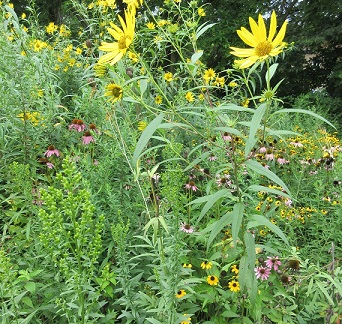
It is not Autumn without sunflowers. Around mid September, when I start thinking about the upcoming winter I look outside at my outrageous sunflowers and the gloomy feeling is instantly dispelled. They smile back at me, while leaning on top of other plants, unorganized, and excessively tall. Yes they are bold and difficult to constrain, but after all that is exactly the reason why I had chosen them, for their high wildlife value.

You guessed right, this post is about native sunflowers, specifically the Heliantus Grosseserratus (sawtooth sunflower) variety.

Sawtooth sunflowers in September

Quick facts:

  • Zones:3-9
  • Bloom time: Fall (Sept)
  • Sun: Sun
  • Soil Moisture: Medium dry to medium wet
  • Aggressive: Yes but well manageable
  • Front yard: MAYBE
  • Height: 6-8 feet
  • Status: OK
  • Maintenance: LOW
  • Wildlife value: VERY HIGH

Wildlife connection: The entire plant from stems to leaves, from seeds to flowers is valuable to a variety of insects and birds. Rabbits like the emerging leaves in early spring. Caterpillars of dozens of butterflies and moths feed on the plant. Bees, including bumblebees, small flies, moths, and beetles visit the flowers. Birds, squirrels and small mammals eat the seeds through winter. Even my groundhog takes a shot at the small plants in spring.

I’ll start saying the this is the tallest sunflower in Illinois and it may not be suitable for small yards. It does spread but is actually not difficult to control because the roots are not too deep, so it is not difficult to remove occasional plants that may grow out of place. I mostly let it spread and remove it only when it starts encroaching on other plants.

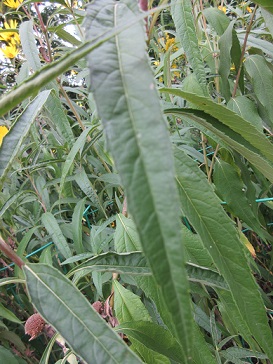
The plant emerges in spring and develops during summer providing a beautiful deep green cover. The leaves are elongated and they have irregular edges that give the name to the plant. Multiple flowers generally branch out of the main stem in late summer.

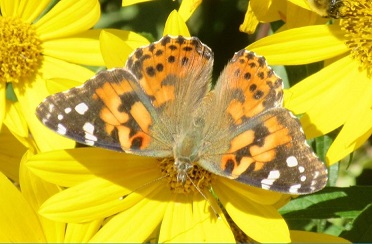
Attractive flowers develop in early September lasting for several weeks. The flowers attract numerous visitors.

Attractive flowers last for several weeks attracting multiple visitors.

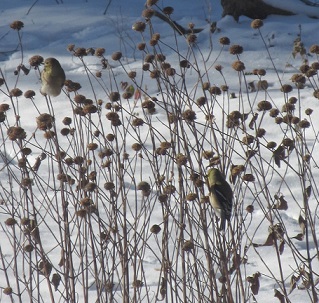
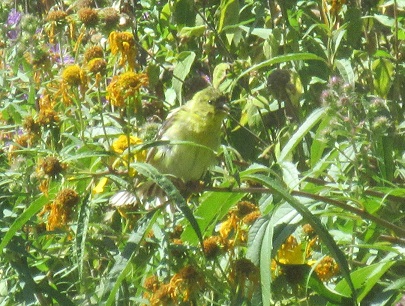
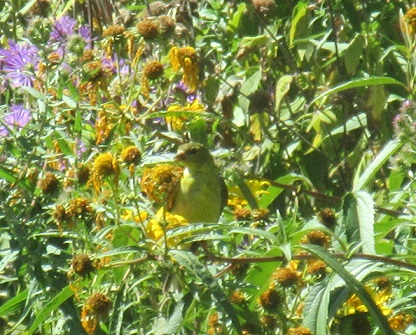
The usefulness and beauty of sunflowers doesn’t end with its bloom. The seeds accessible from spent flowers attract birds through fall and winter.

If you feel this is too much for your backyard, consider that there are other fantastic varieties of native sunflower that are easiliy grown and not as tall. For example downy sunflower (heliantus mollis) is only 5 feet tall. There are even some species such as the woodland sunflower (heliantus divaricatus) suitable for shade. I hope you will consider livening up your fall garden with native sunflowers. Every native plant you add brings back a piece of ecosystem that is vital to biodiversity.

Would you like to talk about a native plant in your backyard? Please send me your post at info@choosesustainable.org

If you liked this post please share it!
Actions and News: New USDA plant hardiness map released

Welcome to YouChoose, a blog about individual climate action.

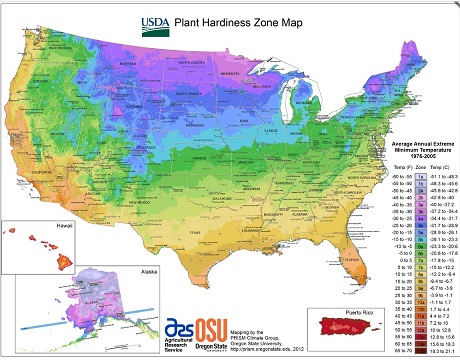
At the end of 2023 the USDA released the updated 2023 plant hardiness zone map. The previous map had been released in 2012. The map can be found here:

https://planthardiness.ars.usda.gov

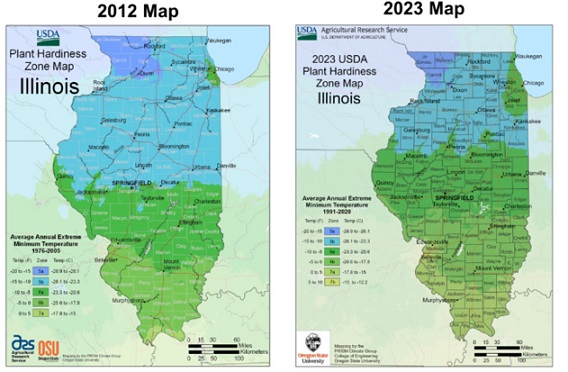
The map provides a climatology of minimum temperatures across the US and is a valuable tool for gardeners to decide which plants have better chance of survival in a certain region. I am placing here the 2012 and 2023 maps next to each other.

The new map confirms the warming trend we all have been feeling to some degrees, especially here in the Midwest.

Temperature is one factor that affects your plants chances of survival, but other factors such as droughts and extreme events affect your garden as well. Using native plants in your garden helps mitigate the effects of climate change on your landscape. Native plants have uniquely evolved to withstand extreme conditions. In fact there are prairie plants such as the lead plant (Amorpha canescens, just to mention one) that can tolerate extreme droughts.

If you are interested in knowing more about hardiness and ecoregions check out this nice article from the National Wildlife Federation on how to plan a sustainable garden

https://blog.nwf.org/2024/02/hardiness-zones-and-ecoregions-for-climate-smart-gardening/

Don’t feel that your efforts are in vain. You can be sure that switching to native plants and pesticide-free gardening has a profound impact on the environment.

Please share the link.

Catalpa speciosa (Northern catalpa )

Welcome to ChooseSustainable.org a blog about individual climate action. In this series of short posts I present a native plant to encourage everybody to abandon our traditional way of gardening (basically a continuous fight against nature) and engage in sustainable gardening practices that nurture the ecosystem, sustain wildlife and foster biodiversity. I show the plants in a garden setting to dispel the myths depicting them as weedy and unsuitable for gardens.

In this post I talk about a hardy blooming tree that I like very much: Catalpa speciosa (Northern catalpa). This tree is adaptable, resilient, fast growing and it makes great choice to replace invasive buckthorn at the edge of your property.

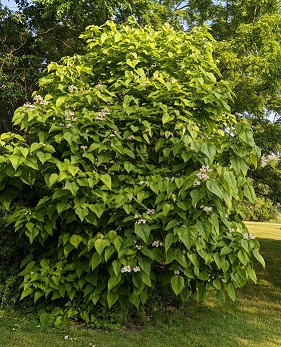
Catalpa can grow as a large shrub. If you zoom in you can see the flowers

Quick facts:

  • Zones:4-6
  • Bloom time: Spring (May-June)
  • Sun: Sun
  • Soil Moisture: Medium dry to medium wet
  • Aggressive: No
  • Front yard: YES
  • Height: 50-70 feet or 15-20 m
  • Status: OK
  • Maintenance: LOW
  • Wildlife value: Medium

Wildlife connection: The large flowers attract bumblebees and various types of bees. I also see moths and great insect activity on the leaves.

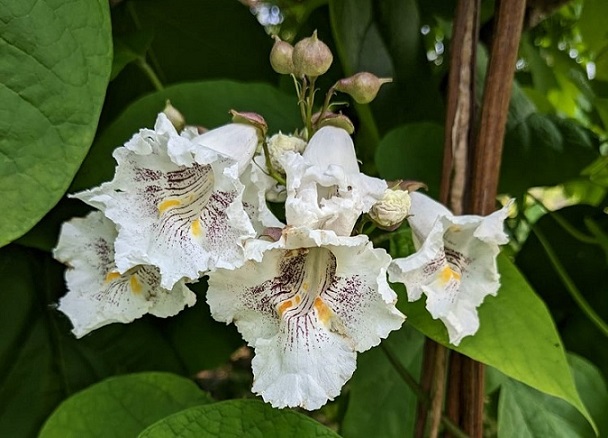
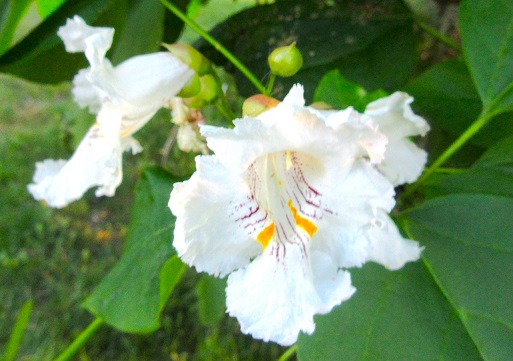
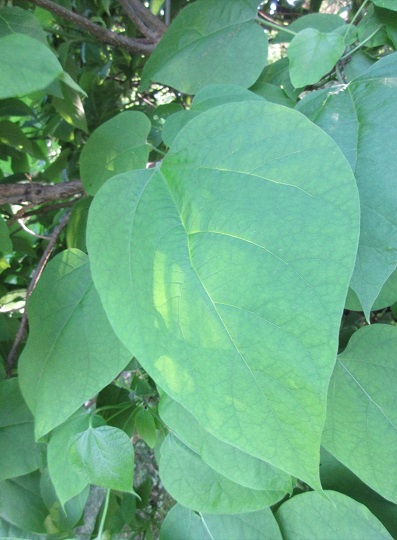
Catalpa is one of the few trees at these latitudes that produce large flowers. The leaves are also large and heart shaped. In this sense it is quite unusual and easy recognizable, you may even see it growing on the edges of roads depending on where you live. The plant blooms in Spring, around mid May and the bloom lasts about a month. The tubular flowers are easily recognizable from their markings.

If provided with enough room, the plant expands producing new small trees. This is a desirable feature if one wants to use the tree at the edge of a property. For this reason, although the value to wildlife is limited, this plant can still be considered important as a fast growing alternative to foreign species for screening.

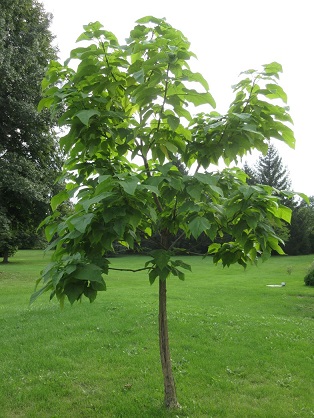
Catalpa can also be shaped as a tree and it can occupy a nice prominent place in the middle of the yard. I have 2 catalpas in my yard, one is left as a shrub and one shaped as a tree.

This young catalpa was planted a few years back

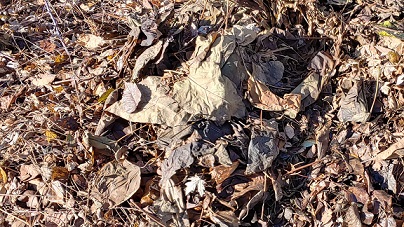
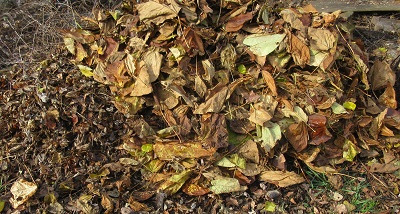
Catalpa has a reputation for being weedy and for producing a lot of litter in fall. This can also be considered a plus. I collect the large fallen leaves and add them to the leaf compost pile. They do compost very easily, and are not a problem at all.

Catalpa leaves are a great addition to the leaf compost pile

I hope you will consider Northern catalpa for your garden, especially as an alternative to buckthorn. Every native plant you add brings back a piece of ecosystem that is vital to biodiversity.

Would you like to talk about a native plant in your backyard? Please send me your post at info@choosesustainable.org

If you liked this post please share it!