Empower yourself! Free yourself from meat dependency by switching to a diverse, plant-based diet. I propose here another quick and delicious recipe based on millet.
Sustainability tips:
Millet is a sustainable crop that is resilient to drought and climate stress. It is therefore considered a staple of sustainable agriculture. I suggest to buy organic millet that can be purchased in bulk at a relatively low cost. Millet is an important food in the Ayurvedic tradition where is celebrated for its nutrient contents and recommended for weight management. Another advantage of millet is that it can be prepared fairly quickly and used in a variety of dishes. In this recipe we use foxtail millet.
Useful things to have ready
For rinsing and draining the raw and cooked millet it is useful to have a fine mesh strainer.
It is a good practice to rinse the millet a few times, until the water is clear, and soak it 1 or 2 hours before using it. Soaking is not strictly necessary, but it helps improve the taste.
The spices suggested here are optional and can be replaced with something else, depending on personal preferences. Even just some olive oil, roasted garlic, and lemon will do!
Preparation time: 15 minutes
Ingredients (3-4 people)
1 cup of dry millet
1-2 garlic cloves
2-3 curry leaves or bay leaves
1 teaspoon of mustard seeds (optional)
1 teaspoon of cumin seeds
1 green chili (optional)
Red crushed chili pepper (optional)
Peanuts (optional)
Salt
One table spoon of olive oil or other vegetable oil
Lemon
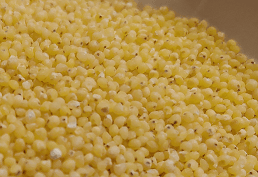
Raw millet
Procedure
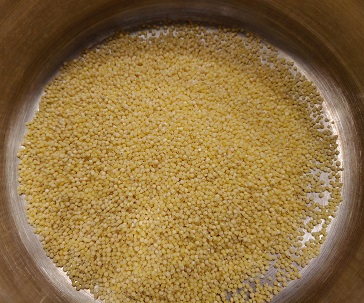
After soaking and rinsing the millet, place it in a pot with water and little salt
Bring the water to a boil and cook the millet until soft (about 10 minutes)
Skim the foam that builds up while the millet is cooking to improve taste
Drain the cooked millet with a fine mesh strainer and cool it by rinsing it with cold water
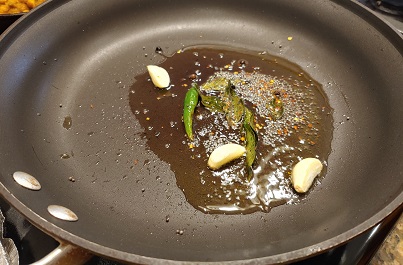
In a pan heat the oil
Add cumin, mustard seeds, and red chilies
Add curry leaves, green chilies and garlic cloves
Sautee on low flame until garlic is lightly roasted
Add spices to a pan
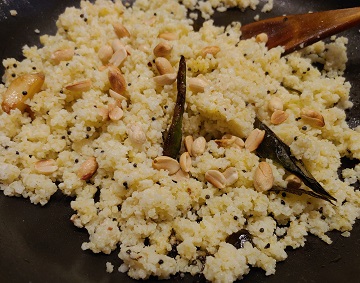
Add millet and sautee for a few minutes
Turn off the heat and squeeze some fresh lemon on top
You can add some peanuts or other garnish if desired
Welcome to YouChoose, a blog about individual climate action.
Have you ever thought about making laundry habits more sustainable? Laundry habits are very personal and intrinsically linked to our health and lifestyle, however even small changes to our routine can help reduce our environmental impact. In this post I talk about my personal experience in trying to do just that.
Just as many of us, every few months I used to go to a general store to purchase a jug of laundry detergent without worrying too much about ingredients or provenance. I generally looked for the cheapest option or whatever was on sale. As I became more conscious of the environmental destruction caused by palm oil-induced deforestation I decided to include laundry detergent in my list of products to review. My objectives were the following, ranked by increasing difficulty:
Eliminate plastic
Eliminate harmful chemicals
Reduce waste in general
Eliminate detergents that contain palm oil
Do all of the above without increasing costs
I’ll review next to what extent I was able to achieve each goal.
Eliminate as much plastic as I can
Easy
Plastic jugs used in traditional laundry soaps end up in landfills. Even assuming a conservative estimate of about 4 jugs per year per household (I suspect it may be more) it results in about 400 million jugs of laundry detergent discarded each year. Read more about the problem here:
It is quite easy to find detergents that come without plastic. They are either powders or laundry sheets. I only found one brand that comes liquid in carton boxes. I must say that the idea of laundry sheets, although certainly appealing, seems like one of those “created needs” generated through marketing. Personally I don’t see any practical advantage in using a laundry sheet instead of measuring a tablespoon of powder. I understand however that others may have different needs and prefer laundry sheets. When selecting laundry sheets you may want to inform yourself about microplastics that could be released. The ingredient in question in Polyvinyl Alcohol (PVA) a synthetic water soluble compound. There is still some debate on whether the ingredient is completely biodegradable in all conditions. Below are some studies that assess how much these compounds biodegrade. More studies are probably needed to better understand the effect of PVA on aquatic organisms.
I opted for a powder that comes tightly packaged in a small paper box, entirely recyclable. I dissolve a tablespoon of the detergent in a small amount of water before using it (but it can also be used directly in the washer).
Eliminate chemicals dispersed in the environment
Moderate
Fortunately, this objective is also becoming easier to achieve. Traditional laundry detergents may contain sulfates, synthetic surfactants, and brighteners that are not biodegradable. Dryer sheets contain synthetic fragrances. Searching for products with biodegradable ingredients is one effective way to reduce our pollution footprint.
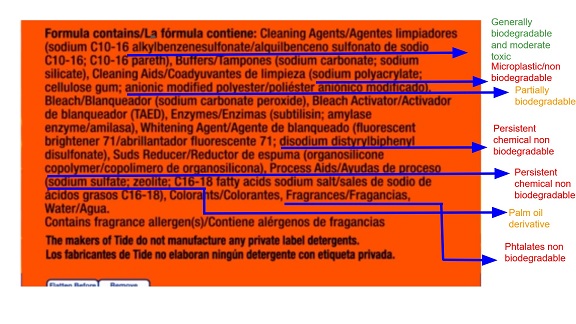
In the image below I have annotated some of the ingredients in a traditional laundry powder product.
A generic label for ingredients for a widely distributed laundry soap shows the presence of many non-biodegradable ingredients derived from petroleum.
Ingredients obtained from petroleumthat we can avoid:
Entirely biodegradable formulas, non petroleum derivatives, plant based, fragrance free, essential oil fragrances. I opted for a powder that lists all ingredients and is made with only few biodegradable ingredients.
Reduce waste in general
Difficult
Waste when doing laundry can take many shapes. Reducing waste requires changing habits, which is a very difficult thing to do. I was only partially successful. One way to approach this is to ask ourselves: Do I need so many products? Can I wear something twice before washing? Below are some more examples.
Wasteful habits
Suggestion
Impediments
Using too much water
Reduce number of loads. If possible, consider wearing clothes more than once before washing.
It strongly depends on individual lifestyle and needs.
Run washer and dryer during non-peak hours (10pm-6am and weekends) to maximize the use of renewable sources depending on where one lives.
Sometime we may be too tired or forget.
Old appliances. Energy and water inefficient machine
This is something to think about when it’s time to replace the machine.
It depends on cost and financial resources available at the moment.
Use too many products (dryer sheets, softener, stain remover)
Use one product for everything. Eliminate dryer sheets. Use minimum amount necessary.
Habits, fear of lack of alternative, takes time to find new ways.
Eliminate detergents that contain palm oil
Extremely Difficult
The palm oil industry is a predatory industry that is built on the ashes (literally) of ancient rainforests. Palm oil plantations wipe out entire ecosystems. Below are some links that discuss the problems created by the replacement of biodiverse forests with monocultures of a foreign species.
Unfortunately the vast majority of laundry detergents (even those marketed as green and sustainable) contain palm oil in spite of the fact that it is well established that sustainable palm oil doesn’t exist. In the majority of cases the ingredient is not clearly indicated in the label. Below are words to watch for. When in doubt contact the company directly:
“Palm” or “kernel”: palm kernel or palm stearine or palm fruit oil, palmitate, palmate, and palmitoyl, Sodium Kernalate.
“Sodium” or “Sulfate”: Sodium Laureth Sulfate, Sodium Lauryl Sulfate, Sodium Lauryl Sulfoacetate or SLS, Sodium Dodecyl Sulphate (also known as SDS or NADS), Sodium Isostearoyl Lactylaye and Fatty alcohol sulphate.
“Cetyl”, “isopropyl”, “steareth”, “stearate”, “glycerol”, “glyceryl” or “lactylate”
So far, I only found a handful of companies that openly don’t use palm oil in their detergents. At the end of this blog there is link to information I have found on common brands and their palm oil policy.
Do all of the above without increasing costs
Are sustainable detergents more expensive than traditional detergents? It seems that they are slightly more expensive than the cheap detergents one can find in stores but they are comparable to high end regular detergents. There are however ways to reduce the costs even using the sustainable detergents. For example I add washing powder to reduce the cost per load. Using fewer products, fewer loads, and smaller doses has actually decreased my overall costs. Another saving comes from the fact that the laundry powder, with a small addition of borax, can also be used to clean carpet stains eliminating the need to purchase additional carpet cleaning products (in plastic bottles).
To conclude, I have put together a few slides that can be viewed at the following link. The last two slides contain a comparison of popular detergents, their price, and how they satisfy the criteria discussed in this post.
I hope this information can help you to make informed decisions on laundry detergents and to minimize our impact on the environment. Every change counts!
Welcome to YouChoose, a blog about individual climate action.
Last month the AMS published the 35th annual climate report for the year 2024. The comprehensive report was put together by about 600 scientists worldwide and provides the latest update on land and ocean observations from ground and space, global climate indicators, and specific weather events. It covers regional and global climate.
The report, as well as previous ones, can be found at:
Welcome to ChooseSustainable.org a blog about individual climate action. In this series of short posts I present a native plant to encourage everybody to abandon our traditional way of gardening (basically a continuous fight against nature) and engage in sustainable gardening practices that nurture the ecosystem, sustain wildlife and foster biodiversity. I show the plants in a garden setting to dispel the myths depicting them as weedy and unsuitable for gardens.
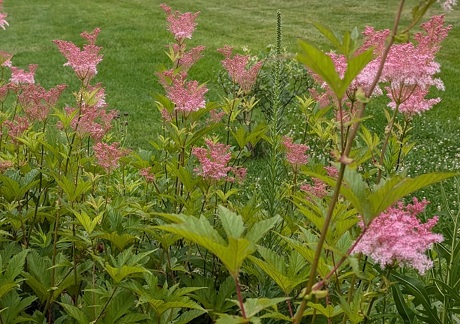
In this post I want to talk about a stunning perennial, ideal for a variety of soil conditions: Filipendula rubra. The plant is ideally a wetland species, but it will also grow in moist conditions. It spreads if it finds the right place, colonizing an area. This plant is ideal if you have a part of your garden that gets flooded when it rains.
Established queen of the prairie in July
Quick facts:
Zones: 3-6
Bloom time: June-July
Sun: Sun
Soil Moisture: Wet, moist, well drained. Rich soil is preferred.
Aggressive: MODERATE it spreads through roots and occupies an area
Front yard: YES
Height: 4-5 feet
Status: Endangered in Illinois, threatened in Iowa and Michigan.
Maintenance: LOW
Wildlife value: LIMITED
Wildlife connection: The plant is visited by small insects such as small flies and beetles. It has no nectar but plenty of pollen. I don’t see much activity on the leaves, however the leaves provide nice shade for frogs.
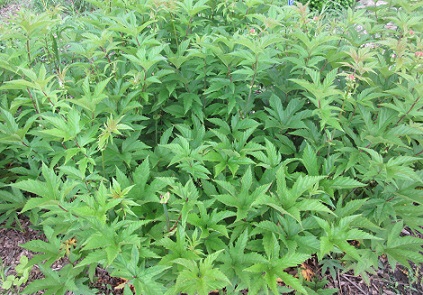
I originally removed the lawn in an area where water used to accumulate after rain and planted 5 small plugs (along with other water loving species). After more than 10 years the 5 plugs have grown nicely, but not overwhelmingly, and so they haven’t reached the point where I need to pull them back. Queen of the prairie does well in rich soil. After the lawn is removed the soil is generally terrible and it takes time to bring it back to life. I leave all organic material from the previous year’s cuttings in place, together with leaves. All material gets quickly decomposed in spring and summer and with time the soil improves. In spring the large, attractive leaves form a nice ground cover before the stems develop to their full height.
This is the current size after about 10 yearsBeautiful base leaves in spring
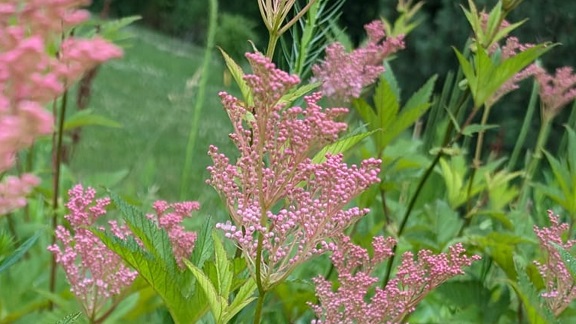
In early summer the plant blooms with large feather-like flowers that remind me of cotton candy. The large inflorescence is made up of small flowers. The bloom lasts for a few weeks.
The large inflorescence reminiscent of cotton candy provides a great bloom in the garden
In fall the plant produces small reddish fruits that provide a nice fall accent.
In late summer and fall the plant produces small reddish fruits
Here is how to transform a soggy mess into a most attractive well-drained part of your yard without digging. The first step is to get rid of the lawn by covering it in fall with a few layers of cardboard covered with mulch (I use wood chips also). If you don’t have enough cardboard boxes you can use rolls of construction paper. In spring purchase some moist-loving native plants. Here are a few choices (there are many more):
Filipendula rubra (Queen of the prairie), Gentiana andrewsii (Bottle gentian), Liatris pycnostachyaI (Blazing star), Aster Novae Angliae (New England aster), Chelone glabra (White turtle head), Echinacea purpurea (Purple coneflower). You can add some grasses and sedges, however select them carefully because they may take over the place.
The deep roots of native plants help the water go in the soil quickly reducing standing water. In a few years you will have a beautiful pollinator haven. Plant dense or let the plants self-seed to reduce weeds.
Every native plant you add brings back a piece of ecosystem that is vital to biodiversity.
Would you like to talk about a native plant in your backyard? Please send me your post at info@choosesustainable.org
Welcome to YouChoose, a blog about individual climate action.
According to a NASA report released in January 2025, the year 2024 was the warmest year on record. Although it is not expected for every year to be warmer than the previous one, temperature data show a clear trend.
I thought I pass this along as there is a brief video and nice 3D visualization that shows monthly global temperature differences (since 1880) with respect to the average temperature for 1951-1980.
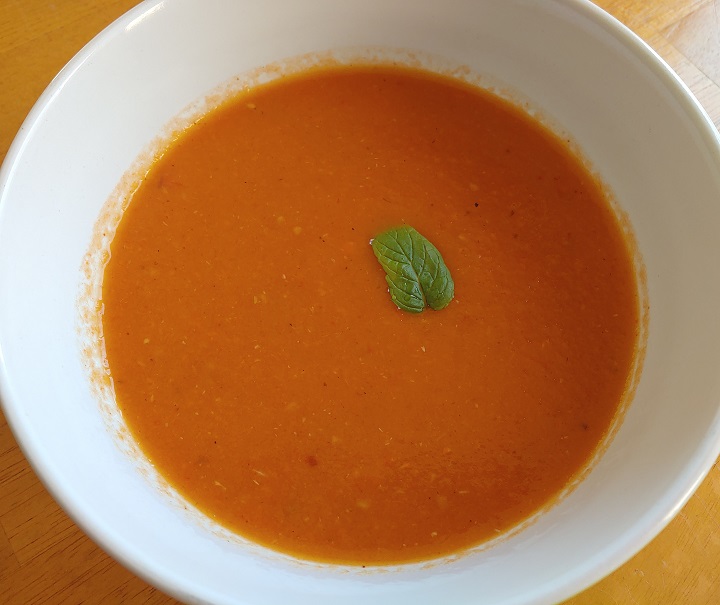
Empower yourself! Free yourself from meat dependency by switching to a diverse, plant-based diet. I propose here a delicious recipe based on tomatoes. This recipe is quick and perfect for a lunch and requires only a few ingredients.
Sustainability tips:
Using organic tomatoes and bell peppers helps sustain agriculture that doesn’t use pesticides. However regular tomatoes also work as we peel them before cooking.
Useful things to have ready
1 Peeled carrot
To peel the tomatoes place them for about 1 minute in a pot of boiling water. Remove them from the water and check that the skin is cracking. Let them cool off for a few minutes before peeling off the skin.
I usually leave the seeds. If you want to remove the seeds you can split the tomatoes after peeling and easily remove them.
Easy to peel-off tomatoes skin
Preparation time: 20 minutes
Ingredients (3-4 people)
6-7 Roma tomatoes or a can of peeled tomatoes
Half of a small onion
1 carrot
3-4 garlic cloves
Half red bell pepper
Red crushed chili pepper (optional)
3-4 leaves of fresh sage
A pinch of dry oregano
Salt
Two tablespoons of olive oil or other vegetable oil
Procedure
Slice the onion, bell pepper, and carrots
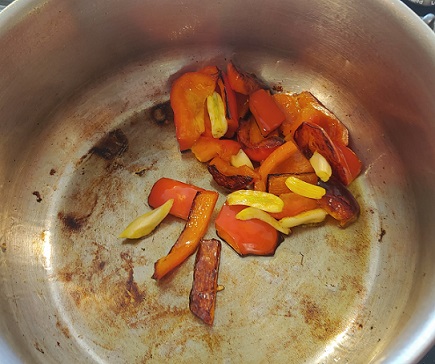
Warm up a table spoon of olive oil in a pot, add the sliced bell pepper and garlic and let them cook for 5-7 minutes (this step can also be done in the oven)
Roast red pepper and garlic on the stove or in the oven
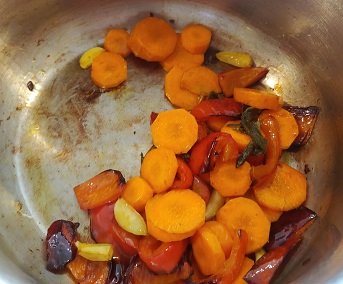
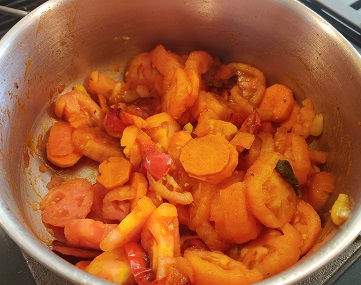
Add sliced carrots and sage- cook for a few minute
Add sliced carrots and sage
Remove from pot and set aside
In the same pot warm up a tablespoon of oil, add finely sliced onions and cook until they become translucent
Add red chili (optional)
Add sliced tomatoes and cook for a few minutes
Add cooked carrots, bell pepper, and garlic
Join all ingredients
After a few minutes add enough water to cover and bring to a boil
Add salt and oregano-If tomatoes are too acidic you can add 1/4 teaspoon of sugar
When the tomatoes are well cooked (10 minutes) blend everything with a hand-held blender
Welcome to YouChoose, a blog about individual climate action.
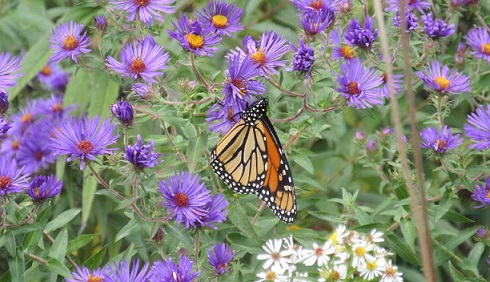
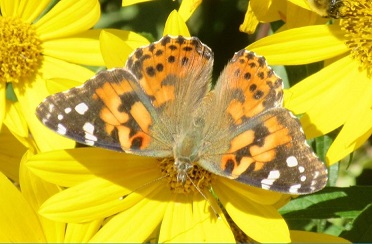
The population of monarch butterflies is steadily declining. There is an opportunity to voice our support to include monarch butterflies in the list of threatened species under the Endangered Species Act.
Read more about monarch butterflies and why they should be protected here:
Welcome to ChooseSustainable.org a blog about individual climate action. In this post I talk about winter gardening in your native prairie. Have you given a thought about transitioning your gardening habits from an endless list of “getting rid of” to welcoming, sustaining, and restoring of lost habitat? Do you know that restoring a piece of native ecosystem in your backyard is one of the most effective ways you can fight soil degradation, pollution, and loss of biodiversity?
In this post I talk about winter activities that help biodiversity. Remember that wildlife, just like us, inhabits the land all year round, not just in summer, and needs food, water, and shelter all year, just like we do. The good news is that when it comes to winter gardening less is more. In fact, our obsession with fall cleaning deprives other species of their winter shelter and eliminates important sources of food for birds that don’t migrate. Let’s get started then with our fall and winter trash to treasure list.
Leaves
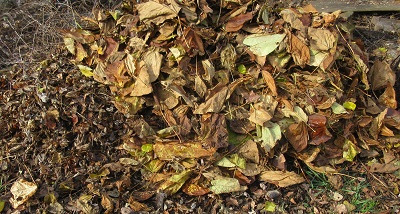
Trash to us treasure to...Birds, insects, turtles, moths butterflies, fireflies, bumblebees, chipmunks, frogs and other amphibians…and the list goes on. Don’t trash the fallen leaves, gently push them out of the lawn area and collect them in a designated corner of your yard. They appear to be a lot, but after a couple of rainfalls they reduce to little. You can also divide them among the planted areas and around trees. I add to them all that is produced in the kitchen, mostly fruit and vegetable peels, and coffee grounds.
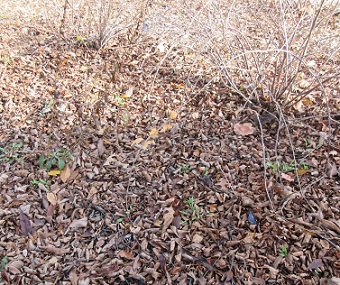
Leaves can stay were they fall on planted areas…Or they can be collected in one place for leaf compost
perennial STEMS
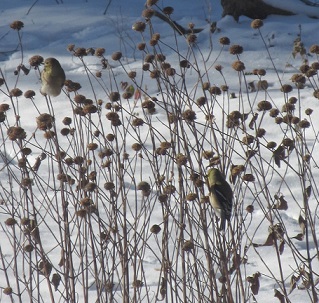
Trash to us treasure to...stem nesting bees, birds, rabbits, chipmunks. Perennials should be left as they are. Perennials in winter provide food and hiding places for birds and small animals. The stems of perennial plants that we are quick to remove because “dead” and “unsightly” provide nesting space for stem nesting bees in early spring. They should be left untouched until late February or March, then just shortened to about 1 foot. You can leave the cut ends on the ground as they quickly decompose during spring and summer and enrich the soil beneath. In early spring stem nesting bees lay their eggs into the hollow stems where the new larvae develop. Read more about stem nesting bees here:
Beautiful perennials that provide good nesting for stem bees are: Elderberry, Joe Pye Weed, Goldenrods, Bee Balm, and Purple Coneflower.
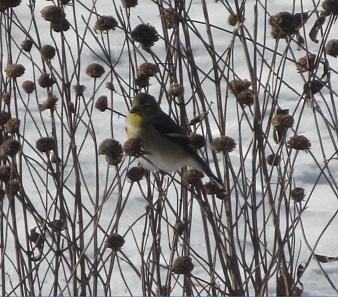
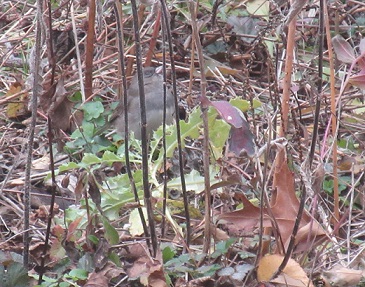
Long perennial stems provide hiding for birds while they search for insects under the leavesBee balm seed heads are a source of food for winter birds. In early spring stems can be shortened to 1 foot to provide nesting space for native bees
SNAGS, branches, and twigs
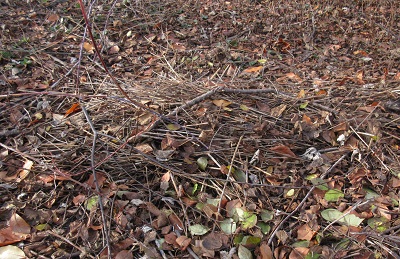
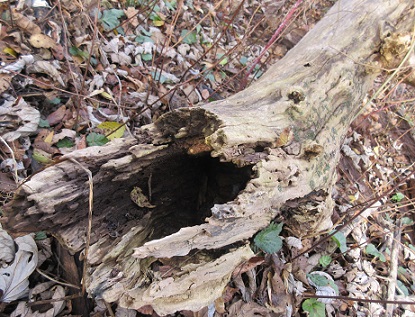
Trash to us treasure to...Birds, bees, chipmunks, lizards, rabbits, squirrels. Our fall and winter cleaning often includes complete removal of fallen branches, twigs, and dead trees. Trees continue to live after they die. Hollow wood provides nesting places for wood nesting bees, birds, and small mammals. If you are lucky enough to have a wooded area in you backyard, you can leave dead trees (snags) properly shortened to avoid hazards, branches, and small piles of wood material. Dead trees at the edge of a backyard can also be kept and just cut back enough so that they are not hazardous. Fallen twigs and smaller branches can be piled up in a corner and left there to decompose. Here is a link to know more about wood nesting bees and nesting for pollinators:
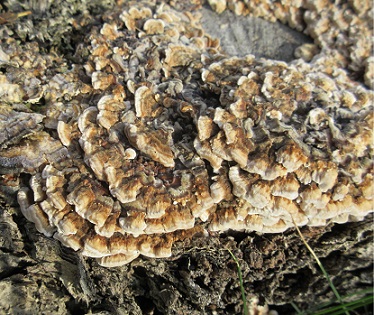
Wood mushrooms decompose the hard part of the wood releasing nutrients that enrich the soil. Keeping snags and branches as much as we can ensures that the full cycle of life takes place in our yard.
Small brush piles are used as winter shelterEmpty logs are used by bees and other wildlifeI love to watch mushrooms grow on the stumps of trees
LAWN imperfections
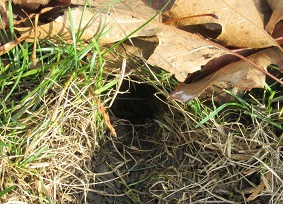
Trash to us treasure to...Ground nesting bees, bumblebees, chipmunks to name a few. Small holes in flowerbeds and lawns are likely due to wildlife trying to find a place to overwinter. Ground nesting bees can dig their own holes where the soil is soft, or they can also reuse holes dug by other wildlife. Extensive pesticide use on the lawn and obsession with lawn appearance are harmful to everybody and especially ground nesting bees. Read more here:
A small hole in the lawn can be used by ground nesting bees or other wildlife as winter refuge.
enjoy winter gardening
Finally, fall and winter gardening is a lot about observing, discovering, and planning for spring. Already in February we’ll be planning our cutting and sowing if we haven’t done it in late fall. Sustainable fall and winter activities ensure that life continues in your yard through the seasons and allow wildlife to survive harsh winters. HAPPY SOLSTICE DAY!
Would you like to talk about a native plant in your backyard? Please send me your post at info@choosesustainable.org
Welcome to ChooseSustainable.org a blog about individual climate action. As usual, my October post is a reminder of the destructive properties of palm oil, a common ingredient in Halloween candies.
Palm oil is one of the most devastating commodities, driving deforestation, the extinction of countless species, and rampant human right abuses. Unfortunately it is found found in mass produced Halloween candies as well as other countless products. This Halloween take a few extra minutes and read the ingredients to avoid candies that contain palm oil.
Below is a link to a list of candies without palm oil. However it is always better to read the label to make sure ingredients haven’t changed.
Industrial deforestation, driven by palm oil demand, is one of the largest contributor to climate change and the largest driver of loss of biodiversity and mass extinction on the planet. Don’t finance the suffering of countless species with your money, this Halloween go palm oil free.
Welcome to ChooseSustainable.org a blog about individual climate action. In this series of short posts I present a native plant to encourage everybody to abandon our traditional way of gardening (basically a continuous fight against nature) and engage in sustainable gardening practices that nurture the ecosystem, sustain wildlife and foster biodiversity. I show the plants in a garden setting to dispel the myths depicting them as weedy and unsuitable for gardens.
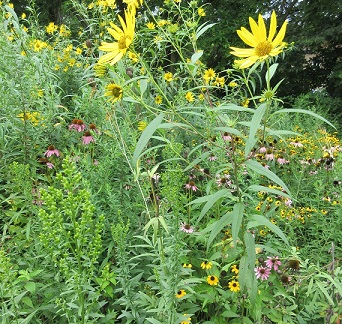
It is not Autumn without sunflowers. Around mid September, when I start thinking about the upcoming winter I look outside at my outrageous sunflowers and the gloomy feeling is instantly dispelled. They smile back at me, while leaning on top of other plants, unorganized, and excessively tall. Yes they are bold and difficult to constrain, but after all that is exactly the reason why I had chosen them, for their high wildlife value.
You guessed right, this post is about native sunflowers, specifically the Heliantus Grosseserratus (sawtooth sunflower) variety.
Sawtooth sunflowers in September
Quick facts:
Zones:3-9
Bloom time: Fall (Sept)
Sun: Sun
Soil Moisture: Medium dry to medium wet
Aggressive: Yes but well manageable
Front yard: MAYBE
Height: 6-8 feet
Status: OK
Maintenance: LOW
Wildlife value: VERY HIGH
Wildlife connection: The entire plant from stems to leaves, from seeds to flowers is valuable to a variety of insects and birds. Rabbits like the emerging leaves in early spring. Caterpillars of dozens of butterflies and moths feed on the plant. Bees, including bumblebees, small flies, moths, and beetles visit the flowers. Birds, squirrels and small mammals eat the seeds through winter. Even my groundhog takes a shot at the small plants in spring.
I’ll start saying the this is the tallest sunflower in Illinois and it may not be suitable for small yards. It does spread but is actually not difficult to control because the roots are not too deep, so it is not difficult to remove occasional plants that may grow out of place. I mostly let it spread and remove it only when it starts encroaching on other plants.
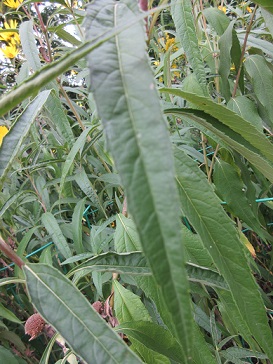
The plant emerges in spring and develops during summer providing a beautiful deep green cover. The leaves are elongated and they have irregular edges that give the name to the plant. Multiple flowers generally branch out of the main stem in late summer.
The long leaves have irregular edges the give the name to the plantsMultiple stems develop from a main stem.
Attractive flowers develop in early September lasting for several weeks. The flowers attract numerous visitors.
Attractive flowers last for several weeks attracting multiple visitors.
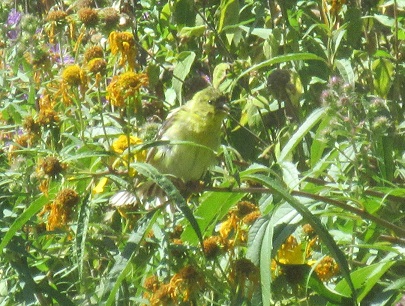
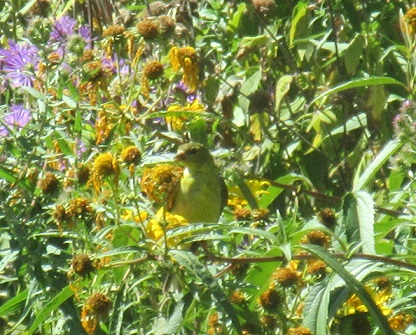
The usefulness and beauty of sunflowers doesn’t end with its bloom. The seeds accessible from spent flowers attract birds through fall and winter.
Your fall garden is a preferred habitat for dozens of birdsBesides food the plant provides fall and winter cover for many inhabitants
If you feel this is too much for your backyard, consider that there are other fantastic varieties of native sunflower that are easiliy grown and not as tall. For example downy sunflower (heliantus mollis) is only 5 feet tall. There are even some species such as the woodland sunflower (heliantus divaricatus) suitable for shade. I hope you will consider livening up your fall garden with native sunflowers. Every native plant you add brings back a piece of ecosystem that is vital to biodiversity.
Would you like to talk about a native plant in your backyard? Please send me your post at info@choosesustainable.org









 You Choose