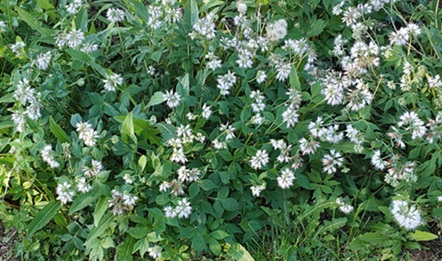
Hydrophyllum virginianum (Virginia waterleaf)

Welcome to ChooseSustainable.org a blog about individual climate action. In this series of short posts I present a native plant to encourage everybody to abandon our traditional way of gardening (basically a continuous fight against nature) and engage in sustainable gardening practices that nurture the ecosystem, sustain wildlife and foster biodiversity. I show the plants in a garden setting to dispel the myths depicting them as weedy and unsuitable for gardens.

In this post I want to talk about a shade perennial, ideal for areas under trees: Hydrophyllum virginianum. The plant is a ground cover, only one foot tall and is ideal for shaded locations. It may become aggressive if it finds the right conditions filling up the entire area.
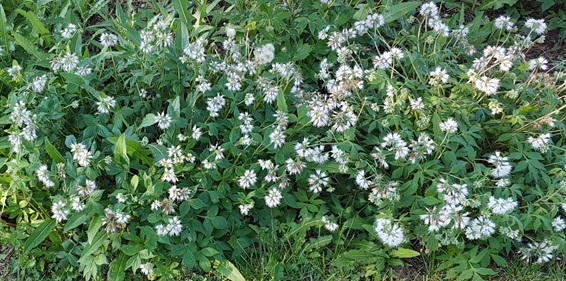
Virginia waterleaf in May

Quick facts:

  • Zones: 4-9
  • Bloom time: May, early June
  • Sun: Part-shade, shade
  • Soil Moisture: Wet, moist, well drained. Rich soil is preferred.
  • Aggressive: MODERATE; It does spread if it finds the right conditions
  • Front yard: YES
  • Height: 1-2 feet max
  • Status: OK.
  • Maintenance: LOW
  • Wildlife value: LIMITED

Wildlife connection: The plant is an early bloomer and as such is important for bees, bumblebees, and other small insects early in the season.

I planted this plant because I was looking for an aggressive ground cover in an area that was in partial shade. Unfortunately the chosen location wasn’t the right one because of the poor soil, insufficient soil moisture, and probably excessive afternoon sun in summer. In spite of the non-ideal location the plant has expanded and covered a large part of the intended area. It is easy to transplant, so last fall I decided to move some of the plant to a more suitable location and I am expecting a much better outcome.

Based on my mistakes I can say that the plant is extremely resilient and it will manage even in conditions that are not ideal. Depending soil and sun, it may suffer during extended early-summer drought and may need occasional watering. The plant makes a great ground cover/first layer reducing your weeding activity substantially.

Virginia waterleaf emerges in April, when other perennials are still dormant, blooms in May, and the foliage persists until fall.
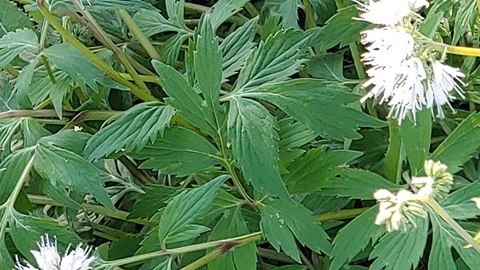
The foliage of Virginia waterleaf in early May.

The foliage is dark green with characteristic small white discolored areas that my give the impression of water drops. The foliage is dense in springs, but it thins out at the end of summer. The compound leaves are made of 4-7 lobes as visible in the photo.
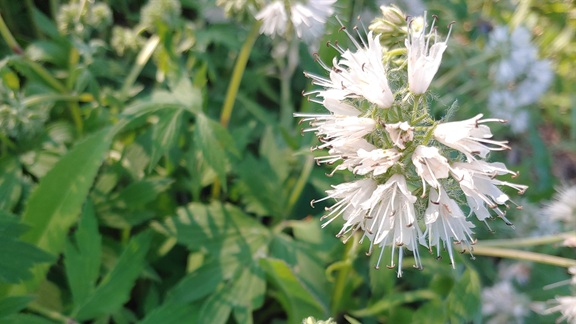
Virginia waterleaf bloom in early May

The bloom consists of clusters of small, bell-shaped light pink flowers that sometime they can take on a lavender shade. The clusters are large enough that they are noticeable. The flowers last for one or two weeks before releasing a large amount of seeds.

The importance of ground covers

I take this opportunity to talk about the importance of ground covers in your native garden. Over the years I have experimented with several non-chemical weed management techniques. So far, the only truly successful way that I have been able to reduce or eliminate the need for weeding has been through ground covers and dense planting. Virginia waterleaf is one to try. In my next post I’ll talk more about this topic and discuss great tested ground covers for sun and shade.

Every native plant you add brings back a piece of ecosystem that is vital to biodiversity.

Would you like to talk about a native plant in your backyard? Please send me your post at info@choosesustainable.org

If you liked this post please share it!
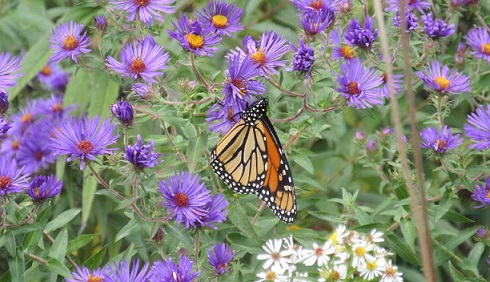
Actions and News: Ask the US fish and wildlife service to protect monarch butterflies.

Welcome to YouChoose, a blog about individual climate action.

The population of monarch butterflies is steadily declining. There is an opportunity to voice our support to include monarch butterflies in the list of threatened species under the Endangered Species Act.

Read more about monarch butterflies and why they should be protected here:

https://xerces.org/monarchs

You can then go to the National Wildlife Federation petition and add your name HERE

Below is the full link to the petition page:

https://support.nwfactionfund.org/page/78153/action/1?utm_medium=email&utm_source=engagingnetworks&utm_campaign=20250121_ACT_ETT_FederalAgency_MonarchCommentPeriod_Monarchs_Email1&utm_content=20250121+ACT+ETT+FederalAgency+MonarchCommentPeriod+Monarchs+Email1&ea.url.id=3260839&forwarded=true

Check out this previous post about planting milkweed in your backyard.

Conservation begins in our backyard! Convert your lawn to a diverse ecosystem, switch to native plants and become part of the conservation efforts!

Please share this post!

Actions and News: Ask congress to support improvements to the North American Grasslands Conservation Act

Welcome to YouChoose, a blog about individual climate action.

The North American grasslands are disappearing at a fast rate causing the irreversible decline of the entire ecosystem that relies on them. Please ask congress to continue working to stop the decline by supporting improvements to the North American Grasslands Conservation Act.

Read why more action is required from the National Wildlife Federation:

https://www.nwf.org/Outdoors/Blog/02-09-2023-Grasslands

You can then go to the petition sign up page and add your name:

https://support.nwfactionfund.org/page/71342/action/1?ea.tracking.id=FBK_NWFAF

The great American prairies constitute a large part of grasslands. Almost entirely destroyed by European settlers in the 19th and 20th century prairies are now one of the most endangered ecosystems in the world, less than 2% of the original extension survives. You can read more about the North American Grasslands and why they matter here:

https://americanprairie.org/why-it-matters/

Chances are that your very lawn grows where a piece of grasslands used to be! You can change that back, by switching to native plants that once covered large part of the American landscape and have now almost disappeared.

Restore a piece of American grasslands in your backyard and help recover a disappearing ecosystem.

Please share this post!

Actions and News: New USDA plant hardiness map released

Welcome to YouChoose, a blog about individual climate action.

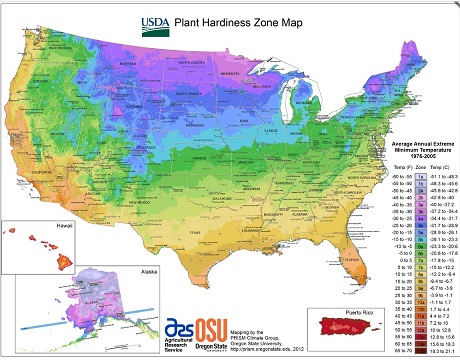
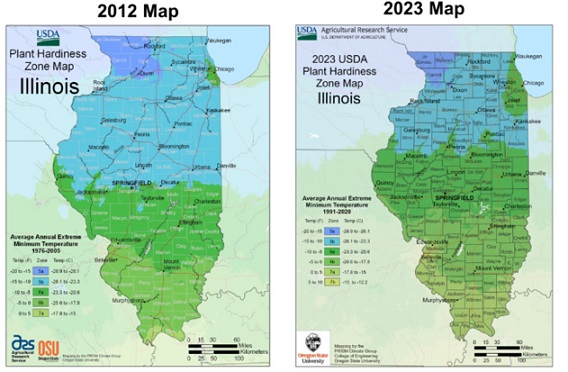
At the end of 2023 the USDA released the updated 2023 plant hardiness zone map. The previous map had been released in 2012. The map can be found here:

https://planthardiness.ars.usda.gov

The map provides a climatology of minimum temperatures across the US and is a valuable tool for gardeners to decide which plants have better chance of survival in a certain region. I am placing here the 2012 and 2023 maps next to each other.

The new map confirms the warming trend we all have been feeling to some degrees, especially here in the Midwest.

Temperature is one factor that affects your plants chances of survival, but other factors such as droughts and extreme events affect your garden as well. Using native plants in your garden helps mitigate the effects of climate change on your landscape. Native plants have uniquely evolved to withstand extreme conditions. In fact there are prairie plants such as the lead plant (Amorpha canescens, just to mention one) that can tolerate extreme droughts.

If you are interested in knowing more about hardiness and ecoregions check out this nice article from the National Wildlife Federation on how to plan a sustainable garden

https://blog.nwf.org/2024/02/hardiness-zones-and-ecoregions-for-climate-smart-gardening/

Don’t feel that your efforts are in vain. You can be sure that switching to native plants and pesticide-free gardening has a profound impact on the environment.

Please share the link.