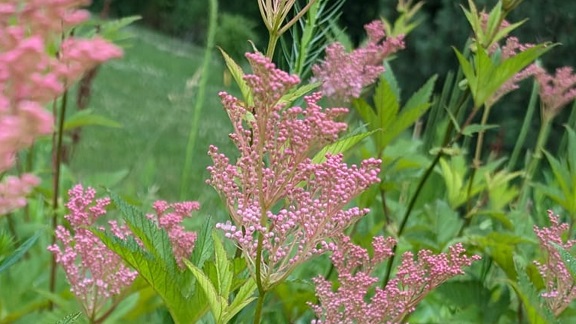
Filipendula rubra (queen of the prairie)

Welcome to ChooseSustainable.org a blog about individual climate action. In this series of short posts I present a native plant to encourage everybody to abandon our traditional way of gardening (basically a continuous fight against nature) and engage in sustainable gardening practices that nurture the ecosystem, sustain wildlife and foster biodiversity. I show the plants in a garden setting to dispel the myths depicting them as weedy and unsuitable for gardens.

In this post I want to talk about a stunning perennial, ideal for a variety of soil conditions: Filipendula rubra. The plant is ideally a wetland species, but it will also grow in moist conditions. It spreads if it finds the right place, colonizing an area. This plant is ideal if you have a part of your garden that gets flooded when it rains.

Established queen of the prairie in July

Quick facts:

  • Zones: 3-6
  • Bloom time: June-July
  • Sun: Sun
  • Soil Moisture: Wet, moist, well drained. Rich soil is preferred.
  • Aggressive: MODERATE it spreads through roots and occupies an area
  • Front yard: YES
  • Height: 4-5 feet
  • Status: Endangered in Illinois, threatened in Iowa and Michigan.
  • Maintenance: LOW
  • Wildlife value: LIMITED

Wildlife connection: The plant is visited by small insects such as small flies and beetles. It has no nectar but plenty of pollen. I don’t see much activity on the leaves, however the leaves provide nice shade for frogs.

I originally removed the lawn in an area where water used to accumulate after rain and planted 5 small plugs (along with other water loving species). After more than 10 years the 5 plugs have grown nicely, but not overwhelmingly, and so they haven’t reached the point where I need to pull them back. Queen of the prairie does well in rich soil. After the lawn is removed the soil is generally terrible and it takes time to bring it back to life. I leave all organic material from the previous year’s cuttings in place, together with leaves. All material gets quickly decomposed in spring and summer and with time the soil improves. In spring the large, attractive leaves form a nice ground cover before the stems develop to their full height.
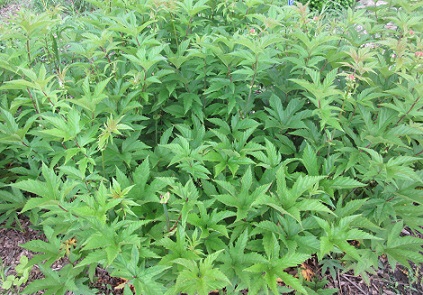
In early summer the plant blooms with large feather-like flowers that remind me of cotton candy. The large inflorescence is made up of small flowers. The bloom lasts for a few weeks.
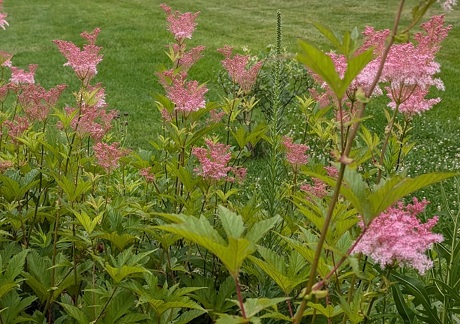
The large inflorescence reminiscent of cotton candy provides a great bloom in the garden

In fall the plant produces small reddish fruits that provide a nice fall accent.

In late summer and fall the plant produces small reddish fruits

Here is how to transform a soggy mess into a most attractive well-drained part of your yard without digging. The first step is to get rid of the lawn by covering it in fall with a few layers of cardboard covered with mulch (I use wood chips also). If you don’t have enough cardboard boxes you can use rolls of construction paper. In spring purchase some moist-loving native plants. Here are a few choices (there are many more):

Filipendula rubra (Queen of the prairie), Gentiana andrewsii (Bottle gentian), Liatris pycnostachyaI (Blazing star), Aster Novae Angliae (New England aster), Chelone glabra (White turtle head), Echinacea purpurea (Purple coneflower). You can add some grasses and sedges, however select them carefully because they may take over the place.

The deep roots of native plants help the water go in the soil quickly reducing standing water. In a few years you will have a beautiful pollinator haven. Plant dense or let the plants self-seed to reduce weeds.

Every native plant you add brings back a piece of ecosystem that is vital to biodiversity.

Would you like to talk about a native plant in your backyard? Please send me your post at info@choosesustainable.org

If you liked this post please share it!
Trash to treasure: Winter gardening in your native prairie

Welcome to ChooseSustainable.org a blog about individual climate action. In this post I talk about winter gardening in your native prairie. Have you given a thought about transitioning your gardening habits from an endless list of “getting rid of” to welcoming, sustaining, and restoring of lost habitat? Do you know that restoring a piece of native ecosystem in your backyard is one of the most effective ways you can fight soil degradation, pollution, and loss of biodiversity?

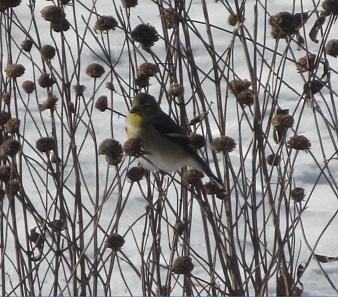
In this post I talk about winter activities that help biodiversity. Remember that wildlife, just like us, inhabits the land all year round, not just in summer, and needs food, water, and shelter all year, just like we do. The good news is that when it comes to winter gardening less is more. In fact, our obsession with fall cleaning deprives other species of their winter shelter and eliminates important sources of food for birds that don’t migrate. Let’s get started then with our fall and winter trash to treasure list.

Leaves

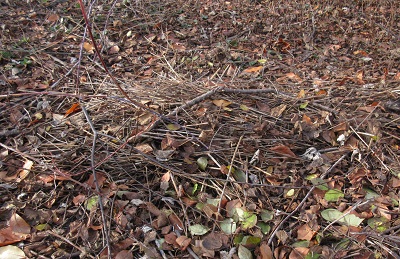
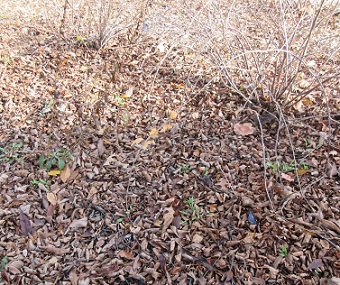
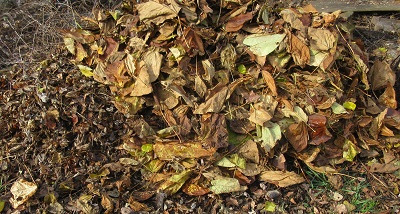
Trash to us treasure to...Birds, insects, turtles, moths butterflies, fireflies, bumblebees, chipmunks, frogs and other amphibians…and the list goes on. Don’t trash the fallen leaves, gently push them out of the lawn area and collect them in a designated corner of your yard. They appear to be a lot, but after a couple of rainfalls they reduce to little. You can also divide them among the planted areas and around trees. I add to them all that is produced in the kitchen, mostly fruit and vegetable peels, and coffee grounds.

perennial STEMS

https://xerces.org/sites/default/files/publications/22-005_01_web-press.pdf

Beautiful perennials that provide good nesting for stem bees are: Elderberry, Joe Pye Weed, Goldenrods, Bee Balm, and Purple Coneflower.

SNAGS, branches, and twigs

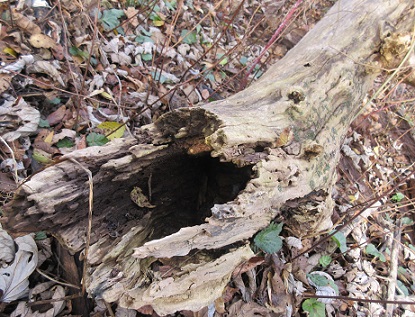
Trash to us treasure to...Birds, bees, chipmunks, lizards, rabbits, squirrels. Our fall and winter cleaning often includes complete removal of fallen branches, twigs, and dead trees. Trees continue to live after they die. Hollow wood provides nesting places for wood nesting bees, birds, and small mammals. If you are lucky enough to have a wooded area in you backyard, you can leave dead trees (snags) properly shortened to avoid hazards, branches, and small piles of wood material. Dead trees at the edge of a backyard can also be kept and just cut back enough so that they are not hazardous. Fallen twigs and smaller branches can be piled up in a corner and left there to decompose. Here is a link to know more about wood nesting bees and nesting for pollinators:

https://xerces.org/pollinator-conservation/nesting-resources

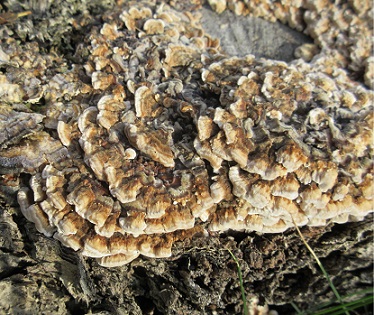
Wood mushrooms decompose the hard part of the wood releasing nutrients that enrich the soil. Keeping snags and branches as much as we can ensures that the full cycle of life takes place in our yard.

LAWN imperfections

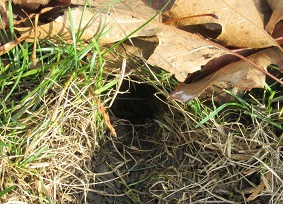
Trash to us treasure to...Ground nesting bees, bumblebees, chipmunks to name a few. Small holes in flowerbeds and lawns are likely due to wildlife trying to find a place to overwinter. Ground nesting bees can dig their own holes where the soil is soft, or they can also reuse holes dug by other wildlife. Extensive pesticide use on the lawn and obsession with lawn appearance are harmful to everybody and especially ground nesting bees. Read more here:

https://www.xerces.org/blog/clear-space-for-bees-why-pollinators-in-your-yard-need-access-to-bare-ground

A small hole in the lawn can be used by ground nesting bees or other wildlife as winter refuge.

enjoy winter gardening

Finally, fall and winter gardening is a lot about observing, discovering, and planning for spring. Already in February we’ll be planning our cutting and sowing if we haven’t done it in late fall. Sustainable fall and winter activities ensure that life continues in your yard through the seasons and allow wildlife to survive harsh winters. HAPPY SOLSTICE DAY!

Would you like to talk about a native plant in your backyard? Please send me your post at info@choosesustainable.org

If you liked this post please share it!
Helianthus Grosseserratus (sawtooth sunflower)

Welcome to ChooseSustainable.org a blog about individual climate action. In this series of short posts I present a native plant to encourage everybody to abandon our traditional way of gardening (basically a continuous fight against nature) and engage in sustainable gardening practices that nurture the ecosystem, sustain wildlife and foster biodiversity. I show the plants in a garden setting to dispel the myths depicting them as weedy and unsuitable for gardens.

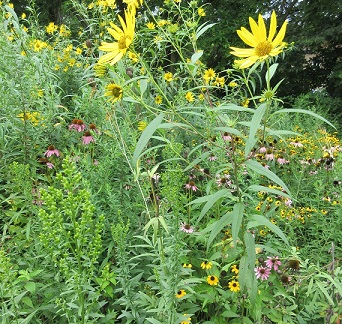
It is not Autumn without sunflowers. Around mid September, when I start thinking about the upcoming winter I look outside at my outrageous sunflowers and the gloomy feeling is instantly dispelled. They smile back at me, while leaning on top of other plants, unorganized, and excessively tall. Yes they are bold and difficult to constrain, but after all that is exactly the reason why I had chosen them, for their high wildlife value.

You guessed right, this post is about native sunflowers, specifically the Heliantus Grosseserratus (sawtooth sunflower) variety.

Sawtooth sunflowers in September

Quick facts:

  • Zones:3-9
  • Bloom time: Fall (Sept)
  • Sun: Sun
  • Soil Moisture: Medium dry to medium wet
  • Aggressive: Yes but well manageable
  • Front yard: MAYBE
  • Height: 6-8 feet
  • Status: OK
  • Maintenance: LOW
  • Wildlife value: VERY HIGH

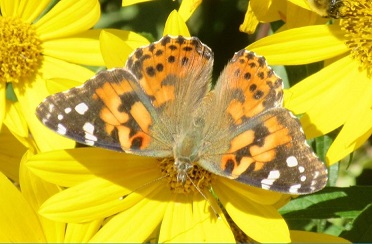
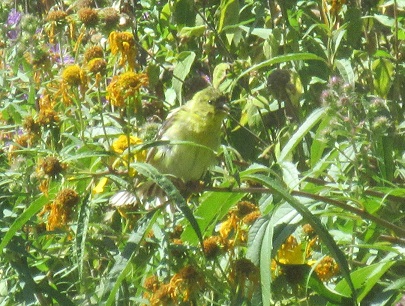
Wildlife connection: The entire plant from stems to leaves, from seeds to flowers is valuable to a variety of insects and birds. Rabbits like the emerging leaves in early spring. Caterpillars of dozens of butterflies and moths feed on the plant. Bees, including bumblebees, small flies, moths, and beetles visit the flowers. Birds, squirrels and small mammals eat the seeds through winter. Even my groundhog takes a shot at the small plants in spring.

I’ll start saying the this is the tallest sunflower in Illinois and it may not be suitable for small yards. It does spread but is actually not difficult to control because the roots are not too deep, so it is not difficult to remove occasional plants that may grow out of place. I mostly let it spread and remove it only when it starts encroaching on other plants.

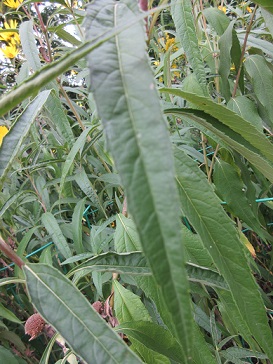
The plant emerges in spring and develops during summer providing a beautiful deep green cover. The leaves are elongated and they have irregular edges that give the name to the plant. Multiple flowers generally branch out of the main stem in late summer.

Attractive flowers develop in early September lasting for several weeks. The flowers attract numerous visitors.

Attractive flowers last for several weeks attracting multiple visitors.

The usefulness and beauty of sunflowers doesn’t end with its bloom. The seeds accessible from spent flowers attract birds through fall and winter.

If you feel this is too much for your backyard, consider that there are other fantastic varieties of native sunflower that are easiliy grown and not as tall. For example downy sunflower (heliantus mollis) is only 5 feet tall. There are even some species such as the woodland sunflower (heliantus divaricatus) suitable for shade. I hope you will consider livening up your fall garden with native sunflowers. Every native plant you add brings back a piece of ecosystem that is vital to biodiversity.

Would you like to talk about a native plant in your backyard? Please send me your post at info@choosesustainable.org

If you liked this post please share it!
Actions and News: Ask congress to support improvements to the North American Grasslands Conservation Act

Welcome to YouChoose, a blog about individual climate action.

The North American grasslands are disappearing at a fast rate causing the irreversible decline of the entire ecosystem that relies on them. Please ask congress to continue working to stop the decline by supporting improvements to the North American Grasslands Conservation Act.

Read why more action is required from the National Wildlife Federation:

https://www.nwf.org/Outdoors/Blog/02-09-2023-Grasslands

You can then go to the petition sign up page and add your name:

https://support.nwfactionfund.org/page/71342/action/1?ea.tracking.id=FBK_NWFAF

The great American prairies constitute a large part of grasslands. Almost entirely destroyed by European settlers in the 19th and 20th century prairies are now one of the most endangered ecosystems in the world, less than 2% of the original extension survives. You can read more about the North American Grasslands and why they matter here:

https://americanprairie.org/why-it-matters/

Chances are that your very lawn grows where a piece of grasslands used to be! You can change that back, by switching to native plants that once covered large part of the American landscape and have now almost disappeared.

Restore a piece of American grasslands in your backyard and help recover a disappearing ecosystem.

Please share this post!

Actions and News: New USDA plant hardiness map released

Welcome to YouChoose, a blog about individual climate action.

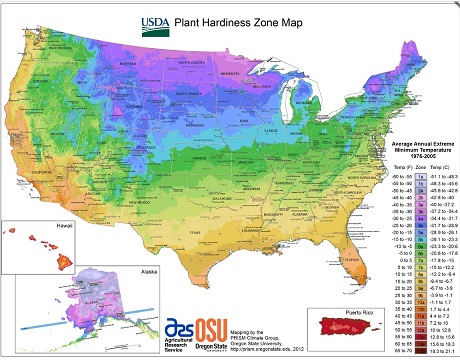
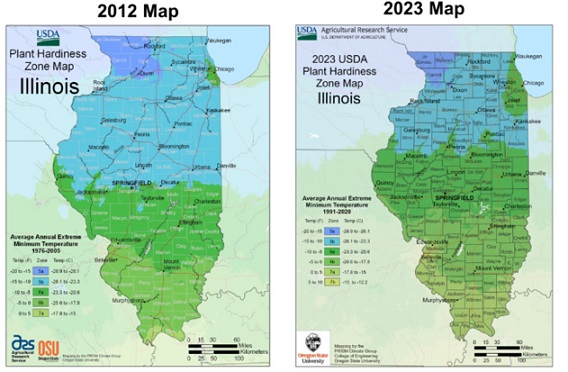
At the end of 2023 the USDA released the updated 2023 plant hardiness zone map. The previous map had been released in 2012. The map can be found here:

https://planthardiness.ars.usda.gov

The map provides a climatology of minimum temperatures across the US and is a valuable tool for gardeners to decide which plants have better chance of survival in a certain region. I am placing here the 2012 and 2023 maps next to each other.

The new map confirms the warming trend we all have been feeling to some degrees, especially here in the Midwest.

Temperature is one factor that affects your plants chances of survival, but other factors such as droughts and extreme events affect your garden as well. Using native plants in your garden helps mitigate the effects of climate change on your landscape. Native plants have uniquely evolved to withstand extreme conditions. In fact there are prairie plants such as the lead plant (Amorpha canescens, just to mention one) that can tolerate extreme droughts.

If you are interested in knowing more about hardiness and ecoregions check out this nice article from the National Wildlife Federation on how to plan a sustainable garden

https://blog.nwf.org/2024/02/hardiness-zones-and-ecoregions-for-climate-smart-gardening/

Don’t feel that your efforts are in vain. You can be sure that switching to native plants and pesticide-free gardening has a profound impact on the environment.

Please share the link.

Catalpa speciosa (Northern catalpa )

Welcome to ChooseSustainable.org a blog about individual climate action. In this series of short posts I present a native plant to encourage everybody to abandon our traditional way of gardening (basically a continuous fight against nature) and engage in sustainable gardening practices that nurture the ecosystem, sustain wildlife and foster biodiversity. I show the plants in a garden setting to dispel the myths depicting them as weedy and unsuitable for gardens.

In this post I talk about a hardy blooming tree that I like very much: Catalpa speciosa (Northern catalpa). This tree is adaptable, resilient, fast growing and it makes great choice to replace invasive buckthorn at the edge of your property.

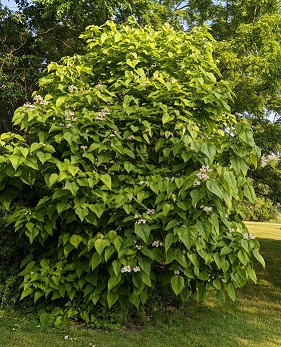
Catalpa can grow as a large shrub. If you zoom in you can see the flowers

Quick facts:

  • Zones:4-6
  • Bloom time: Spring (May-June)
  • Sun: Sun
  • Soil Moisture: Medium dry to medium wet
  • Aggressive: No
  • Front yard: YES
  • Height: 50-70 feet or 15-20 m
  • Status: OK
  • Maintenance: LOW
  • Wildlife value: Medium

Wildlife connection: The large flowers attract bumblebees and various types of bees. I also see moths and great insect activity on the leaves.

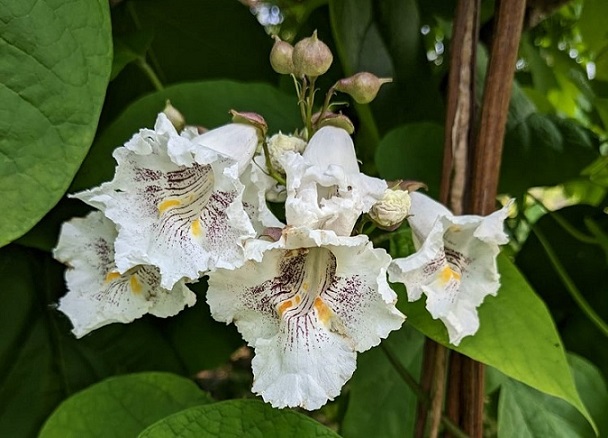
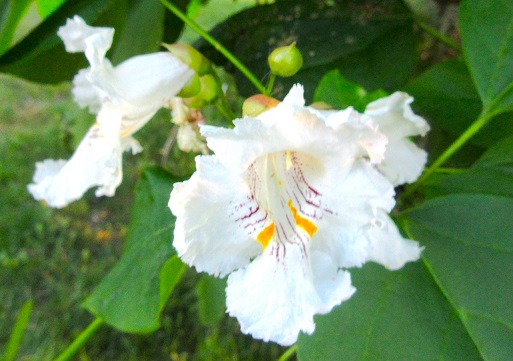
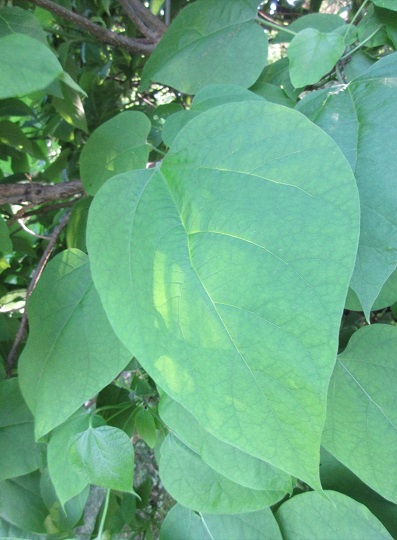
Catalpa is one of the few trees at these latitudes that produce large flowers. The leaves are also large and heart shaped. In this sense it is quite unusual and easy recognizable, you may even see it growing on the edges of roads depending on where you live. The plant blooms in Spring, around mid May and the bloom lasts about a month. The tubular flowers are easily recognizable from their markings.

If provided with enough room, the plant expands producing new small trees. This is a desirable feature if one wants to use the tree at the edge of a property. For this reason, although the value to wildlife is limited, this plant can still be considered important as a fast growing alternative to foreign species for screening.

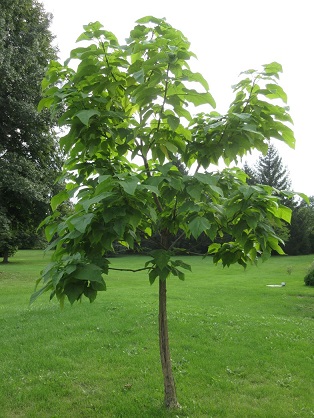
Catalpa can also be shaped as a tree and it can occupy a nice prominent place in the middle of the yard. I have 2 catalpas in my yard, one is left as a shrub and one shaped as a tree.

This young catalpa was planted a few years back

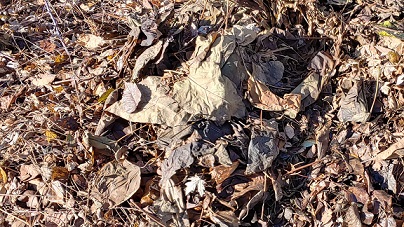
Catalpa has a reputation for being weedy and for producing a lot of litter in fall. This can also be considered a plus. I collect the large fallen leaves and add them to the leaf compost pile. They do compost very easily, and are not a problem at all.

Catalpa leaves are a great addition to the leaf compost pile

I hope you will consider Northern catalpa for your garden, especially as an alternative to buckthorn. Every native plant you add brings back a piece of ecosystem that is vital to biodiversity.

Would you like to talk about a native plant in your backyard? Please send me your post at info@choosesustainable.org

If you liked this post please share it!
Actions and News: New Western Monarch count released

Welcome to YouChoose, a blog about individual climate action.

The Western Monarch Count from the Xerces society is out for this year. Read more about what was found and learn about the health of the Western Monarch population at the following link from the Xerces Society for Invertebrate Conservation:

https://xerces.org/press/western-monarch-count-tallies-233394-butterflie

Both Western and Eastern Monarch populations are facing a steep decline in the last 30 years. Become a part of the effort to preserve the species:

  • Plant native milkweed and native nectar plants in your garden.
  • Reduce or avoid herbicide and insecticide use, especially systemic insecticides in your yard. 
  • Avoid agricultural products that are high in pesticides and herbicides, support organic agriculture when possible

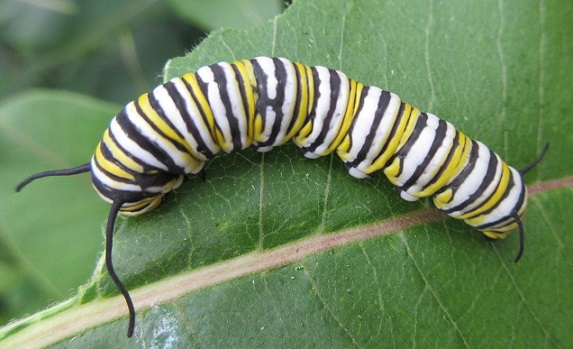
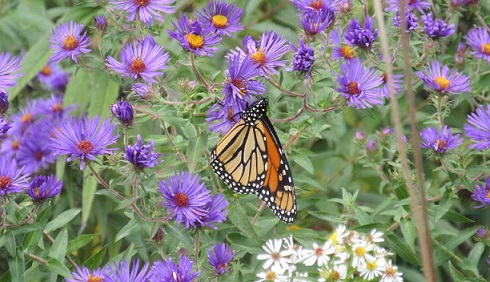
All photos in this post show the Midwest monarch butterfly. All monarch sub-varieties are facing threat of extinction.

Don’t feel that your efforts are in vain. You can be sure that switching to native plants and pesticide-free gardening has a profound impact on the environment.

Please share the link.

Growing native plants from seeds

Welcome to ChooseSustainable.org a blog about individual climate action.

When talking to people about native seeds, more often than not I hear stories of failures. The story usually goes like this: “I have a flower bed where I sprinkled seeds, but nothing came out”. I know this story very well because I have had the very same experience several times when I started my native garden. For example, the first time I decided to convert a section of lawn into tall prairie plants, I dug out a section of the lawn in fall (still didn’t know about no-dig techniques) and ordered some seeds that I proceeded to plant in November. Nothing came out, with few exceptions that will be discussed later. I then resorted to purchase small plants, however if you have a large area to cover, using only plants can get expensive.

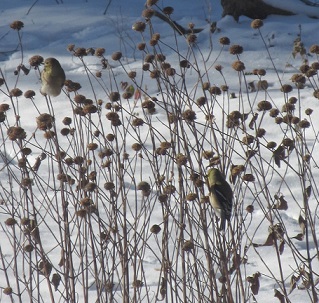
In fall and winter your native plant seeds provide much sought-after food for birds

A few years ago I started growing from seeds again. I collect them from my own yard and have been much more successful. In this post I provide some information on how to maximize your chances of success. At the end of the post there is a list of easy and not-so-easy species based on my experience. I hope the following tips can be useful if you are starting your native garden or want to expand it. However if you are planning to convert a large section of land to prairie you need to sow directly in the soil. In that case you need to prepare the soil accordingly and it will take about 3 years for your prairie to bloom. We’ll discuss no-dig methods and weed suppression in a future post.

When to plant

One of the things I love about native gardening is that there is never a dead season. If we follow nature’s pattern, fall and winter are the seasons when we prepare for spring. In colder climates seeds go through the winter and germinate in spring when temperatures and sunlight become favorable to the survival of the plant. For this reason, several (not all) native plant seeds of the Midwest need to experience a transition from cold to warm to germinate. Sometime people refer to this process as “cold stratification”. One way to mimic the transition from cold to warm weather is to place the seeds in the refrigerator for a prescribed amount of time before planting. I have never been successful with this technique. For me it works better sowing in late fall or at the beginning of winter. It is important to wait until the outdoor temperature drops below 50 F (or about 10 C). Here in Illinois I start sowing in late October or November. One can even wait longer and plant in the middle of winter, however it is difficult to work outside once snow accumulates.

Compass plants release their seeds in late fall and winter. We may be tempted to remove spent flowers. It is best to leave them for birds and to allow self-seeding.
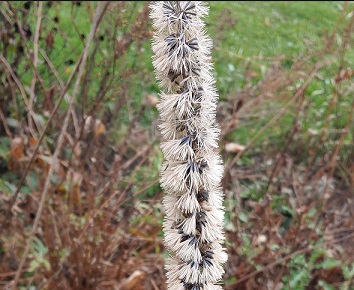
Liatris seeds have small feathers attached. The seeds are released during winter and the feathers allow the seeds to travel, helped by winds. This is a good plant to start from seeds, its germination rate is high and the plant develops quickly.
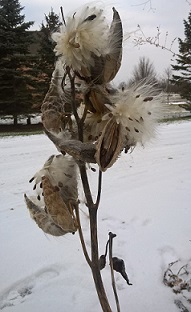
Milkweed seeds are released and transported by winds thanks to the attached cotton-like feathers. Seeds are released once the enclosing pod dries out and opens in late fall and early winter. Seeds are produces in great amounts, the plant germinates easy only if it finds the right conditions.
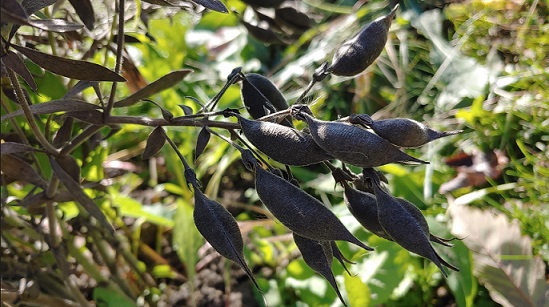
The seeds of wild senna are enclosed in a pod and drop on the soil once the pod opens in early winter. The seeds are then transported around for short distances by water and wildlife. Once established the plant propagates where it finds suitable conditions.
The beautiful pods of cream indigo release small round seeds in late fall. I am trying to propagate this plant for the first time this year.

Prepare what you need

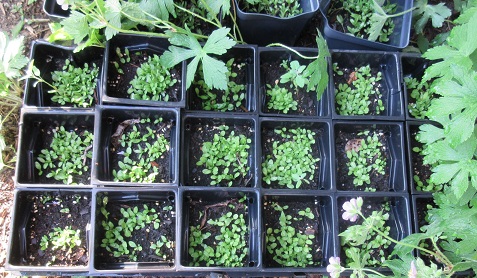
The biggest mistake I used to make was to sow directly in the soil. The reason why germination in the soil is low in a garden setting is that seeds get displaced by water and animals, possibly dug out and eaten by birds, and have to compete with weeds. I was able to grow only 5 species in the soil: wild bergamot, wild senna (with some effort), New England aster, wild geranium, and heliantus grosseratus. When I transitioned to small pots my germination success went from ~0% to about 90%.

I suggest collecting as many small pots as you can from previous plant purchases. I keep small containers and reuse them year after year. The second thing one needs is soil. You don’t need to go crazy with very expensive potting soil, one good quality medium potting soil will do. Finally, no matter how prodigious your memory is, I guarantee that you will forget what is in the pots (it happens to me every year), so labels are essential. You can be creative and make your own planting labels or buy them. Use a lasting marker because the ink fades quickly outdoor.

Reusing empty pots reduces waste and saves you money

Sow the seeds

You are now ready to sow the seeds. Wait for a nice cool day in late fall, fill up 3/4 of the pots with soil, sprinkle a few seeds and cover them lightly with soil. Some seeds may need specific precautions, for example they may need sunlight and should be sprinkled on the surface of the soil. It is important to check specific requirements for the plant. Place the labels in the pots as you go, before forgetting.

Place a label in the pot to recognize the plant in spring

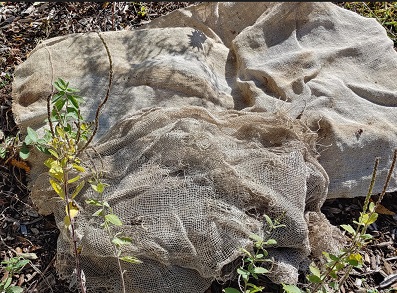
When you are done, locate a suitable location for the pots. I place them near the house in an area that gets afternoon sunshine and is also easily reachable with the hose. You’ll need water in spring when the seeds sprout. I avoid locations that are too shaded as it may cause mold in the soil. When the pots are in the desired location cover them with a burlap cloth or an old cotton bed sheet. The cover helps preserve the seeds by discouraging squirrels and birds from digging and it also prevents the growth of weeds.

You are now ready to wait for spring

The seeds are ready for winter. They will be covered with snow very soon.

Early spring

Left outside, under the burlap, your seeds will be covered with snow most of the time and will experience the cold winter. Wait until the winter snow melts and days become longer to check on the pots. On sunny days, you can remove the burlap for a few hours during the morning, but it is better to keep the seeds covered until you see germination. Even then, it is better to leave the sprouts covered at night and to check the weather because there is always the risk of late season icing through the month of April and sometime even May. During this phase it is better to keep the soil moist by watering as needed with a gentle sprinkle.

In early spring, check the weather and cover the sprouts if there is snow, hale, or nighttime frost in the forecast. Keep the soil moist with a gentle watering when needed.

By mid May the cover can be entirely removed. Keep the soil moist while you wait to plant.

Planting time

I have transplanted the small plants as early as mid-June. However my suggestion is to wait until the plants are grown enough that you don’t risk breaking them while transplanting. After the plants are in the soil, you need to keep the soil moist by gently watering at least twice a week for a month or so (if it doesn’t rain) and possibly remove excess weeds around. Depending on the species it takes about 2 or 3 years from seeds to flowers.

Easy and not-so-easy seeds (my experience)

Below is a list of seeds I tried. I will add to this list as I try (or retry) more varieties.

  • Monarda fistulosa (Wild bergamot): Easy, high germination rate, grows fast
  • Senna hebecarpa (Wild senna): Medium, initial germination rate is low, the population grows once established.
  • Heliantus grosseserratus (Sawtooth sunflower): Easy, self seeds, quick growth
  • Lobelia siphilitica (Blue lobelia): Easy, but it may have mixed success after transplant
  • Lobelia cardinalis (Cardinal flower): Medium, I have had mixed success getting this established
  • Silene regia (Royal catchfly): Easy in pots but needs right location for transplant-slow to grow
  • Liatris spicata (Blazing star): Easy, high germination in pots-develops quickly
  • Penstemon grandiflorus (Showy penstemon): Easy, high germination rate-develops quickly, tolerant of various conditions.
  • Asclepias syriaca (Common milkweed): Medium, I have had mixed success in the soil and pots-Better to plant the small sprouts in an are with no competition.
  • Geranium maculatum (wild geranium): Easy, I have had enough success in the soil. High germination rate, fast growing, spreads once established. Good starter.
  • Aster Novae Angliae (New England aster): Easy, I was able to start this in the soil. High germination rate, fast growing, spreads once established
  • Antennaria neglecta (pussytoe): Difficult, I have had zero success so far but will try again
  • Monarda punctata (spotted bee balm): Difficult, I am trying this again this year, last year I was able to germinate it, but none survived the transplant.

Growing native plants from seeds is a very rewarding experience. I hope this information is useful if you are starting your native garden, and remember that trials and errors are the key to discover which plants grow and do well in your garden. If you would like seeds, send me an email at info@choosesustainable.org and I’ll be happy to provide what I can.

If you liked this post please share it!

Asclepias Syriaca (common milkweed)

Welcome to ChooseSustainable.org a blog about individual climate action. In this series of short posts I present a native plant to encourage everybody to abandon our traditional way of gardening (basically a continuous fight against nature) and engage in sustainable gardening practices that nurture the ecosystem, sustain wildlife and foster biodiversity. I show the plants in a garden setting to dispel the myths depicting them as weedy and unsuitable for gardens.

In this post I’ll talk about one of the most important plants for us living in the Midwest of the USA: Asclepias Syriaca (common milkweed). There are many native varieties of Asclepias, some of which are listed as threatened or endangered in various states. I start here with one of the varieties that used to be the most common. This variety has been steadily declining due to agricultural practices and suburban development.

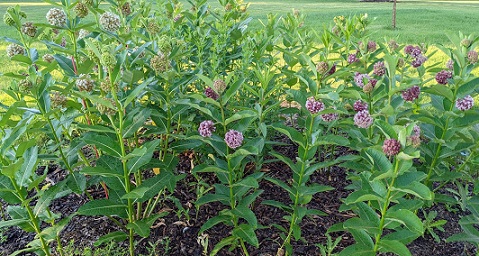
A garden patch of Asclepias syriaca offers great bloom in spring

Quick facts:

  • Zones:3-8
  • Bloom time: Summer (June-July)
  • Sun: Sun to part sun
  • Soil Moisture: Medium wet to dry
  • Aggressive: No
  • Front yard: YES
  • Height: 3-5 feet
  • Status: Declining
  • Maintenance: LOW
  • Wildlife value: Very High

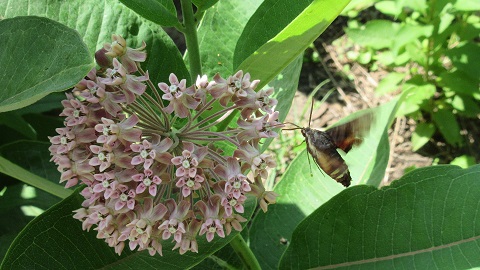
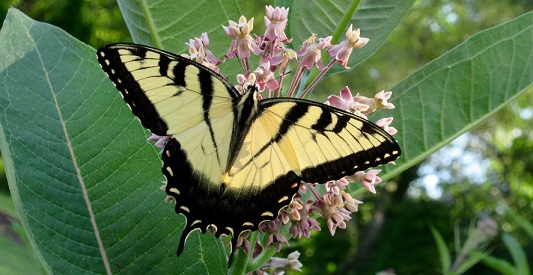
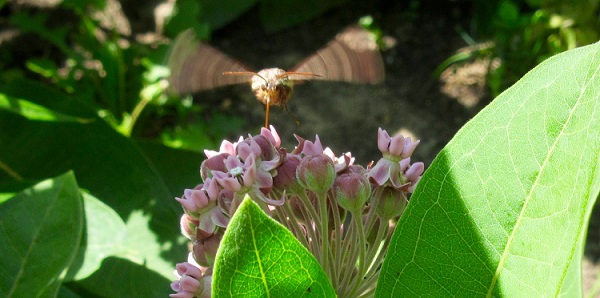
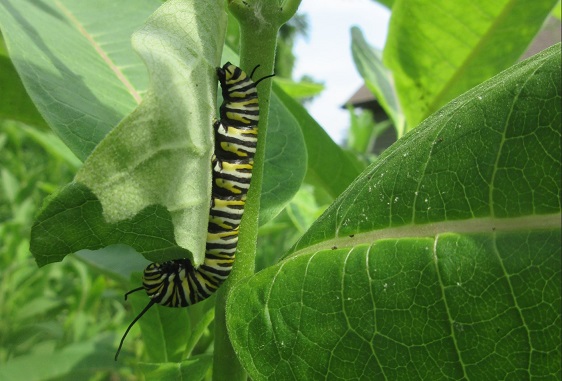
Wildlife connection: The flowers of the plant attract many insects, including butterflies, moths, bees and bumblebees. The foliage is the only source of food for the caterpillars of the monarch butterfly and the tussock tiger moth, and is a preferred source for other varieties of moths.

In spite of its name containing the unflattering ‘weed’ designation, Asclepias Syriaca is a marvelous plant with a showy bloom and a scent reminiscent of lilacs. It has an undeserved reputation for being weedy and aggressive. In truth I have had the opposite experience, as I struggle to maintain the population. It seems to me that this plant doesn’t like competition and, after having nearly lost the entire population, I resorted to making an area just for them, hoping that they will be able to increase in number.

The plant takes about 3 years to fully develop from seed. If purchased as a young plug it usually blooms in the second year. The foliage is very attractive through the summer, and it becomes yellowish and sometime brown in late summer and early fall. Through the summer you will notice a lot of activity on the leaves and flowers.

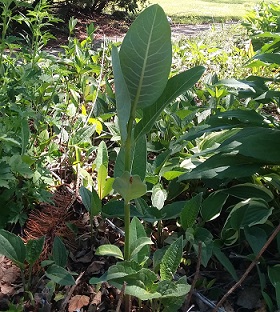
A milkweed plant emerging in spring. Often butterflies select young plants to lay eggs.

The bloom starts in late June and lasts several weeks. During this time many visitors approach the plant. The importance of the plant, however, goes beyond its bloom as the leaves are highly prized by many insects. For this reason we should never spray milkweed with any kind of insecticide or pesticide. Doing so will cause extensive damage on many levels of the food chain and will kill caterpillars feeding on the plants.

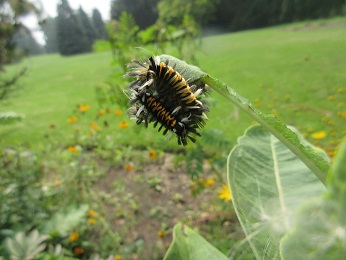
On this topic I would like to talk about another caterpillar that feeds on milkweed: the Tussock Tiger moth caterpillar. In late summer you may find such visitors on the plants. These caterpillars are voracious and they will eat an entire plant from top to bottom. For this reason you may be tempted to eliminate them. The Tussock Tiger moth caterpillar is also a native species that relies on milkweed and has the right to feed on it. We should not destroy other species for the sake of the monarch butterflies. In 15 years I have had one instance where tiger moth caterpillars consumed a large number of plants. Having a large population of milkweed is the best way to ensure that everybody can make use of it.

Besides providing beauty and value for your yard from spring to fall, Asclepias syriaca will enrich your winter garden with large seed pods that release seeds. I collect seeds but also leave some for dispersal through wind.

Seeds are released during fall and winter and can also be collected in late fall

Choosing the right source for your milkweed plants is a very important first step. I do see milkweed in nurseries (usually not the asclepias syriaca) sold as already blooming plants. Usually milkweed doesn’t take transplant well and establishing an already developed plant can be very difficult. Additionally, according to The Xerces Society, pesticides are found in milkweed sold in nurseries, read HERE the report. It is better to purchase young plants at local forest preserve sales, conservation societies, or from specialized nurseries that openly declare their policy on pesticides and neonicotinoids.

I hope you will consider Asclepias syriaca for your garden, Every native plant you add brings back a piece of ecosystem that is vital to biodiversity.

Would you like to talk about a native plant in your backyard? Please send me your post at info@choosesustainable.org

If you liked this post please share it!
Penstemon digitalis (Foxglove penstemon)

Welcome to ChooseSustainable.org a blog about sustainable choices. In this series of short posts I present a native plant to encourage everybody to abandon our traditional way of gardening (basically a continuous fight against nature) and engage in sustainable gardening practices that nurture the ecosystem, sustain wildlife and foster biodiversity. I hear sometime people worrying that native plants may look weedy in a backyard. This notion is mostly misguided, that’s why here I show native plants in a garden setting.

Make a New Year resolution to start a native garden and get a thank you hand-painted bookmark! See what’s available here.

I know it’s January, but one nice thing about native gardening is that there is never a dead time. As a matter of fact, this is the time to think of spring and of the plants to add to our backyard in a few months. This spring-blooming, perennial plant provides early nectar to several species of bees and food for the caterpillars of a few moths. If you are planning a pollinator garden, this plant is an excellent starter, it is easy to grow and self pollinates extensively providing quick results while slower plants develop: Penstemon digitalis (foxglove penstemon).

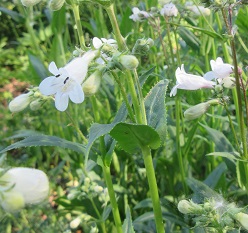
Foxglove penstemon is a great garden choice.

Quick facts:

  • Zones:4-8
  • Bloom time: Early Summer (May-June)
  • Sun: Full, partial
  • Soil Moisture: Medium, Medium dry
  • Aggressive: MODERATE
  • Front yard: YES
  • Height: about 4 feet
  • Status: OK
  • Maintenance: LOW
  • Wildlife value: Medium

Wildlife connection: This perennial spring bloomer attracts wasps, bees, bumblebees, and some variety of moths. Some small butterflies may visit it and it also attracts hummingbirds, although I have never observed that.

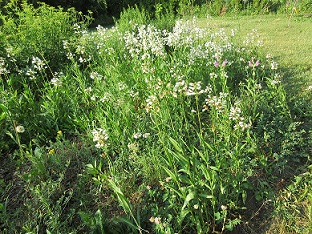
I planted about 6 or 7 small plants several years ago in a dry area of my yard. The plant is quick and easy to grow and it spreads abundantly in the assigned area. Occasionally, I also find new plants in other areas of the garden but overall it is not a very aggressive spreader. I planted this in the same area as the Golden Alexander, another aggressive self pollinating perennial. They bloom approximately at the same time and together they attract a large number of pollinators.

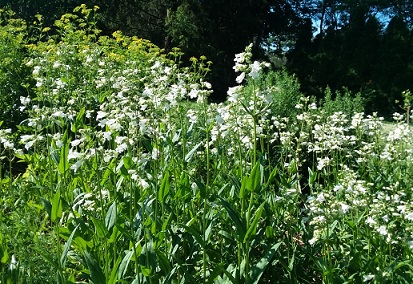
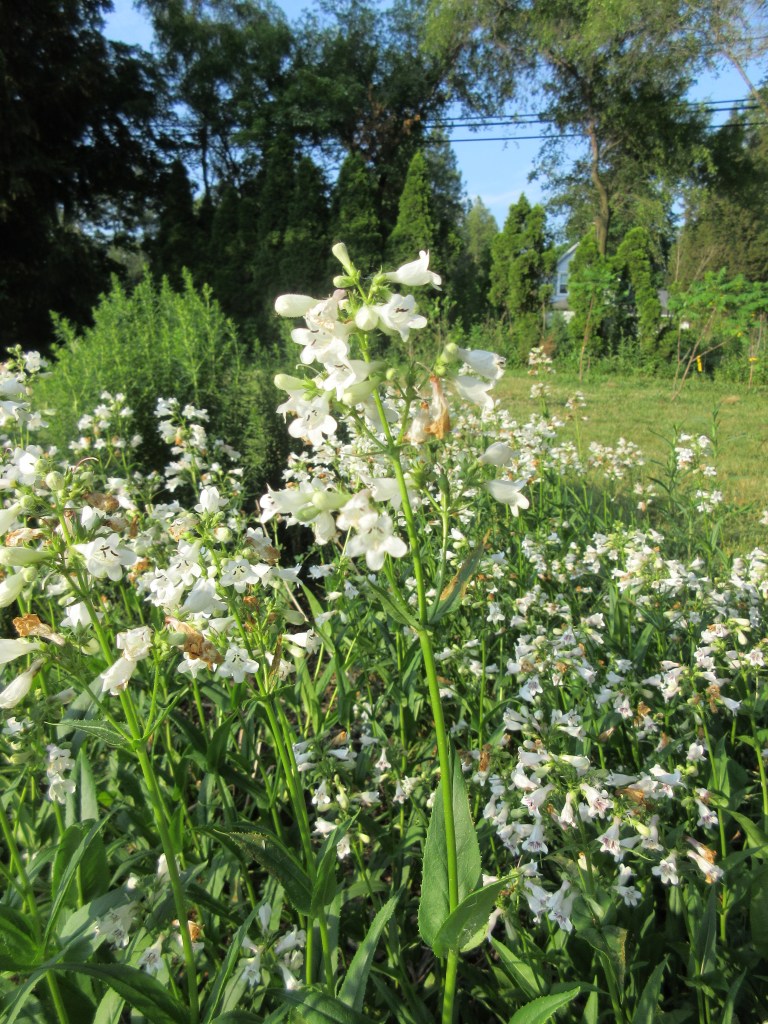
Foxglove penstemon shows off its bloom in spring, May-June

The single flowers are white and small but, as the plants expand, they provide a very attractive ensemble view that last about one month. The leaves are elongated and shiny in spring and summer and change color to red-brown in fall. I used to cut them back in the fall, but now I let them stay untouched until the next spring.

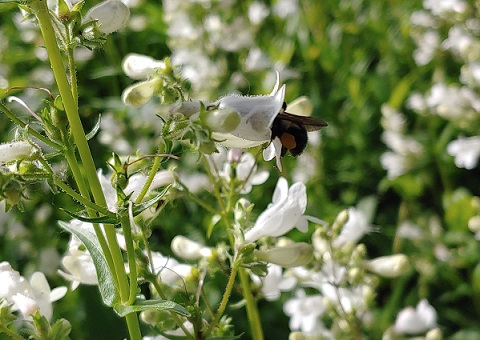
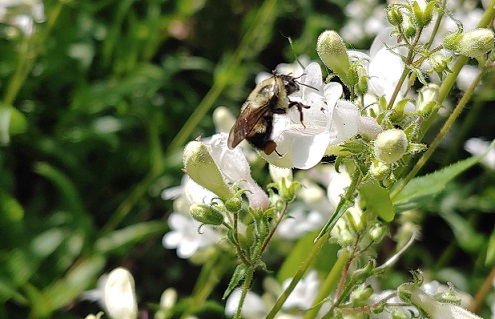
Foxglove penstemon attracts a lot of bumblebees that make their way in the tubular flowers helping with pollination as well.

Penstemon digitalis is valuable to bumblebees
Several types of bees and wasps visit the flowers regularly in spring

Overall the plant is really low maintenance, it is very resistant to drought and hardly needs and care besides some occasional pulling if it expands where is not wanted.

As a note I want to add here that, despite the vague resemblance in name and shape to the European Digitalis Purpurea (common foxglove), penstemon digitalis is not listed as toxic, although of course please don’t eat any part of it.

I hope you will consider this great, easy native plant for your garden this spring. Every native plant you add brings back a piece of ecosystem that is vital to biodiversity.

Would you like to talk about a native plant in your backyard? Please send me your post at info@choosesustainable.org

If you liked this post please share it!