Welcome to ChooseSustainable.org a blog about individual climate action. In this series of short posts I present a native plant to encourage everybody to abandon our traditional way of gardening (basically a continuous fight against nature) and engage in sustainable gardening practices that nurture the ecosystem, sustain wildlife and foster biodiversity. I show the plants in a garden setting to dispel the myths depicting them as weedy and unsuitable for gardens.
In this post I want to talk about a shade perennial, ideal for areas under trees: Hydrophyllum virginianum. The plant is a ground cover, only one foot tall and is ideal for shaded locations. It may become aggressive if it finds the right conditions filling up the entire area.
Quick facts:
- Zones: 4-9
- Bloom time: May, early June
- Sun: Part-shade, shade
- Soil Moisture: Wet, moist, well drained. Rich soil is preferred.
- Aggressive: MODERATE; It does spread if it finds the right conditions
- Front yard: YES
- Height: 1-2 feet max
- Status: OK.
- Maintenance: LOW
- Wildlife value: LIMITED
Wildlife connection: The plant is an early bloomer and as such is important for bees, bumblebees, and other small insects early in the season.
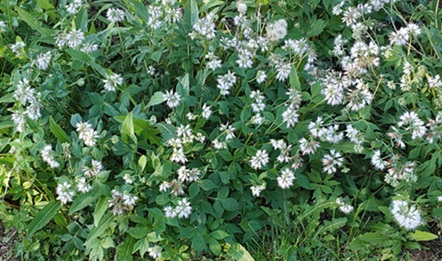
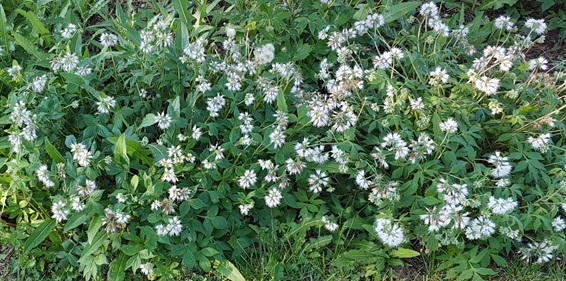
I planted this plant because I was looking for an aggressive ground cover in an area that was in partial shade. Unfortunately the chosen location wasn’t the right one because of the poor soil, insufficient soil moisture, and probably excessive afternoon sun in summer. In spite of the non-ideal location the plant has expanded and covered a large part of the intended area. It is easy to transplant, so last fall I decided to move some of the plant to a more suitable location and I am expecting a much better outcome.
Based on my mistakes I can say that the plant is extremely resilient and it will manage even in conditions that are not ideal. Depending soil and sun, it may suffer during extended early-summer drought and may need occasional watering. The plant makes a great ground cover/first layer reducing your weeding activity substantially.
Virginia waterleaf emerges in April, when other perennials are still dormant, blooms in May, and the foliage persists until fall.
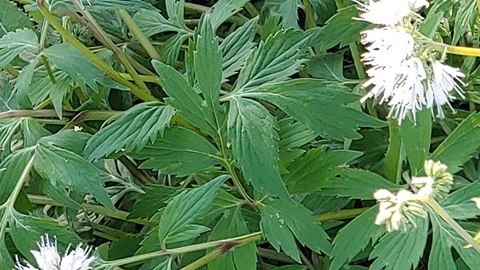
The foliage is dark green with characteristic small white discolored areas that my give the impression of water drops. The foliage is dense in springs, but it thins out at the end of summer. The compound leaves are made of 4-7 lobes as visible in the photo.
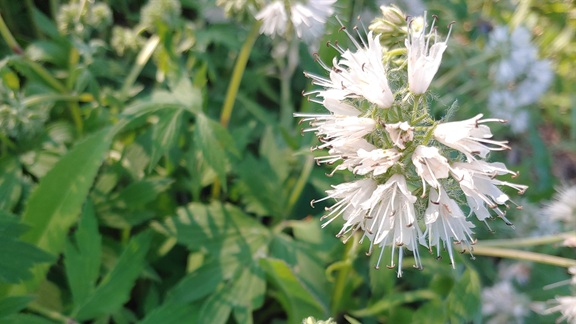
The bloom consists of clusters of small, bell-shaped light pink flowers that sometime they can take on a lavender shade. The clusters are large enough that they are noticeable. The flowers last for one or two weeks before releasing a large amount of seeds.
The importance of ground covers
I take this opportunity to talk about the importance of ground covers in your native garden. Over the years I have experimented with several non-chemical weed management techniques. So far, the only truly successful way that I have been able to reduce or eliminate the need for weeding has been through ground covers and dense planting. Virginia waterleaf is one to try. In my next post I’ll talk more about this topic and discuss great tested ground covers for sun and shade.
Every native plant you add brings back a piece of ecosystem that is vital to biodiversity.
Would you like to talk about a native plant in your backyard? Please send me your post at info@choosesustainable.org
If you liked this post please share it!
 You Choose