Welcome to ChooseSustainable.org a blog about individual climate action.
As modern humans, we rely mostly on eyesight to guide our choices. Other senses are important but they take a somewhat secondary role. This is especially true for gardens, where visual pleasantness is the driving force behind our choice of plants. In suburban gardens the oversized emphasis of visual impact pushes homeowners to conform to aesthetic guidelines that demand continuous mowing, cleaning, chemical weeding, cutting, and removing to the expense of ecosystems and wildlife. It has similarly led to the choice of cultivar species with oversized flowers and unnatural colors that discourage pollinator activity.
A native garden connects you to the larger ecosystem and makes you a part of the workings of nature. It invites you to overcome our modern human inclination to only look; it guides you to listen, smell, and touch. In this post I invite you to experience your native garden not only with your eyes but with all your six (yes six) senses leaving the sight for last. I describe a few plants of choice for each one of our senses.
Touch
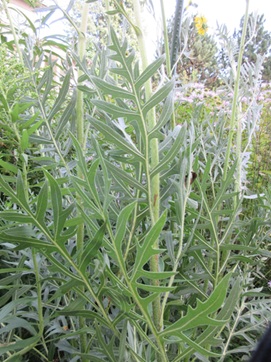

Compass plant (Silphium lacinatum): Compass plants have the prairie feel. They grow tall and bloom in summer with beautiful gold flowers. They are very adaptable and, in spite of their size, they don’t overwhelm the area where they are planted. The large leaves of the compass plant have a rough texture almost like sandpaper. When I find one, I enjoy holding the gigantic leaf between my two hands and lightly rubbing my hands against it. You are going to feel the unusual scratchy texture.
Canada burnet (Sanguisorba Canadensis): This plant is one of the latest blooming flowers in my yard. For this reason it is quite attractive to small bugs and bees as the blooming season approaches its end in October. The plant develops to an imposing size and produces tall white flowers that feel like a soft brush to the touch. The plant loves moist and even wet soil, and is ideal to fill up areas that stays moist for long time.
Pussy willow (Salix discolor): This is another water-loving small tree that is ideal for a moist or even soggy area. In early spring it produces small fuzzy catkins. If you gently touch these lovely tips they feel soft and velvety to the touch. Besides being a great plant for soggy areas, Salix discolor is extremely valuable for wildlife because of its early bloom and the fact that is the host plant for a large variety of moths and butterflies.
Hearing
Plants for sounds? Really? The sounds of your native garden are all around you but here are some plants that also generate a buzz!
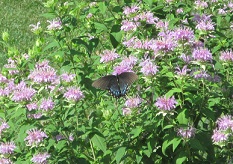
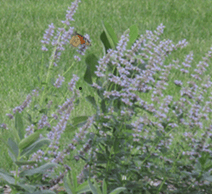
Wild bergamot (Monarda fistulosa): In summer when I approach my bee balm patch I hear the constant buzzing of bumblebees hovering over the plants. Wild bergamot attracts a variety of pollinators, but is particularly attractive to bumblebees. The plant is easy to grow from seeds and is definitely a required feature for a pollinator garden. Another plus is the pleasant citrus-herbal scent of the leaves that extends all the way into the fall.
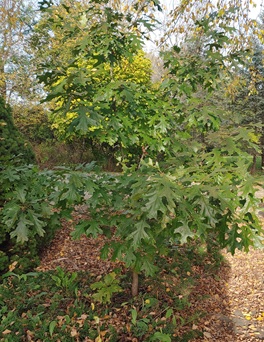
Oaks (Quercus varieties native to your area): In my parents’ garden there was a marvelous oak that provided food and shelter for all kind of birds. I remember, early in the morning, there was a moment of quietness before the traffic drowned everything in its noise. Once, when I was visiting, I asked my father if he listened to the birds in the morning: “Those are the most beautiful songs I can listen to” he answered. Planting an oak in your yard is planting a tree of life. In addition to oaks, fruit trees (for example Prunus serotina) and berry shrubs attract songbirds in all seasons.
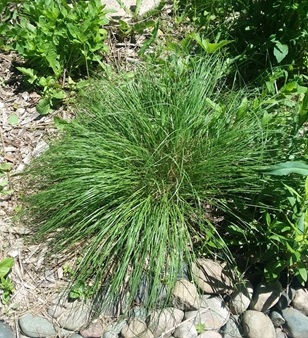
Prairie dropseed (Sporobolus heterolepis) or other native grasses and sedges: For those of us who enjoy the sounds of the night, grasses such as prairie dropseed and little blue stem (Schizachyrium scoparium) offer housing and shelter to crickets and frogs. Avoid fall cleanup and pesticides and you can enjoy the sounds of summer nights.
Smell
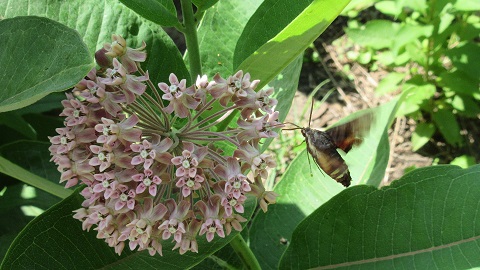
Common milkweed (Asclepia syriaca): In addition to being one of the most valuable plants of you wildlife garden, milkweed is also one of the most fragrant. In my yard common milkweed blooms from mid June to July with beautiful composite flowers. The fragrance is however something that was surprising when I started my native garden more than 15 years ago. It is intense, sweet and strongly floral, similar to the intense scent of the lilac. Plant milkweed in abundance and you will enjoy its spring distinctive scent.
Anise Hyssop (Agastache foeniculum): This is one of my favorite late summer scents. It is a favorite stop of pollinators in late August and through September. Its leaves and purple flowers are strongly aromatic with a licorice scent. The plant grows quite tall but is stands upright without lodging too much. It self seeds abundantly and is one of the most attractive blooms late in the season.
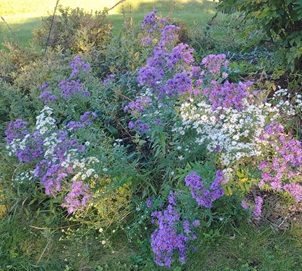
New England aster (Symphyotrichum Novae-angliae, and other asters): Can I really place a scentless flower in the “smell” section? It is what I call the “fall aura”, a vague, yet distinctive scent pervading the air. It is noticeable when I step outside and the asters are in full bloom. Perhaps it is my imagination, but there is nothing that smells of fall like asters. They are considered a keystone species because of their importance for the survival of a large number of insects and other species. Let asters go wild in the fall, and enjoy your evenings surrounded by them.
Common mountain mint (Pycnanthemum virginianum): In spite of its humble appearance recent studies show that this is one of the plants that attract the largest variety of pollinators. Its crushed leaves release a strong mint scent. The plant is resilient and easy to grow from seeds. I have also transplanted it successfully. The fragrant crushed leaves can be used in sachets.
Taste
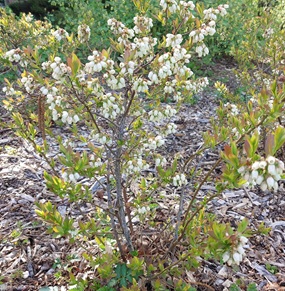
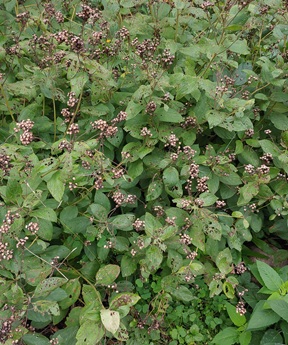
Berries: Many native plants were used as source of food and medicine by the original inhabitants of North America. A variety of native berries and fruits are edible for humans and wildlife. I mention here Serviceberry (Amelanchier arborea), Chokeberry (Aronia melanocarpa), Black Currant (Ribes americanum), and Blueberry (Vaccinium angustifolium or similar) to name a few. These shrubs all produce delicious small tart fruits. I leave all fruits for the birds, but I am sure that one can share. Berry shrubs are also a source of early spring flowers for pollinators.
New Jersey tea (Ceanothus americanus) This is a great looking shrub that blooms in mid summer with large composite white flowers. The leaves can be used to make a mild, mint-like herbal tea. If you plant to consume the leaves, pick them up early in the season because, judging by the state of the plant in fall, nothing is left. The plant is the host for many moth caterpillars and it has high ecological value.
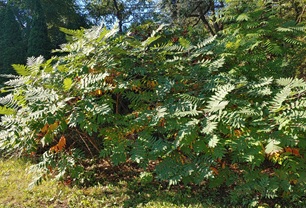
Smooth sumac (Rhus glabra): This is a great plant for screening. I used it to replace invasive honeysuckle in a difficult area near the road, where nothing else grew. The bright red berry clusters can be used as spices in many dishes. It adds a tangy, citrus-like flavor to your dishes. You pick up the red bright cones in late summer or early fall, let them dry, or dry them in the oven, lightly grind them to separate the seeds, and pass them through a fine mesh sieve to remove the coarse seeds and only keep the fine spice. Sumac wildlife value is very high.
Sight
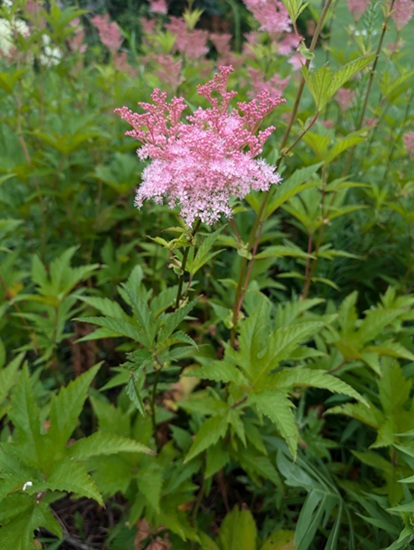
Queen of the prairie (Filipendula rubra): Among showy blooms in our yard we can’t miss the Queen of the Prairie. This plant provides a great point of attraction when is in full bloom. Plant it in a moist area and let it spread. In July it will create an attractive pink cloud of fluffy flowers that lasts several weeks. The flowers turn reddish in fall making them a nice addition to asters and goldenrods in early fall.
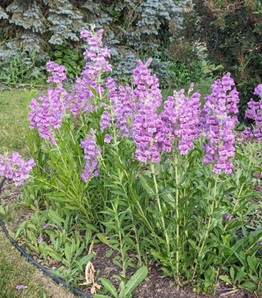
Showy penstemon (Penstemon grandiflorus): As the name suggests these spring blooming plants grab your attention especially when planted in large clusters. In my yard they bloom in mid-June with large bright pink tubular flowers. The bloom is short-lived but still worth it. Every spring I look forward to their appearance and I keep propagating them because they are easy to grow from seeds. The more the better!
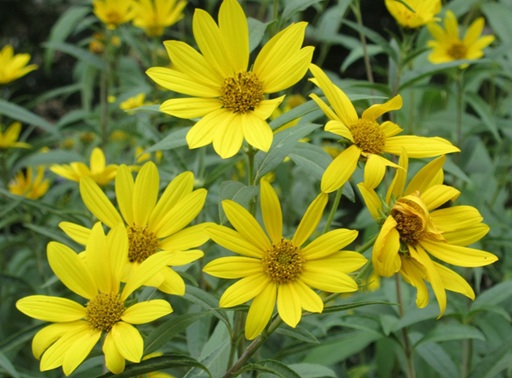
Sunflowers (Heliantus varieties) I love the bold look of sunflowers in late summer. There are many native varieties to chose from and they are highly valuable for wildlife. I have 2 varieties in my backyard: Heliantus grosseserratus and Heliantus occidentalis. This second one is not as imposing and it is more graceful, but still eye catching once it establishes itself.
The sixth sense
The spiritual sense of connection: Finally a native garden connects you to the larger spiritual dimension of nature’s life. A native garden is in motion, always changing, never the same. It calls you out in all seasons and you discover it new every year. I hope your spring planting will include some of these varieties. Give it a try, you won’t be disappointed!
Would you like to talk about a native plant in your backyard? Please send me your post at info@choosesustainable.org
If you liked this post please share it!

